





Some error occured while loading the Quick View. Please close the Quick View and try reloading the page.
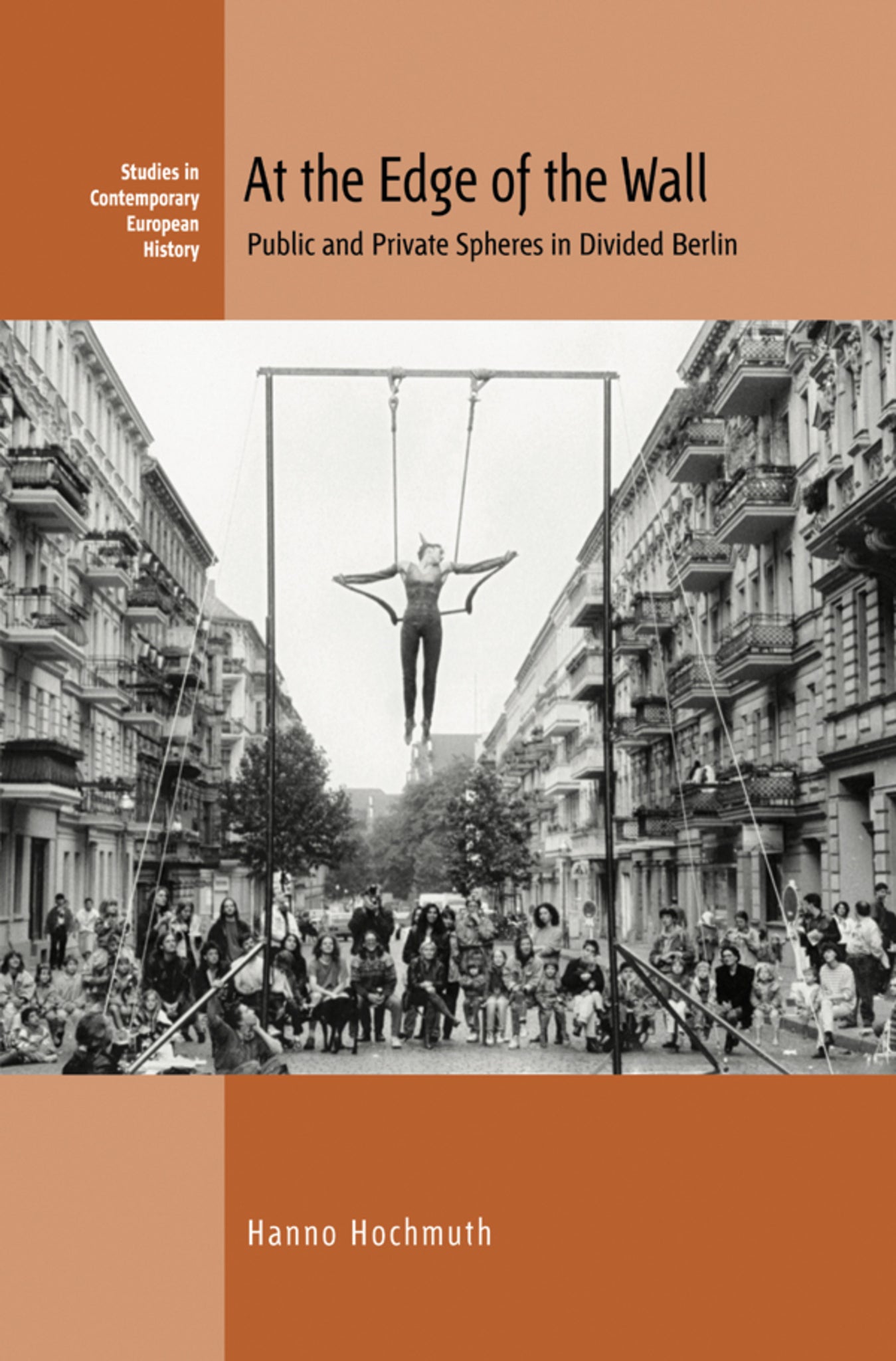
Located in the geographical center of Berlin, the neighboring boroughs of Friedrichshain and Kreuzberg shared a history and identity until their fortunes diverged dramatically following the construction of the Berlin Wall, which placed them within opposing political systems. This revealing account of the two municipal districts before, during and after the Cold War takes a microhistorical approach to investigate the broader historical trajectories of East and West Berlin, with particular attention to housing, religion, and leisure. Merged in 2001, they now comprise a single neighborhood that bears the traces of these complex histories and serves as an illuminating case study of urban renewal, gentrification, and other social processes that continue to reshape Berlin.


“[This book] provides a rich account of the dual history of cultural change and economic restructuring in post-socialist Europe. The methodological and theoretical framework is fascinating and productive. The book will be of interest to students and researchers in the field of urban history in post-socialist Europe as well anyone engaged in modern urban historical research in general.” • Baltic Worlds
Praise for the German edition:
“A lively, detailed and well-written book… It provides profound and exciting insights into urban life in Friedrichshain and Kreuzberg in the 20th century, and makes a sound contribution to the history of Berlin.” • H-Soz-Kult
“Historians of cities and urbanization rarely succeed in linking local with broader social history. Hanno Hochmuth's study on the two Berlin working-class districts of Friedrichshain and Kreuzberg masters this methodological challenge by analyzing the specific stories of the two districts as a comparative history of integration.” • Sehepunkte
“This is a thorough and exemplary study, shedding light not just on the past under discussion, but, by implication, illuminating current developments too. The focus on the years of division allows for a particularly clear profile of general and specific forces that are at work in Berlin’s urban environment.” • The Year’s Work in Modern Language Studies
“Overshadowed by the Cold War and global confrontation, the complexity and utter normality of everyday life on both sides of the Berlin Wall have often been overlooked. Hanno Hochmuth’s fascinating account of two neighborhoods on the margins of West and East uniquely succeeds in providing a fresh picture of urban society, seen through the eyes of its principal actors: proletarians and pastors, drop-outs and dissidents. Here is the historian as “wall-pecker”: The story Hochmuth tells is 20th-century German history in a nutshell, full of insights that also provide background for understanding the current transformation of Germany’s capital.” • Paul Nolte, Freie Universität Berlin
List of Illustrations
Acknowledgments
List of Abbreviations
Map of Friedrichshain and Kreuzberg
Chapter 1. Historical Foundations
Part I: Housing
Chapter 2. Housing as a Constitutive Field of the Public and Private Spheres
Chapter 3. The Long “Gestation Period” of Tenement Buildings: Sorauer Strasse
Chapter 4. The Public and Private Sphere in Urban Transformation: Strasse der Pariser Kommune
Chapter 5. Kreuzberg Counter-Public Spheres
Chapter 6. Neighborhood Appropriation in Friedrichshain
Interim Conclusion I
Part II: The Church
Chapter 7. The Church as a Constitutive Field of the Public and Private Spheres
Chapter 8. Church and the Neighborhood Public Sphere in the Kreuzberg
Chapter 9. The Church as a Surrogate Public Sphere in Friedrichshain
Interim Conclusion II
Part III: Entertainment
Chapter 10. Entertainment as a Constitutive Field of the Public and Private Spheres
Chapter 11. Neighborhood Entertainment: Fruchtstrasse Taverns
Chapter 12. The Diversification of Kreuzberg Bar Culture
Chapter 13. Festival Culture Between East and West
Interim Conclusion III
Chapter 14. Perspectives: Friedrichshain and Kreuzberg in Transformation since 1989–90
Conclusion
Bibliography
Index