



We're sorry. An error has occurred
Please cancel or retry.
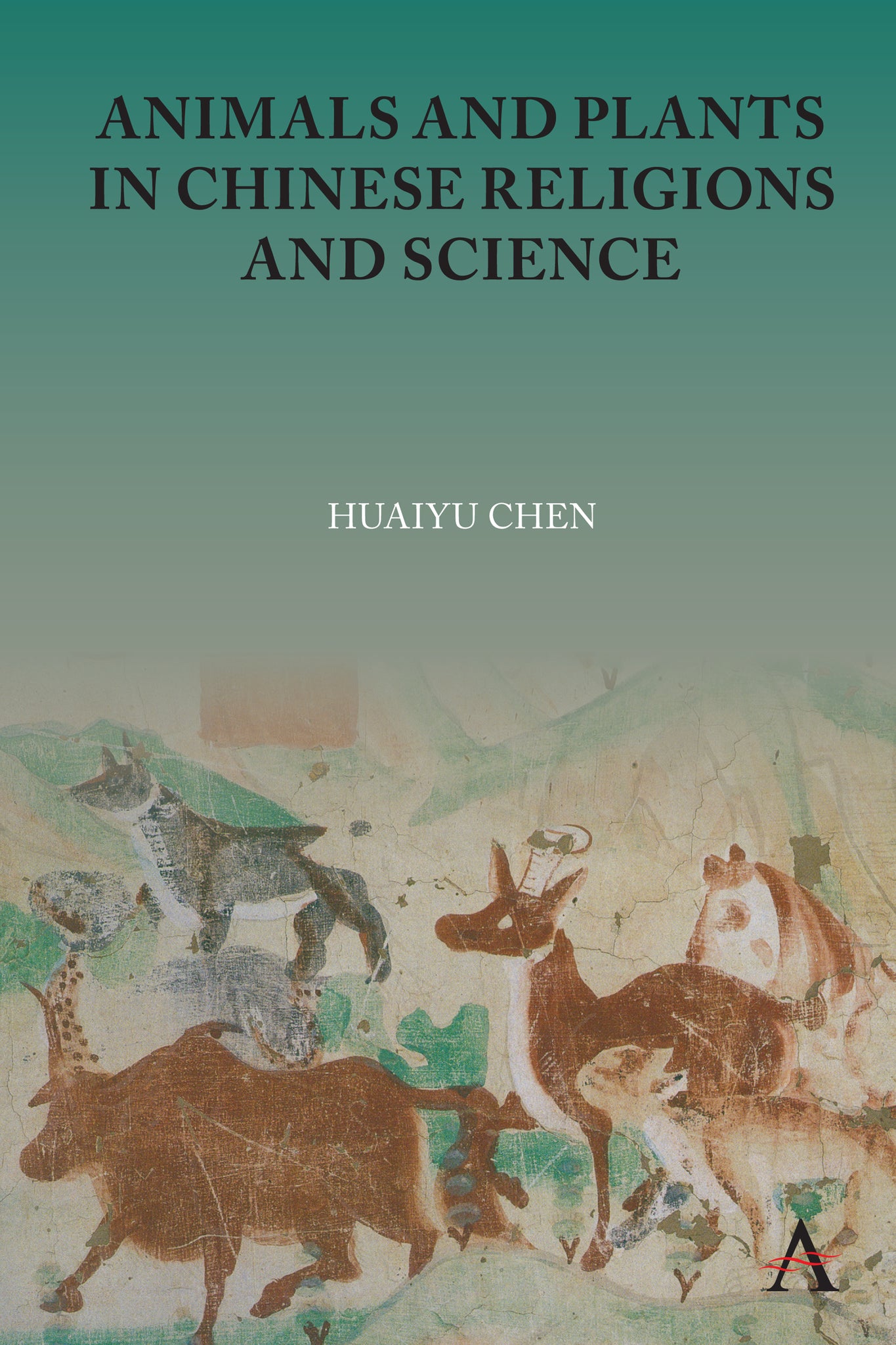
Animals and Plants in Chinese Religions and Science
Some error occured while loading the Quick View. Please close the Quick View and try reloading the page.
Couldn't load pickup availability
- Format:
-
14 March 2023

This book is a unique transdisciplinary study on animals and plants in medieval Chinese religions and science, especially in such a critical era of environmental crisis today. In recent years, environment historians have written intensively on China, yet the study of animals and plants in medieval China was less developed, not much about the role of religions, more precisely. This book aims to bridge the gaps between religious studies and environmental studies, between the history of science and religious studies, and between animal studies and plant studies. It also deals with folklores and other literary sources for examining the changing images of animals in the psychological and imaginative experience, which are often overlooked in the conventional scholarship. This book addresses big issues such as how religious agents responded to the challenges about animals and plants as material culture in the mundane world, and how the religious writers developed their different discourse about animals and plants from the state ideology, and how the spiritual world and natural world mutually enriched each other in the medieval world of China.

RELIGION / Buddhism / History, Buddhism, HISTORY / Asia / China, SCIENCE / Life Sciences / General, History of religion, Asian history, Biology, life sciences
“In this book, Huaiyu Chen, a leading pioneer in the study of animals in Chinese history and religion, masterfully explains how medieval Chinese categorized and employed plants and used animal behavior to predict the future. He further indicates that Chinese monks explained the disposition and characteristics of animals through both native, correlative theory and Buddhist ideas” —Professor Keith Knapp, The Citadel, The Military College of South Carolina, USA.
“This is yet another tour de force by a prolific historian of East Asian Buddhism who, this time, gives us a fascinating study of the visual and textual representations of animals and plants in medieval China. These two natural presences, usually assumed to be at the mercy of human avarice and caprice, under Dr. Chen’s scholarship, are revealed of their long-neglected but significant roles in shaping the religious and scientific life in medieval China” —Professor Jinhua Chen, Department of Asian Studies, The University of British Columbia, Canada.
The chapters are well-researched studies with rich and very reliable annotations […] it is an interesting contribution to an academic field that will develop into various directions —Monumenta Serica: Journal of Oriental Studies
In sum, Chen has gathered together a staggering corpus of animal- and plant-related literature from the disciplines of Sinology, science, environmental history, and beyond. The scope of the book, broad in timeframe, topics, and places, means that its findings can appeal to a range of scholars. —Bulletin of the School of Oriental and African Studies
Huaiyu Chen is Associate Professor of School of Historical, Philosophical and Religious Studies at Arizona State University. He is the author of In the Land of Tigers and Snakes: Living with Animals in Medieval Chinese Religions (2023).
Acknowledgments; List of Figures; List of Charts; Introduction; Plant Science and Technology in Medieval China; Ordering Plants in the Buddhist World: A Medieval Botanical Taxonomy; Animal Divination and Climate: An Environmental Perspective on the Cult of the Pig; Zoomancy in Medieval China; The Changing Images of Zodiac Animals in Medieval Chinese Buddhist Literature; The Were-Tigers in Medieval China and Its Asian Context; The Animal Turn in Asian Studies and the Asian Turn in the Animal Studies; Bibliography; Index