





Some error occured while loading the Quick View. Please close the Quick View and try reloading the page.
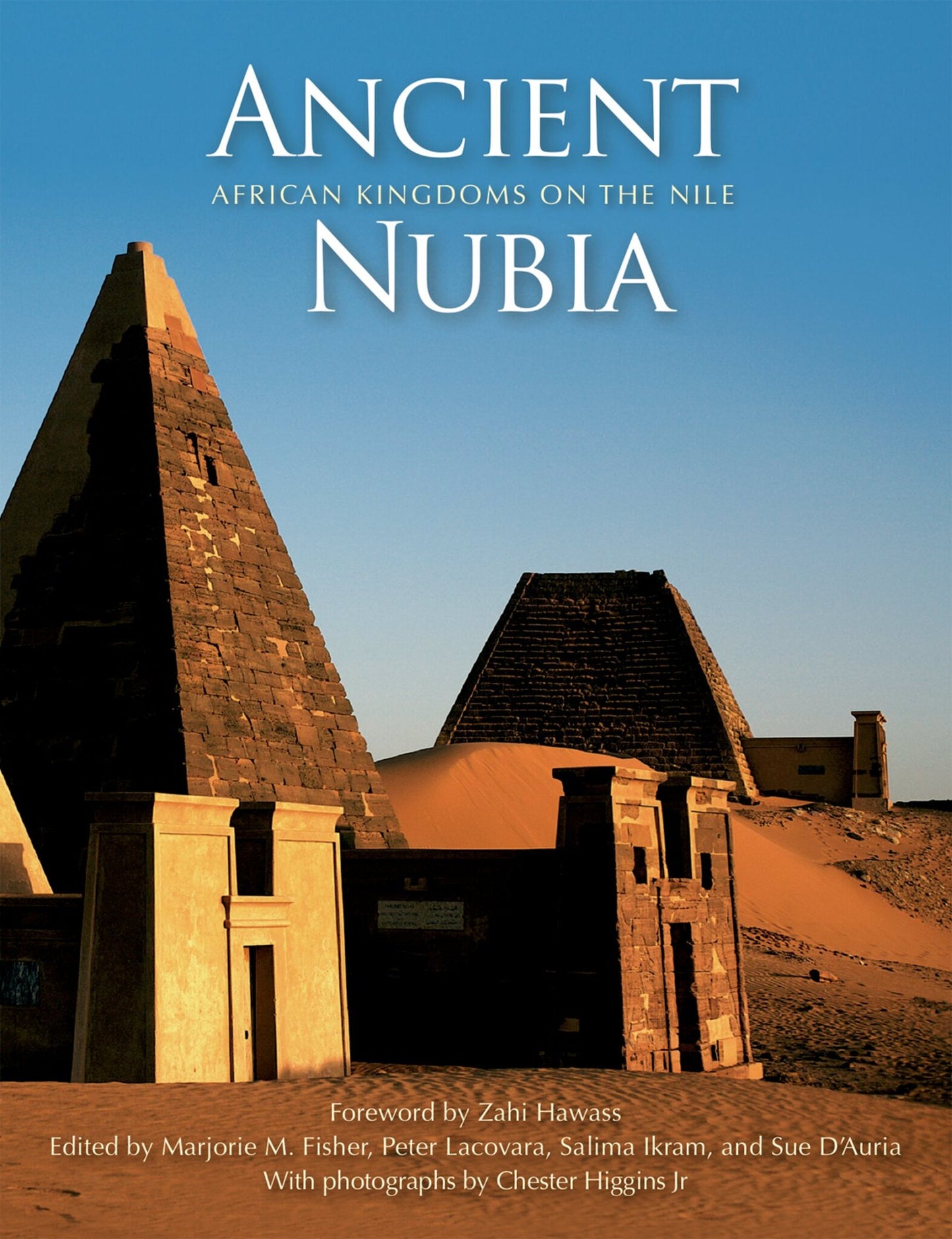
A lushly illustrated gazetteer of the archaeological sites of southern Egypt and northern Sudan and named a 2012 American Publishers (PROSE) Awards winner for Best Archaeology & Anthropology Book
For most of the modern world, ancient Nubia seems an unknown and enigmatic land. Only a handful of archaeologists have studied its history or unearthed the Nubian cities, temples, and cemeteries that once dotted the landscape of southern Egypt and northern Sudan. Nubia’s remote setting in the midst of an inhospitable desert, with access by river blocked by impassable rapids, has lent it not only an air of mystery, but also isolated it from exploration. Over the past century, particularly during this last generation, scholars have begun to focus more attention on the fascinating cultures of ancient Nubia, ironically prompted by the construction of large dams that have flooded vast tracts of the ancient land.
This book attempts to document some of what has recently been discovered about ancient Nubia, with its remarkable history, architecture, and culture, and thereby to give us a picture of this rich, but unfamiliar, African legacy.


"This beautifully illustrated volume offers the general reader a survey of this little-known civilization and is highly recommended."—Library Journal
"[B]rings the ancient unknown kingdom of Nubia alive through essays and beautiful photos."—Booklist
"[Ancient Nubia: African Kingdoms on the Nile] is arguably the definitive work on the subject to date. And the on-location lush color photographs of Chester Higgins Jr. are worthy of a volume of their own!"—KMT: A Modern Journal of Ancient Egypt
Marjorie M. Fisher is adjunct assistant professor of Egyptology at the University of Michigan.
Peter Lacovara is director of the Ancient Egyptian Heritage and Archaeology Fund. He was formerly senior curator of ancient Egyptian, Nubian, and Near Eastern art at the Michael C. Carlos Museum of Emory University. He is co-editor of Ancient Nubia: African Kingdoms on the Nile (AUC Press, 2012).
Salima Ikram is distinguished professor of Egyptology at the American University in Cairo. She has directed the Animal Mummy Project and the North Kharga Darb Ain Amur Survey, among other truly exciting projects and excavations, throughout Egypt and in Turkey, Sudan, and Greece. She has worked in museums around the world, including the Smithsonian in Washington, D.C. and the Egyptian Museum in Cairo. She has published extensively, for both scholarly and general audiences.
Sue D’Auria is a former associate curator at the Huntington Museum of Art.
Chester Higgins Jr. is a world-renowned photographer and author of six books of photography whose work has appeared in ART- news, Essence, and The New York Times Sunday Magazine.
Zahi Hawass is one of the world’s best known Egyptologists, former Egyptian minister of state for antiquities, and National Geographic Explorer-in-Residence. He is the author of many books on ancient Egypt, including (with Sahar Saleem) Scanning the Pharaohs: CT Imaging of the New Kingdom Royal Mummies (AUC Press, 2016).
Essays on:
The Land of Nubia
History of Nubia
Early Exploration and Archaeology
Saving Nubia's Legacy
Archaeological Salvage
Art and Architecture
Kings and Kingship
Religion
Burial Customs
Texts and Writing
Daily Life
Women
Adornment
Ceramics
Animals
Gazetteer of sites:
Gebel Qeili
Naqa
Musawwarat al-Sufra
Wad ban Naqa al-Hobagi
Muweis
al-Hassa
Hamadab
Meroe
Dangeil Nuri
Gebel Barkal
al-Kurru
Kawa
Tabo
Kerma
Tombos Nauri
Sesebi
Soleb
Sedeinga
Sai Island
Amara West Gammai
Gebel Sheikh Suleiman
Second Cataract Forts C-Group
Qustul
Ballana
Abu Simbel
Arminna West and Arminna East
Toshka East and Toshka West
Qasr Ibrim Karanog
Derr
Amada
Wadi al-Sebua
Maharraqa
Dakka Gerf Hussein
Dendua Beit al-Wali
Kalabsha
Taffeh Qertassi
Debod
Philae
Elephantine and Aswan