





Some error occured while loading the Quick View. Please close the Quick View and try reloading the page.
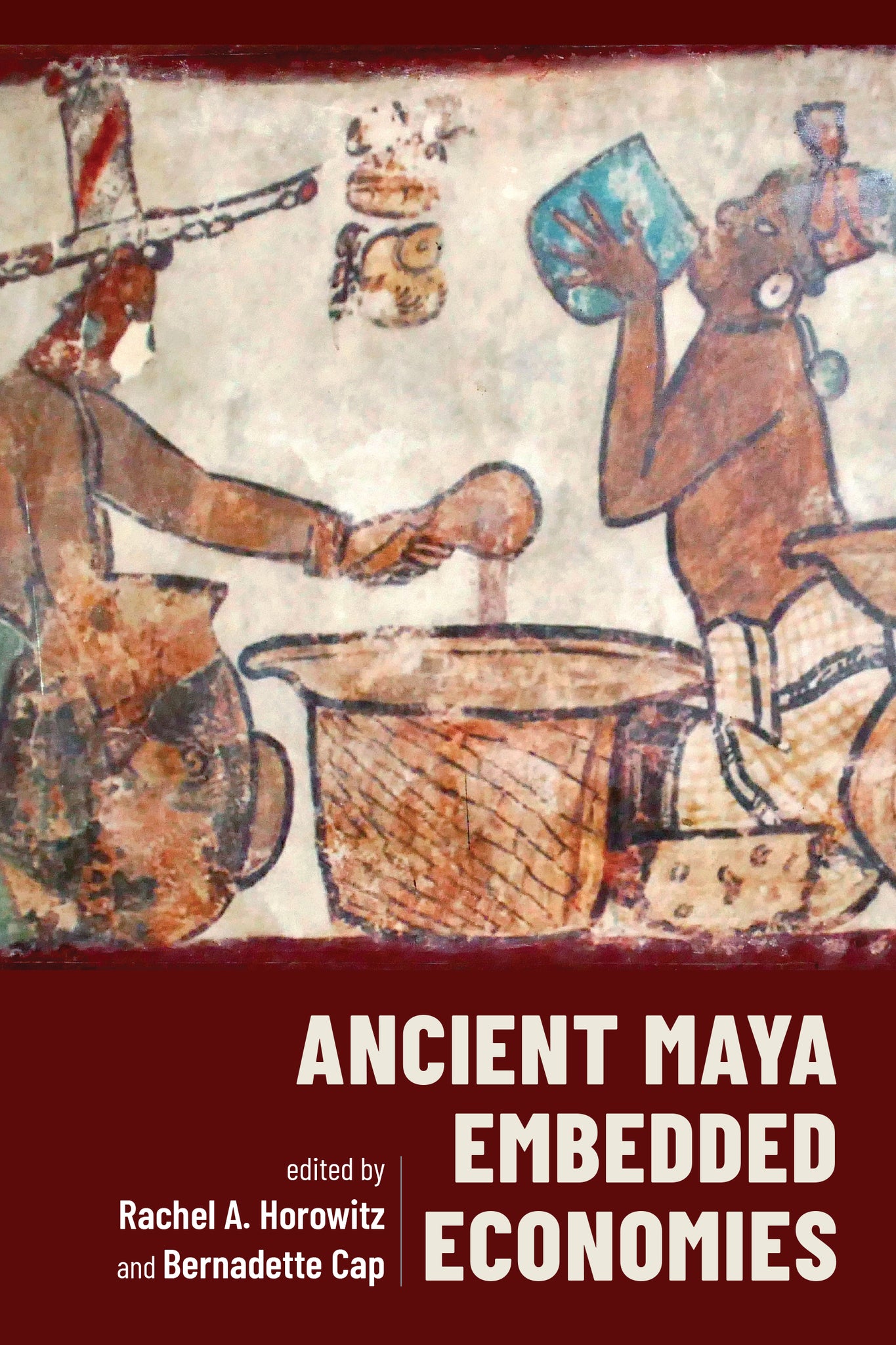
Ancient Maya Embedded Economies provides an in-depth discussion of the relationships between economic activities and other aspects of the daily lives of the ancient Maya. Through a series of casestudies spanning the Preclassic through the Late Classic periods, this volume addresses the entangled relationship of ancient Maya economies within social, political, and religious practices.
Contributors use cutting-edge data from a variety of sources to address the interrelatedness between economy and other aspects of Maya life and point to the complexity of interactions among ancient Maya peoples of all socioeconomic statuses—interactions guided by not only economies but also political-religious frameworks. Ancient Maya Embedded Economies provides a unique viewpoint into how economies functioned in the past and advances scholarly understandings of Maya economies and the ways in which archaeological data can examine such systems, as well as contribute to broader understandings of pre-modern economic organization on a global level.


“In a series of strong case studies with good data and thoughtful conclusions, this volume builds on previous studies and provides new data to reveal the importance of Maya marketplaces and the embeddedness of Maya economies.”
—Scott Hutson, University of Kentucky
Rachel A. Horowitz is associate professor in the Department of Anthropology at Washington State University. Her research interests include lithic technology, technological organization, economic organization, and the Maya. Her work has been published in several journals and edited volumes, and she is coeditor of Lithic Technologies in Sedentary Societies.
Bernadette Cap is assistant professor of anthropology at San Antonio College. Her research foci range from studying Classic Maya economic networks and identifying marketplace facilities to exploring the political and ritual underpinnings of rulership. She also specializes in the use of geospatial analysis for understanding settlement and landscape relationships