





Some error occured while loading the Quick View. Please close the Quick View and try reloading the page.
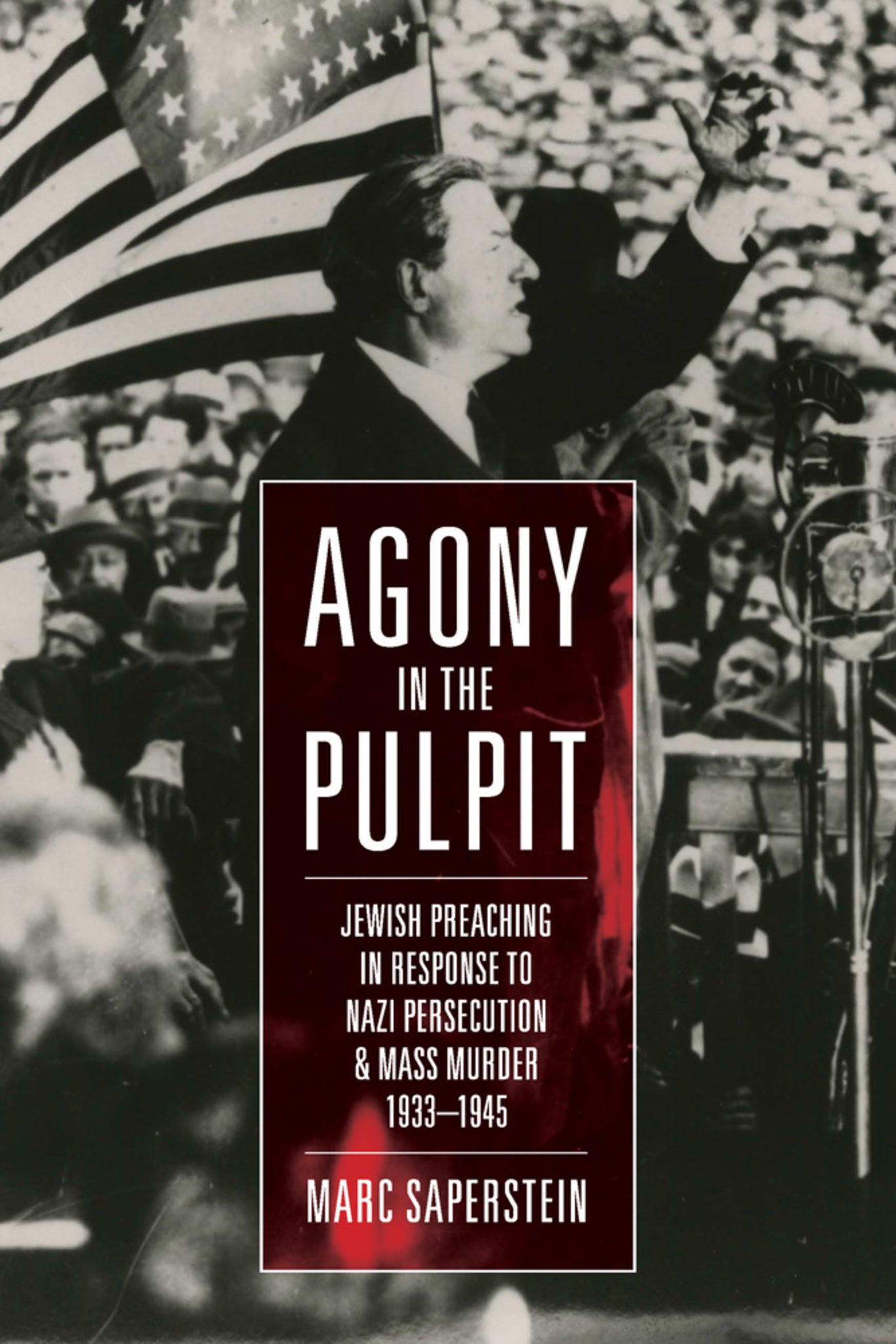


The High Holidays, 1943. In Chicago and Copenhagen, San Francisco and Nove Mesto, Detroit and Raanana, the Bronx and Brooklyn, rabbis prepared their sermons. They understood that during the previous two years three million European Jews had been murdered, and that millions more stood in imminent danger. What words of consolation, lamentation, or exhortation could they utter? Agony in the Pulpit provides answers. In an impressive feat of sleuthing, Marc Saperstein, a professor at Leo Baeck College, London, found and authenticated hundreds of sermons delivered by one hundred and thirty-six rabbis. Most lived in the U.S. or U.K., others in such outposts as Cape Town and Dublin. Some were even in the belly of the beast: Hamburg, Pin´ czów, or Lyon. In his introduction, Saperstein argues that the sermons offer important insights into how people understood events at the time. Nearly a thousand pages of excerpts and complete sermons (twenty-one) bear out that judgment. --Laurel Leff, Northeastern University, Oxford University Press Journals: Holocaust and Genocide Studies, Volume 33, Issue 3, Winter 2019
"When [Marc Saperstein's most recent] book caught my eye on the "new books" shelf I put everything aside and just read, and read, and read. WOW, what a massive, systematic, and in-depth study, as always. The preface is powerful, the material is fascinating, and [the] notes, as usual, uncover layers that anyone who reads these sermons would surely overlook."
Kimmy R. Caplan, Department of Jewish History and Contemporary Jewry, Bar-Ilan University