





Some error occured while loading the Quick View. Please close the Quick View and try reloading the page.
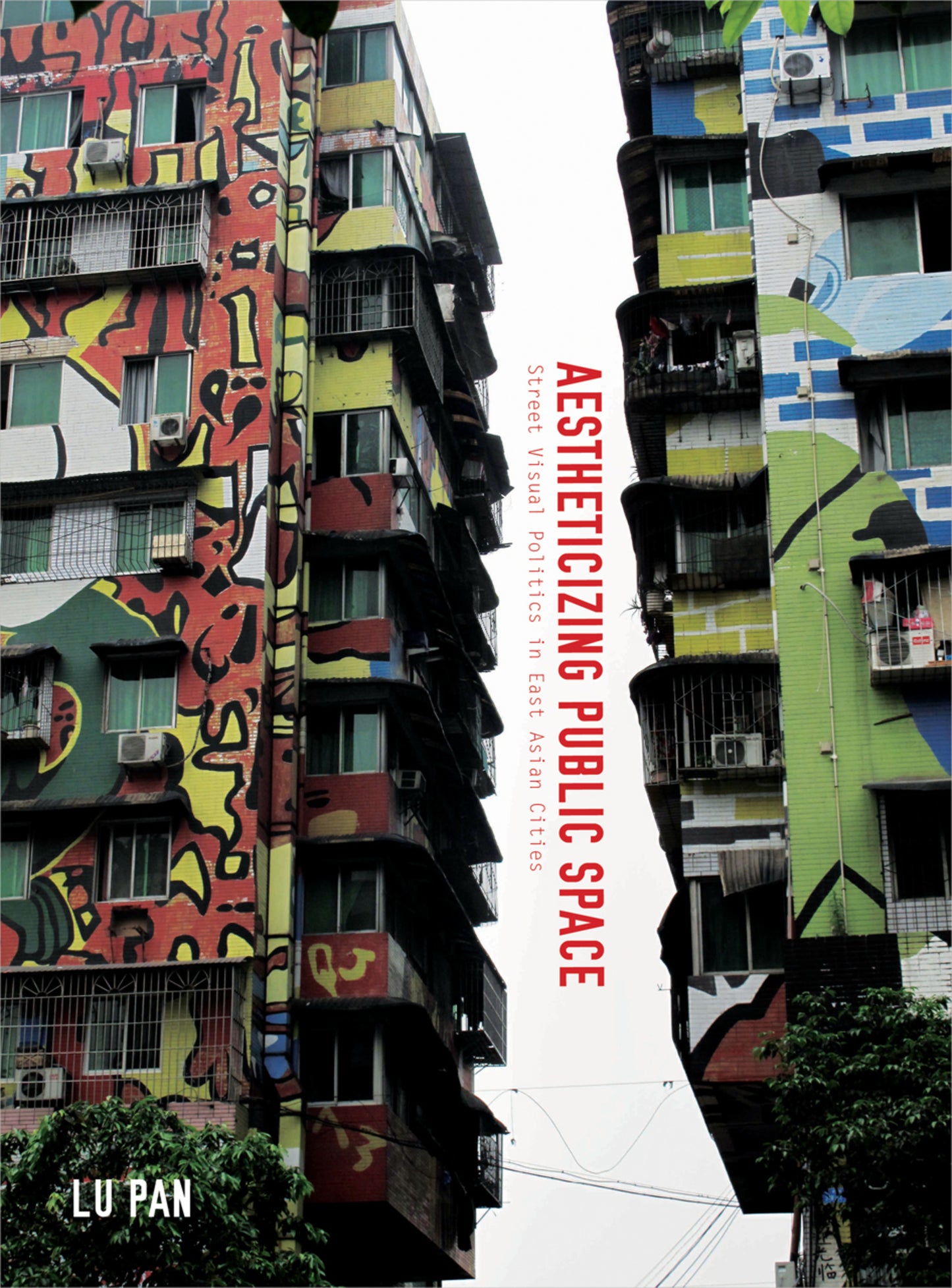
A photo collage of past and present street visuals in Asia, Aestheticizing Public Space explores the domestic, regional and global nexus of East Asian cities through their graffiti, street art and other visual forms in public space. Attempting to unfold the complex positions of these images in the urban spatial politics of their respective regions, Lu Pan explores how graffiti in East Asia reflects the relationship between aesthetics and politics. The book situates itself in a contested dynamic relationship among human bodies, visual modernity, social or moral norms, styles, and historical experiences and narratives. On a broader level, this book aims to shed light on how aesthetics and politics are mobilized in different contested spaces and media forms, in which the producer and the spectator change and exchange their identities.


Part I: Carnival on the Street—Visual Order and its (Pseudo-)Reversion
Chapter 1: A Twisted Carnival: State-Sponsored Graffiti in China
Chapter 2: Writing at the End of History: Reflections on Two Cases of Graffiti in Hong Kong
Part II: Aura on (and beyond) the Street—Body, Community, and Media
Chapter 3: Trans-spatial Images: Traveling Graffiti (Art) and the Possibility of Resistance in Chinese Urban Space
Chapter 4: Eloquence of Silent Speech: JR in East Asia
Part III: Dissensus on the Street—Aesthetics, Politics, and Public Space
Chapter 5: The Spectacle of Democracy: Violence, Language, and Dissensus in the Case of Anti-war Graffiti in Tokyo
Chapter 6: The Nation’s Shame? Seoul’s Rat Graffiti Incident at the 2010 G-20 Summit
Part IV: Creativity on the Street—Visual Narratives of East Asian Creative Cities
Chapter 7: Art, Urban Space, and Governance: Street Mural and “Legal Wall” in Japan
Chapter 8: Marginality as Centrality: The “Seoul Urban Art Project” and AGIT in Busan
Special Chapter: Voices from the Street—Interviews with Street Visual Producers in East Asia
Interview with VERY
Interview with Garoo
Interview with Zyko (Beijing)
Interview with Ken Lee @Dirty Panda
Interview with Friendly @Invasian