





Some error occured while loading the Quick View. Please close the Quick View and try reloading the page.
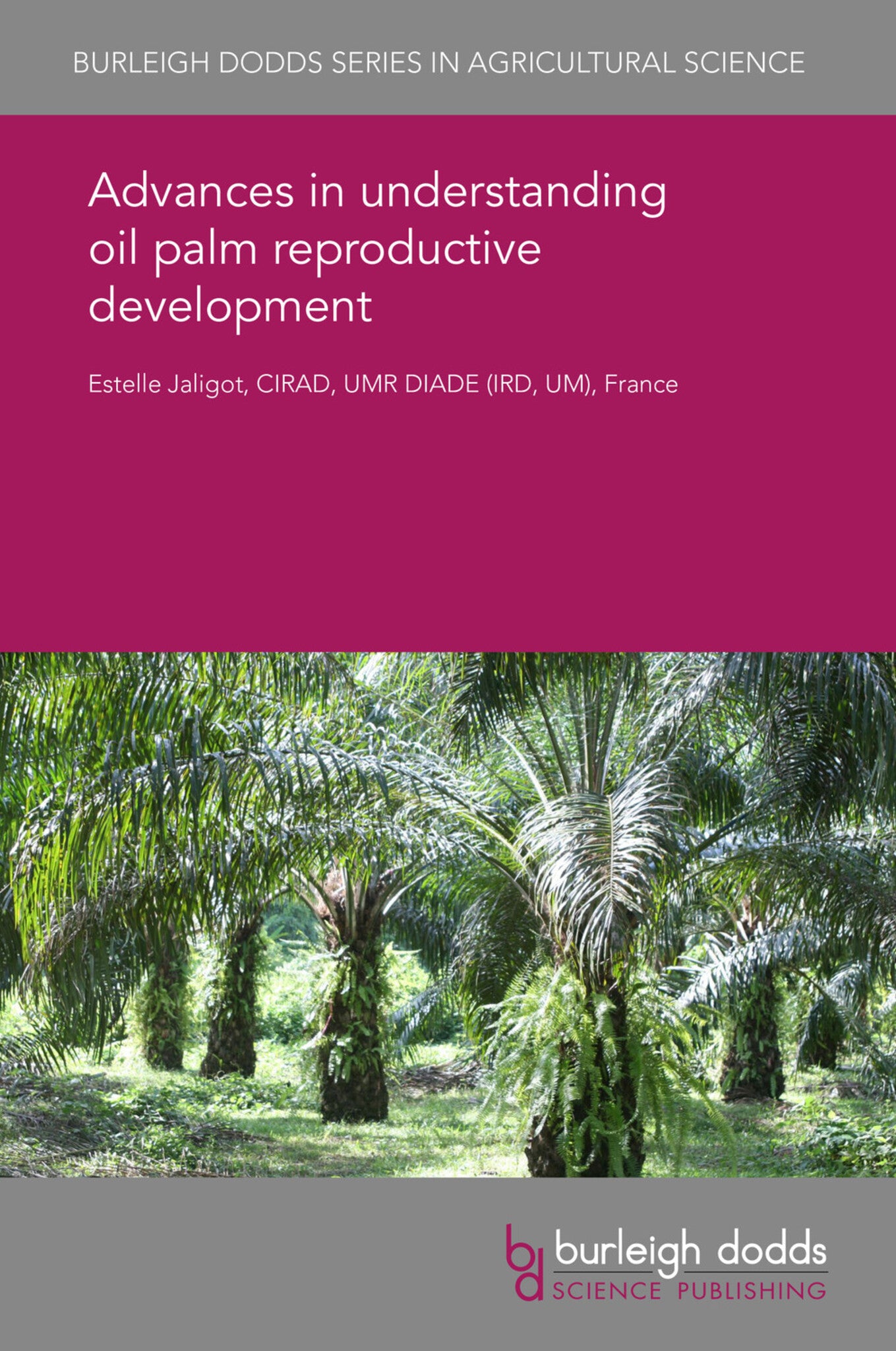
As for many other crops, yield components of oil palm rely partly on the optimal implementation of its reproductive development. As a result, studies focusing on the mechanisms underlying sex ratio determination, inflorescence development or fruit maturation have rapidly multiplied, significantly improving our comprehension of these processes. Because the influence of the environment on plant development is multiple and since climate models predict large-scale changes in the areas where the oil palm is presently cultivated, current research is increasingly focusing on investigating the effects of such changes on both the physiology and the productivity of the plant, in a bid to help breeding schemes adapt to new requirements regarding stress adaptation traits.

Price: £25.00
Publisher: Burleigh Dodds Science Publishing
Imprint: Burleigh Dodds Science Publishing
Series: Burleigh Dodds Series in Agricultural Science
Publication Date:
12 February 2018
ISBN: 9781838794637
Format: eBook
BISACs:

1 Introduction 2 Sex ratio 3 Inflorescence and flower development 4 Fruit development and maturation and oil composition 5 Fruit shedding and oil acidification 6 Future trends and conclusion 7 Where to look for further information 8 References