





Some error occured while loading the Quick View. Please close the Quick View and try reloading the page.
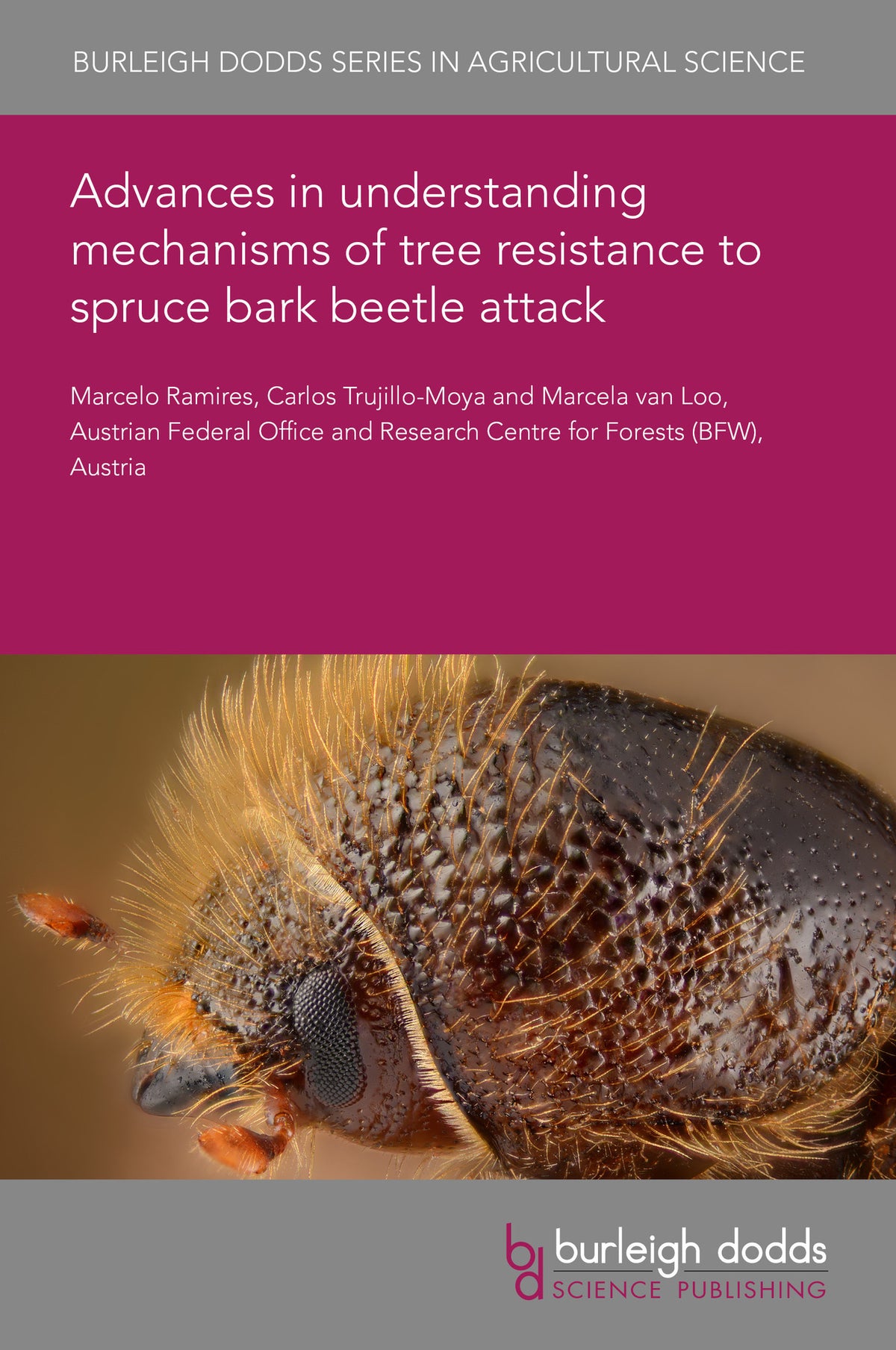
The European spruce bark beetle (Ips typographus L.) is a major insect pest of coniferous species, particularly affecting Norway spruce (Picea abies (L.) H. Karst.), a vital timber conifer in Central and Northern Europe. Using the Norway spruce as a model forest species, this chapter explores the intricate interactions between the tree and bark beetles during and after a bark beetle attack. A particular focus is tree’s physical and molecular defenses, with the latter encompassing hormonal signaling, defense-associated gene and protein regulation, and the defense machinery of secondary metabolites. The chapter illustrates how Norway spruce coordinates local and systemic defense strategies and examines trade-offs in resource allocation as the tree balances defense with growth. It also emphasizes the importance of genetic diversity as a reservoir of resistance traits, particularly the potential of adaptive constitutive and inducible defenses, highlighting the promise of priming to affect inducible resistance for improved forestry management.


- 1 Introduction
- 2 Norway spruce defense strategies: physical defense mechanisms
- 3 Norway spruce defense strategies: molecular defense mechanisms
- 4 Coordinating local and systemic responses for optimal impact
- 5 Balancing growth and defense: trade-offs in Norway spruce
- 6 Genetic diversity and resistance: exploring adaptive, constitutive and induced defense
- 7 Conclusion
- 8 Where to look for further information
- 9 References