





Some error occured while loading the Quick View. Please close the Quick View and try reloading the page.
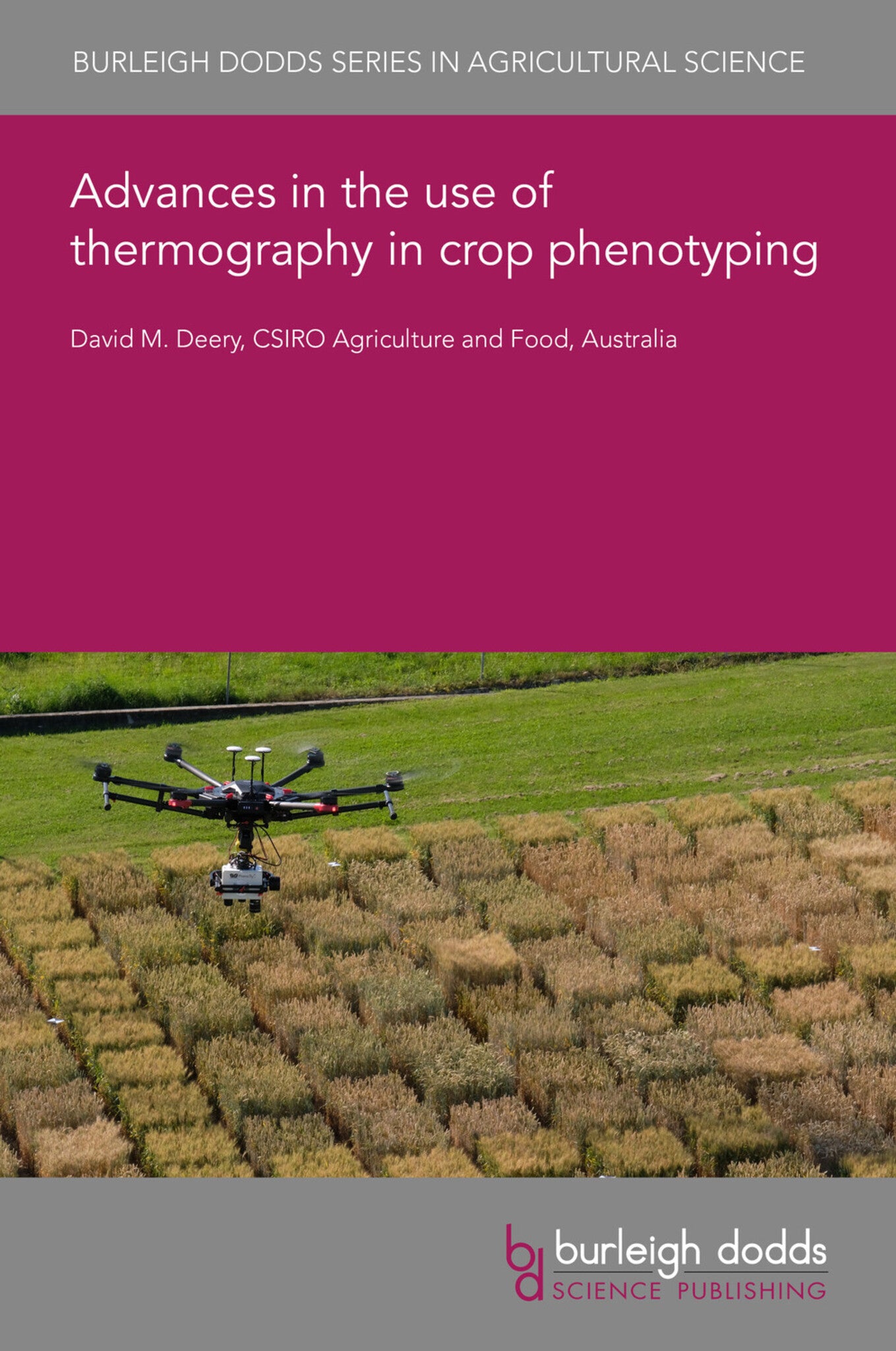
Thermography is a powerful crop phenotyping tool because it enables contactless temperature measurement of the plant or crop canopy. The plant canopy temperature (CT) reflects transpiration and this can be related to yield, as shown in numerous studies on wheat. There are various CT sensing methods that are explained herein. In order to effectively apply thermography as a phenotyping tool, the micrometeorological conditions need to vary as little as possible between the measurement of multiple genotypes. Aerial remote sensing of CT is therefore highly promising for crop phenotyping. This chapter connects the fundamental principles of thermography with its application in crop phenotyping, including discussion of the key technologies, methods and their limitations. Relevant case study examples are discussed.

Price: £25.00
Publisher: Burleigh Dodds Science Publishing
Imprint: Burleigh Dodds Science Publishing
Series: Burleigh Dodds Series in Agricultural Science
Publication Date:
27 June 2022
ISBN: 9781801465267
Format: eBook
BISACs:

1 Introduction 2 Foundational theory of thermography 3 Principles of thermography measurement 4 Technologies available and thermography methods 5 Traits measured 6 Case studies 7 Main challenges 8 Summary and future trends 9 Where to look for further information 10 References