





Some error occured while loading the Quick View. Please close the Quick View and try reloading the page.
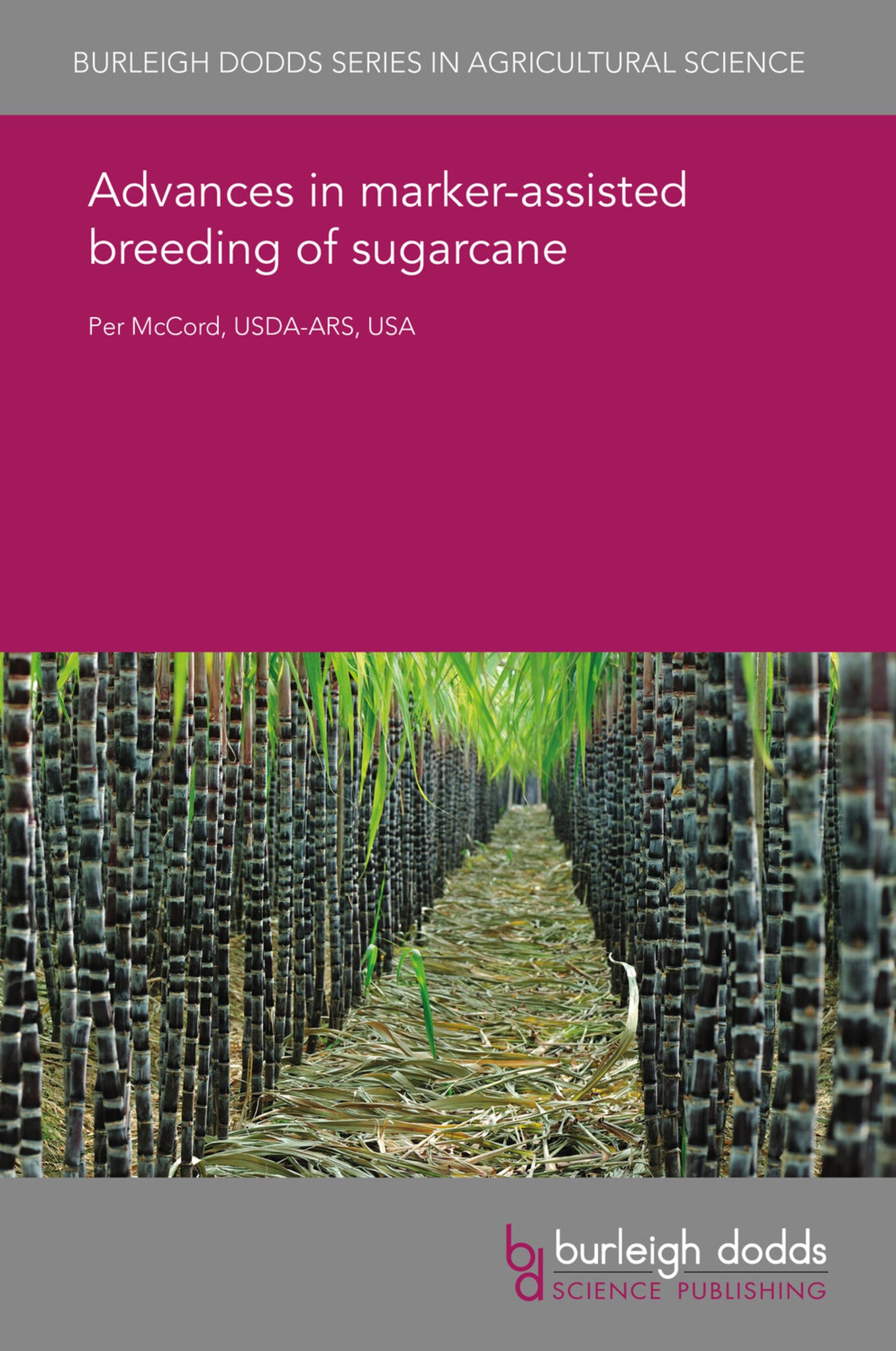
Sugarcane breeding has until very recently been based solely on phenotype, and marker-assisted breeding of sugarcane remains in its infancy compared with that of row crops such as maize and soybean. A major reason for this is the complex genetics of sugarcane. This chapter reviews the uses of DNA marker technology in fingerprinting and diversity analysis of sugarcane. This is followed by a review of the development of linkage maps and initial trait/QTL mapping, including the Bru1 locus for resistance to brown rust (Puccinia melanocephala). Finally, the chapter reviews the use of newer next-generation sequencing–based technologies in sugarcane, including genome-wide association analysis and genomic selection.

Price: £25.00
Publisher: Burleigh Dodds Science Publishing
Imprint: Burleigh Dodds Science Publishing
Series: Burleigh Dodds Series in Agricultural Science
Publication Date:
05 March 2018
ISBN: 9781838795832
Format: eBook
BISACs:

1 Introduction 2 Sugarcane fingerprinting and variety identification 3 Sugarcane diversity analysis 4 Linkage mapping and QTL analysis 5 GWAS/SNP-based mapping and QTL analysis 6 Genomic selection 7 Future trends and conclusion 8 Where to look for further information 9 References