





Some error occured while loading the Quick View. Please close the Quick View and try reloading the page.
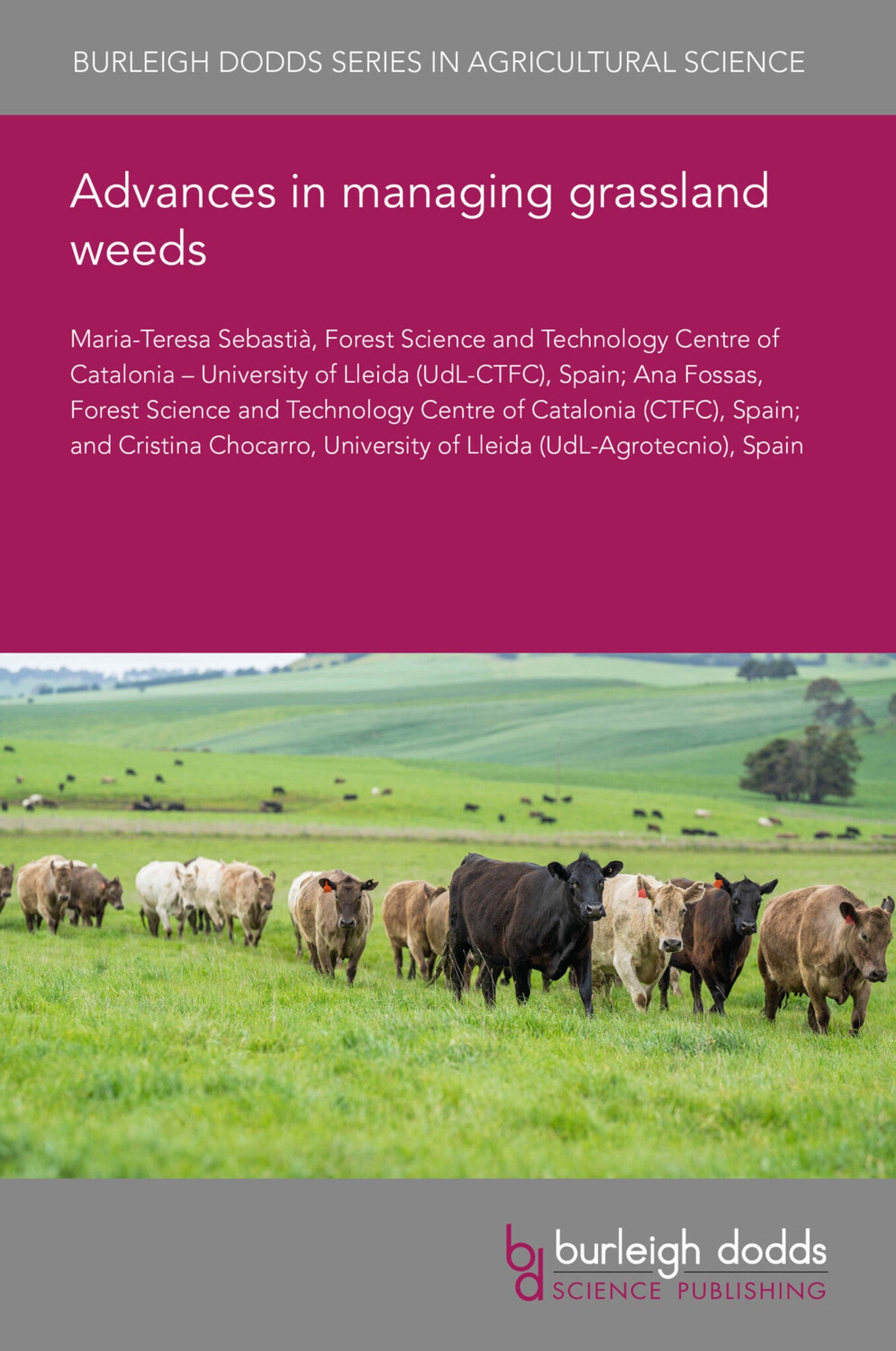
The term "weed" is both relative and subjective, defined contextually and in relation to human activities. In this chapter, we discuss weeds in different grassland types, ranging from cultivated feed crops in arable land (leys) to natural multispecies grasslands. As agricultural systems transition from monocultures to more diverse natural ecosystems, the perception of what constitutes a weed may shift. In the current framework of complex human societies driving significant environmental changes, questions arise regarding whether weeds are always detrimental or if they can potentially offer solutions as well. We review different management practices to prevent weed proliferation, e.g. Nature-based Solutions (NbS) that, in contrast to conventional agriculture, include the role of biodiversity in suppressing weeds. To sustainably manage grasslands, we should address both the opportunities and threats posed by weeds. Challenges and solutions are discussed in the framework of a case study in Catalonia.


- 1 Introduction
- 2 Weeds: a threat or an opportunity?
- 3 Nature-based solutions for weed management
- 4 Weeds and management within models ofsustainable agriculture
- 5 Case study: weed management in alfalfa as a foragecrop
- 6 Future trends in weed management
- 7 Acknowledgments
- 8 References