





Some error occured while loading the Quick View. Please close the Quick View and try reloading the page.
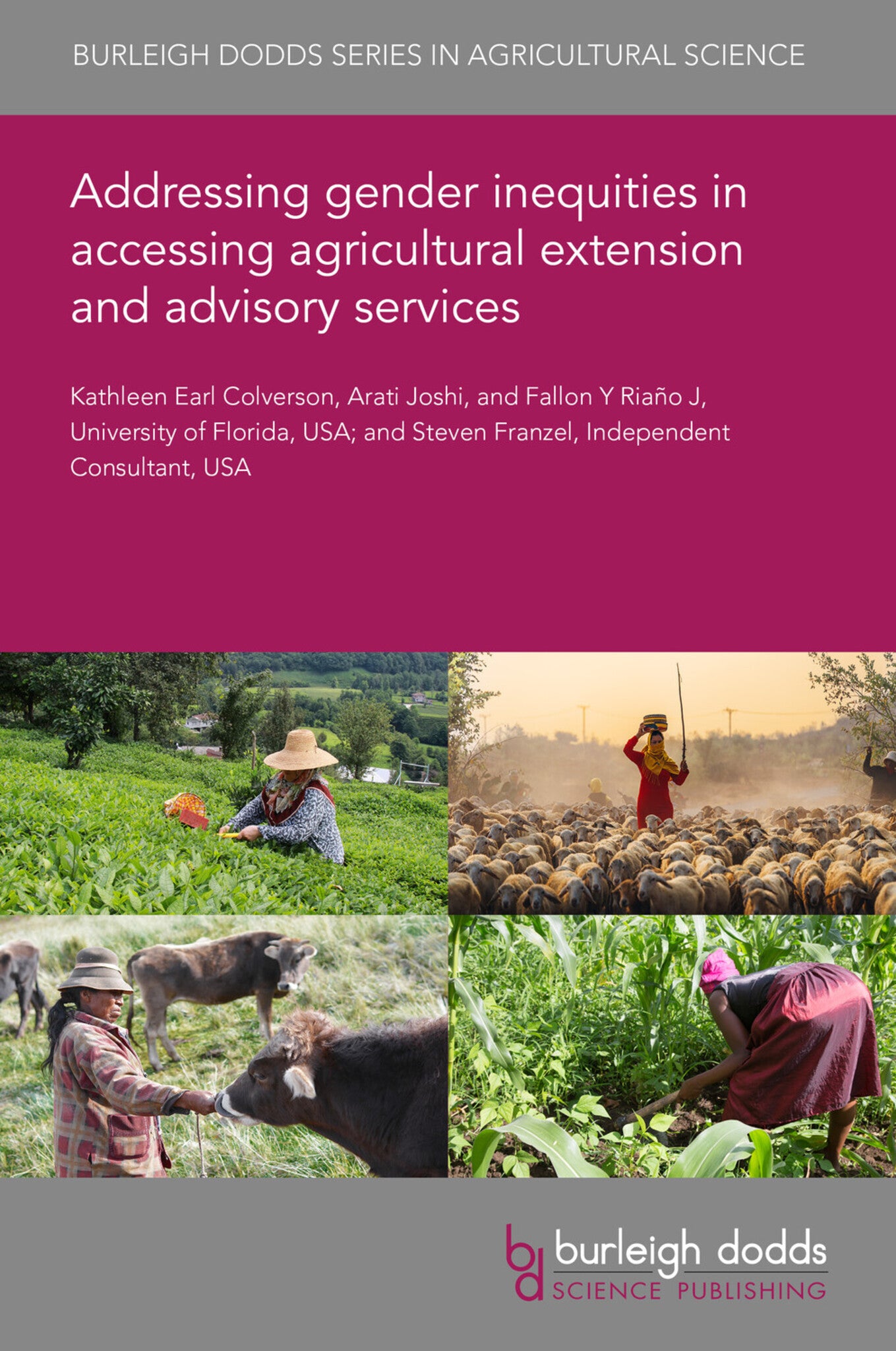
Extension and Advisory Services have historically been challenged to meet the needs of both women and men producers in environments where women typically have benefited less. However, there are examples of projects and programs where gender equity in access to these services has been improved. In this chapter, the authors will review extension programs using the Gender Integration Continuum, an approach that examines gender integration from non-existent (gender blind) to fully integrated (gender transformative). They highlight programs that have utilized innovative techniques to more fully meet the needs of male and female producers using case studies from successful integration in Africa, Asia, and Latin America. The authors summarize these examples to glean possible solutions for future work in extension programs that more fully integrate and address underlying issues limiting gender equity.


- 1 Introduction
- 2 The Gender Integration Continuum and extension services
- 3 Case studies of gender integration in extension programs
- 4 Conclusion and next steps
- 5 Where to look for further information
- 6 References