





Some error occured while loading the Quick View. Please close the Quick View and try reloading the page.
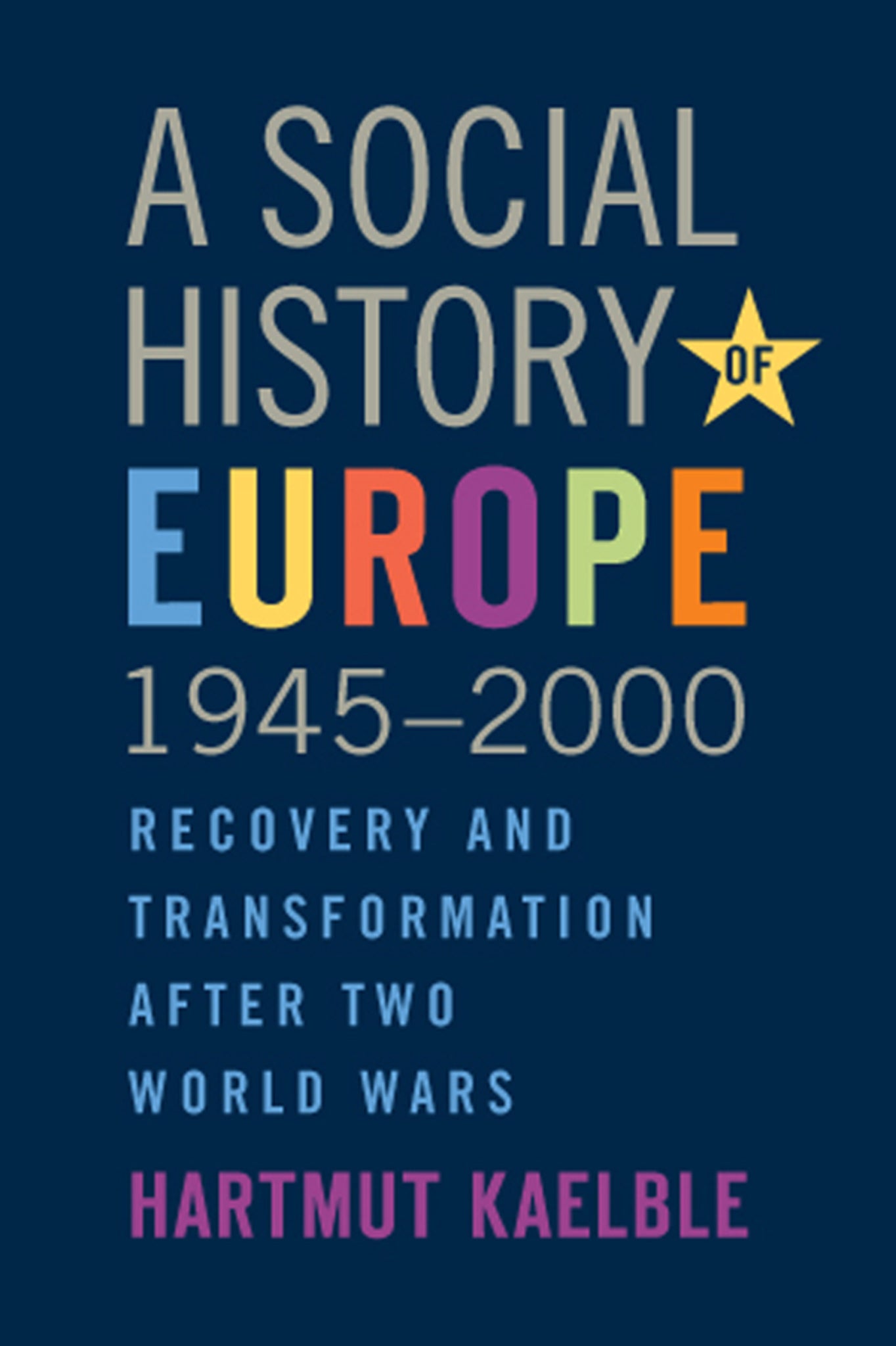
Since 1945 Europe has experienced many periods of turmoil and conflict and as many moments of peace and integration: from the devastation felt in the aftermath of World War II to the recovery in the 1950s and 1960s; to the new challenges in the 1970s and 1980s when neoliberal policies led to fundamental social and economic changes, marked by the effects of the oil shock and widespread unemployment; and then 1989 and after when the existing world order experienced new convulsions. In this brilliant and comprehensive work, the author, one of the best known social historians of Europe, discusses a wide range of subjects, not shying away from controversial topics: family structure, work, consumption, values, migration, inequality, elites, civil society, social movements, media, welfare state, education, and urban policies. He focuses on the fundamental changes European societies underwent in the second half of the twentieth century but also explores what divides Europeans, what unites them, and what sets them apart from the rest of the world. This major historical work will be an important and highly sought-after addition for library collections as well as an important volume for course adoptions.


“A sweeping, fact-filled analysis, this well-researched survey can serve as text and reference work with its graphs and very selective bibliography.” · Choice
“As Kaelble stresses, this is not simply a social history from the point of view of social classes. Going beyond this abstraction, it covers family, work, consumption, values, religiosity and urban as well as rural life. Given that it also includes social meanings, social symbols, rites and myths, it is in certain respects nearly a cultural history, while some chapters could fit into the framework of political history… All in all, this book is a great achievement, from which the reader can learn a lot… [It] is well written and highly valuable as a source of knowledge about Europe in the second half of the twentieth century.” · European Review of History—Revue européenne d’histoire
“The series of essays in this book provide readers of every ilk with a solid overview of European social history, and the factors that caused it to change over the course of the second half of the 20th-century. This book will prove invaluable to scholars working in all fields of modern European history, and it will aid politicians, social activists, and others, plan for the future by learning from the past. In short, A Social History of Europe 1945-2000is destined to be a classroom standard, and it deserves a place in every library.” · History in Review
“Without a doubt, this book offers also for the general reader a fascinating journey of discovery through Europe, which shows surprising commonalities on the one hand and illuminating differences on the other.” · Frankfurter Allgemeine Zeitung
“…with this book, Hartmut Kaelble has written a work that will impact political as well as scholarly debates for a long time to come.” · Der Tagesspiegel
“Kaelble’s book offers rich and brilliantly analyzed material in a retrospective view - a look back before Europe takes the next step into the future.” · Financial Times Germany
“This book could not be more timely…Students of contemporary history will soon include this book among those standard works that are a must-read. But also politicians and the large number of Euroskeptics would be well advised to study it closely.” · Neue Zürcher Zeitung
List of Figures and Tables
Foreword
Introduction
Part I: Basic Social Constellations
Chapter 1. Family
Chapter 2. Labor
Chapter 3. Consumption and Standard of Living
Chapter 4. Changing Values and Secularization
Part II: Social Hierarchies and Inequalities
Chapter 5. Elites, Intellectuals and Social Milieus
Chapter 6. Inequalities within Socio-Economic Circumstances and Opportunities for Social Mobility
Chapter 7. Migration
Part III: Society and State
Chapter 8. The Media and European Public
Chapter 9. Social Movements, Social Conflicts, and Civil Society
Chapter 10. The Welfare State
Chapter 11. City Growth, City Life, and Urban Planning
Chapter 12. Education
Chapter 13. Summary