





Some error occured while loading the Quick View. Please close the Quick View and try reloading the page.
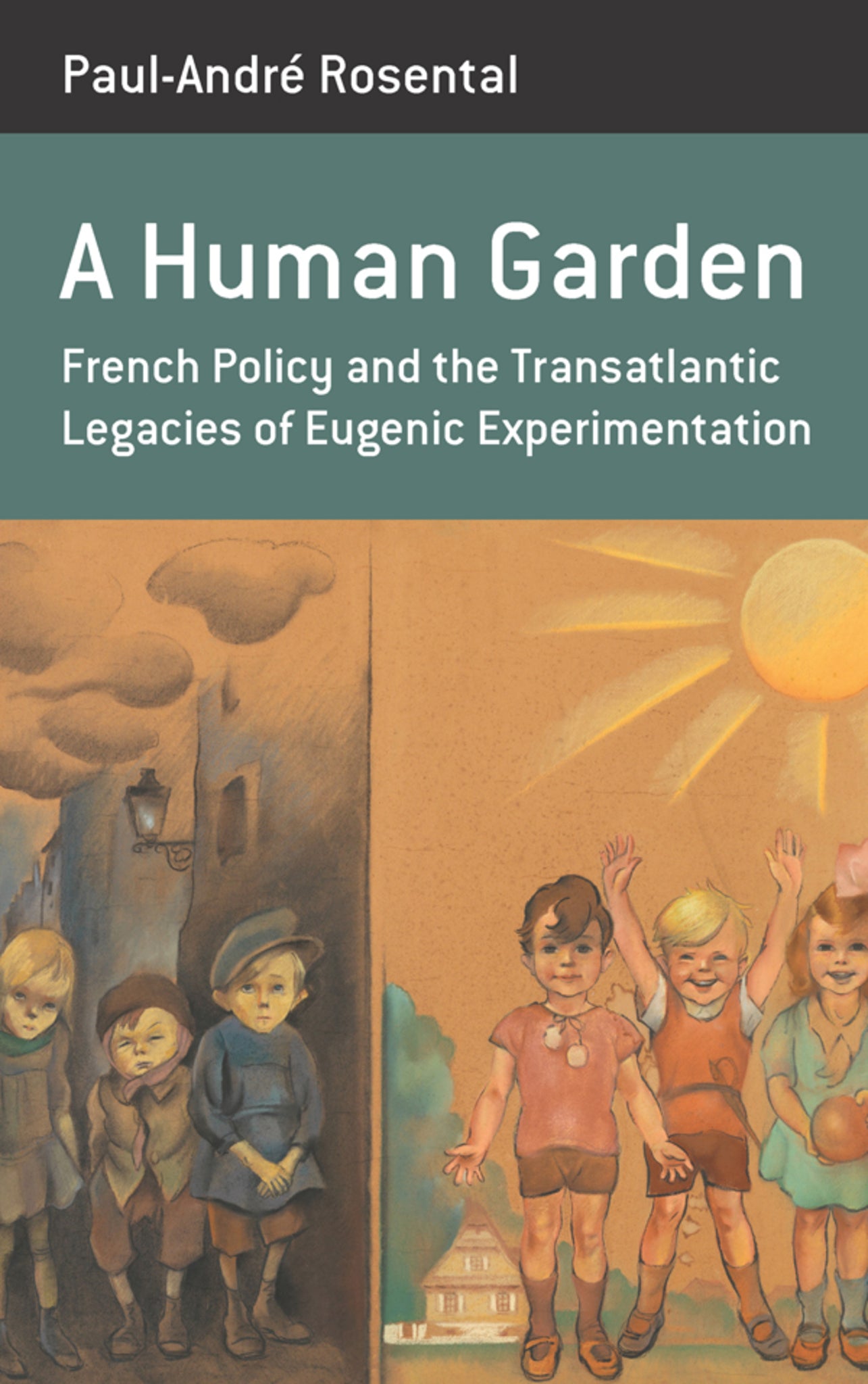
Well into the 1980s, Strasbourg, France, was the site of a curious and little-noted experiment: Ungemach, a garden city dating back to the high days of eugenic experimentation that offered luxury living to couples who were deemed biologically fit and committed to contractual childbearing targets. Supported by public authorities, Ungemach aimed to accelerate human evolution by increasing procreation among eugenically selected parents. In this fascinating history, Paul-André Rosental gives an account of Ungemach’s origins and its perplexing longevity. He casts a troubling light on the influence that eugenics continues to exert—even decades after being discredited as a pseudoscience—in realms as diverse as developmental psychology, postwar policymaking, and liberal-democratic ideals of personal fulfilment.


“With skills and empathy, Rosental integrates his story into the broader debate about French eugenics during the twentieth century. Within that context, Rosental pushes both conceptual and chronological boundaries…As we continue to debate the legacies of eugenics, this is an important study. It should pave the way for further research into how the obsession with desirable eugenic traits in the population shaped public health, social assistance and welfare policies during the second part of the twentieth century and beyond.” • Cultural and Social History
“Paul-André Rosental has recovered each of the threads that led to this remarkable experiment … we discover piece by piece, within the history of Ungemach Gardens, the scientific and moral wellsprings of eugenics.” • Le Monde
“[The book’s] wide-ranging and provocative insights ought to fuel real reflection about twentieth-century eugenics’ living legacies. Scholars of housing, municipal planning, social welfare policy, psychology, and demography, both in France and elsewhere, will find much here to ponder.” • Journal of Modern History
“A richly detailed micro-history … Rosental manages to give us in considerable detail the local and the national contexts that makes sense of this extraordinary experiment on the one hand, but never to fall into the trap of national exceptionalism in so doing.” • Philippa Levine
“Historian Paul-André Rosental has delivered a genuine historical scoop. In beautiful prose, A Human Garden correlates the factual record with intellectual history and shows how eugenics suffused the development of policies for managing and protecting populations.” • L’Obs
Abbreviations
Foreword
Theodore M. Porter
PART I : THE INTELLECTUAL AND POLITICAL HISTORY OF A HUMAN GARDEN (1880S–1980S)
Chapter 1. The Acceptance of a Eugenic Experimentation
Chapter 2. The Stone Poem of the Alsatian Ibsen
Chapter 3. Guinea Pigs or Citizens? From the Reign of the “Diktator” to the Public Policy (1923–1984)
PART II: EUGENICS, BIOPOLITICS, AND WELFARE IN A TRANSATLANTIC PERSPECTIVE (1914–1968)
Chapter 4. From Micro- to Macro-History: Ungemach Gardens and the Survival of Eugenics in France after 1945
Chapter 5. Stamping out Racism and Reforming Eugenics: a Transatlantic History of Qualitative Demography
Chapter 6. Qualitative Demography, Reform Eugenics, and Social Policies in 1950s France
PART III: EUGENICS AND DEVELOPMENTAL PSYCHOLOGY: A NEGLECTED LEGACY
Chapter 7. Eugenics as a Moral Theory (1): The Theory of Human Capital
Chapter 8. Eugenics as a Moral Theory (2): At the Sources of “Personal Development”
Conclusion
Epilogue
Archival Sources
Bibliography
Appendix: Works by Abel Ruffenach, pseudonym of Alfred Dachert