





Some error occured while loading the Quick View. Please close the Quick View and try reloading the page.
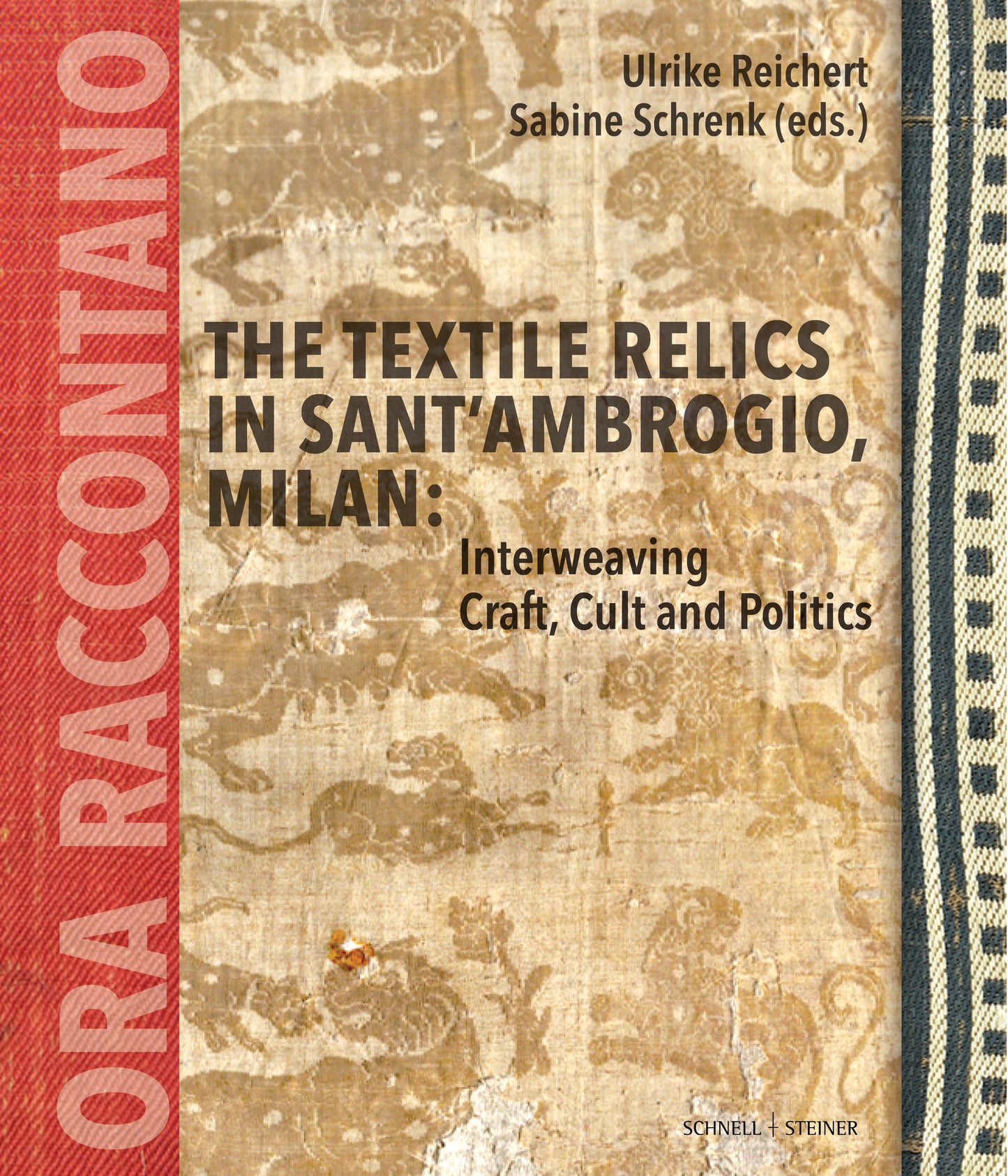
Fragments of late antique silk textiles are often preserved as wrappings for relics, yet only rarely do original fabrics survive as relics in their own right. The Church of Sant'Ambrogio in Milan preserves an exceptional example: the remains of a silk garment venerated since the fifth or sixth century as the dalmatic of Saint Ambrose, the renowned bishop and church father. Together with a second, slightly later dalmatic, the textile has been repeatedly reinforced and protected over the centuries, creating a remarkable assemblage of fifteen historic fabrics that document more than eight centuries of devotion.
This volume presents the results of a major interdisciplinary conservation and research project devoted to this extraordinary “textile archive.” Bringing together specialists in archaeology, art history, church history, Islamic studies, chemistry and digital heritage technologies, including advanced 3D laser scanning, the study examines the preservation, reconstruction and historical significance of the textiles.
Through the analysis of these unique relics, the volume offers new perspectives on textile production, relic veneration, conservation practices and the material culture of Christianity from Late Antiquity through the medieval period.

Price: £45.00
Pages: 304
Publisher: Schnell & Steiner
Imprint: Schnell & Steiner
Publication Date:
17 June 2026
ISBN: 9783795439262
Format: Hardcover
BISACs:

A. INTRODUCTION
1. The conservation and research project in Sant’Ambrogio: 2011–2023, ULRIKE REICHERT ∙ SABINE SCHRENK
2. Ambrose of Milan: A profile of his personality and pastoral work, MONS. MARCO NAVONI
3. Textile relics – Textile reliquaries, ULRIKE REICHERT ∙ SABINE SCHRENK
4. Ambrosian textiles as “discovered” by Monsignor Rossi, CARLO CAPPONI
5. Ambrosius’ textile relics: From discovery to restoration, PIERA ANTONELLI ∙ LAURA PAOLA GNACCOLINI
6. From the Basilica of Sant’Ambrogio to Castello Sforzesco (via Como), FRANCESCA TASSO
7. The conservation and textile analysis' ULRIKE REICHERT ∙ SABINE SCHRENK
B. THE TEXTILES. THEIR SHAPE, WHEN THEY ARRIVED IN SANT’AMBROGIO, AND HOW THEY WERE USED HERE
I. SILK – LINEN – GOLD THREAD
8. On the origin and use of the most important yarns, PETRA LINSCHEID
II. THE OLDEST SILK DALMATIC (“HUNTING SILK”) AND THE TEXTILES ENCLOSING IT
9. The late antique silk garment with animal and hunting scenes (S7) and its transformation into a relic, ULRIKE REICHERT ∙ SABINE SCHRENK
10. Crosses bring a new meaning to the garment. Analyzing and interpreting the silks S8 and S9, ULRIKE REICHERT ∙ SABINE SCHRENK
11. The first securing procedure: Using a precious linen (L2), PETRA LINSCHEID
14. Busts and eagles in a linen fabric (L3), BIRGITT BORKOPP-RESTLE
15. A silk (S4) with gold-embroidery (S6): Tiny remains with enormous effect, ULRIKE REICHERT ∙ SABINE SCHRENK
16. The various steps to create the blue textile reliquary, ULRIKE REICHERT ∙ SABINE SCHRENK
III. THE YOUNGER SILK DALMATIC (“CLAVUS DALMATIC”) AND THE TEXTILES ENCLOSING IT
17. A second dalmatic for Sant’Ambrogio (S1) – A pseudo garment, ULRIKE REICHERT ∙ SABINE SCHRENK
18. Another garment, another linen cloth (L1) as support, ULRIKE REICHERT ∙ SABINE SCHRENK
19. Hidden under red and yellow silk (S2), ULRIKE REICHERT ∙ SABINE SCHRENK
20. The decoration of a garment with embroidery (L4A, L4B), added to the cover of the second dalmatic, UTA-CHRISTIANE BERGEMANN
21. A cross or a rectangle? The latest addition to the red textile reliquary (S10), ULRIKE REICHERT ∙ SABINE SCHRENK
22. The various steps to create the red textile reliquary, ULRIKE REICHERT ∙ SABINE SCHRENK
C. SCIENTIFIC METHODS IN TEXTILE RESEARCH
23. Radiocarbon dating of ten textiles in Sant’Ambrogio, MATHIEU BOUDIN
24A. Chemical analysis of the dyestuffs for the red and yellow silk (S2): An unusual yellow dye, SILVIA BRUNI ∙ MARGHERITA LONGONI
24B. Black or blue dyes on linen fabric L3?, INA VANDEN BERGHE
25. Hi-res photogrammetry teams up with photometry to unveil hidden features: The case study of the St. Ambrose’s so-called dalmatic,
FEDERICO CAPRIUOLI ∙ LUCA COSCARELLI ∙ GABRIELLA CAROTI ∙ ANDREA PIEMONTE
D. CULT AND POLITICS
26. De dalmatica sancti Ambrosii. Written sources on the cult of Ambrose’s textile relics during the Middle Ages, MIRIAM TESSERA
27. On the re-use of Islamic textiles in Medieval Christian setting, AVINOAM SHALEM
28. King and queen and their entourage pay their respects (L4A and L4B, with the fragment in the Castello Sforzesco inv. 2229T), UTA-CHRISTIANE BERGEMANN
29. Where was Bishop Ambrose buried at first? Different opinions, SILVIA LUSUARDI SIENA ∙ JACOB A. KNECHTEL
30. From Mansuetus to Ariberto: The silk ʼpalliumʻ and its inscription, MARCO PETOLETTI
E. CONCLUSION AND OUTLOOK
31. Ora raccontano: The textile relics in Sant’Ambrogio and their report. Summary and new questions, ULRIKE REICHERT ∙ SABINE SCHRENK
F. APPENDIX
32. Glossary
33. Technical data of the fabrics
34. Concordance
35. Abbreviations and image credits
36. The authors