





Some error occured while loading the Quick View. Please close the Quick View and try reloading the page.
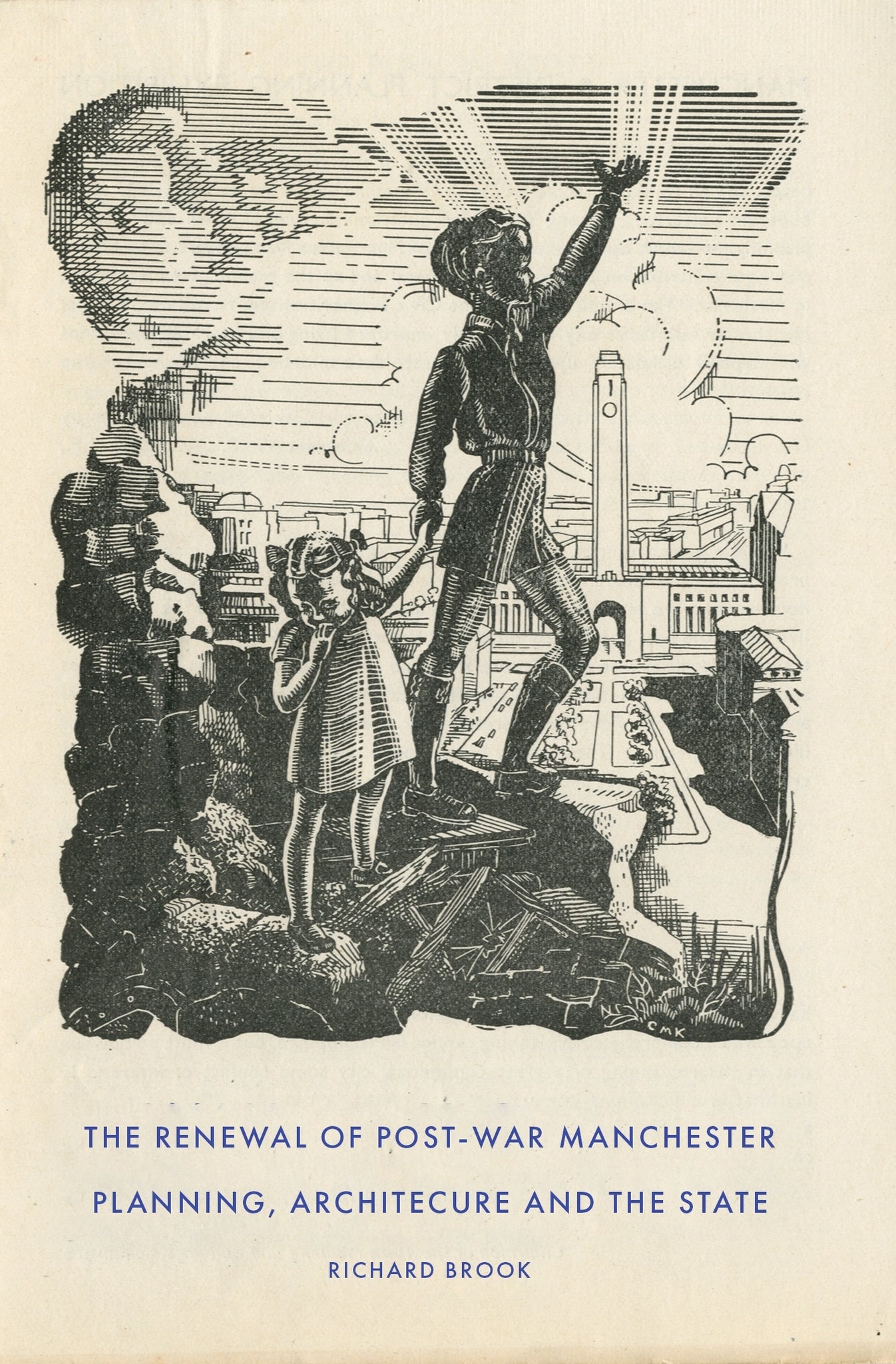
A compelling account of the project to transform post-war Manchester, revealing the clash between utopian vision and compromised reality.
Urban renewal in Britain was thrilling in its vision, yet partial and incomplete in its implementation. For the first time, this deep study of a renewal city reveals the complex networks of actors behind physical change and stagnation in post-war Britain.
Using the nested scales of region, city and case-study sites, the book explores the relationships between Whitehall legislation, its interpretation by local government planning officers and the on-the-ground impact through urban architectural projects. Each chapter highlights the connections between policy goals, global narratives and the design and construction of cities.
The Cold War, decolonialisation, rising consumerism and the oil crisis all feature in a richly illustrated account of architecture and planning in post-war Manchester.


Shortlisted for the SAHGB Alice Davis Hitchcock Medallion 2025
‘Richard Brook’s holistic approach to the narration of Manchester’s mid-twentieth-century history is refreshingly novel and derived from the dual experience of the practising architect and the architectural historian. His decades-long engagement with, interest in and love for the city is manifest in this comprehensive volume. His sensitivity towards the values and heritage of mainstream modernism sheds a more nuanced light on the city’s development and the networks and individuals who transformed it. At a time when understanding and valuing our everyday heritage in its complexity becomes more and more crucial, and valuing what is already there a key tenet for all the built-environment professions, this empathy and understanding unfolds a new way of researching and writing about our shared urban space.’
Luca Csepely-Knorr, University of Liverpool
‘The urban histories of Manchester – both early and recent – have been often narrated in terms of the extraordinary, shocking, heroic, ruthless, generous, innovative and visionary. Richard Brook’s history of Manchester between the mid-1950s and the mid-1970s offers a different scholarly sensitivity and a fresh generational voice that favours what was moderated, phased, delayed, constrained and reconstructed in the city’s development. In so doing, he offers a new way to consider post-war urban renewal as a networked and negotiated practice.’
Lukasz Stanek, University of Michigan
'Although based on the author’s PhD, it is also the result of half a lifetime’s careful deliberation and immersion in Manchester’s messiness. This includes not only national and local archives, but interviews with some of the chief protagonists... So, with Brook in hand we can look, and sense as we walk, at a city of postwar possibilities that were only partly realised. Hopefully its lead will encourage similar serious studies and a greater historical understanding of the lengthy process of renewal, not only the political expediency of ‘quick-fix’ reconstruction.'
Julian Holder, Architectural History
Introduction
1 The shape of the city: power and planning
2 Computing and the Cold War
3 In advance of progress: higher education and technology
4 Intractable investment: the Crown Agents and Central Station
5 Bookended by bombs and drawn out development: Market Place
6 The redoubtable resilience of the Ring Road
Conclusion
Index