





Some error occured while loading the Quick View. Please close the Quick View and try reloading the page.
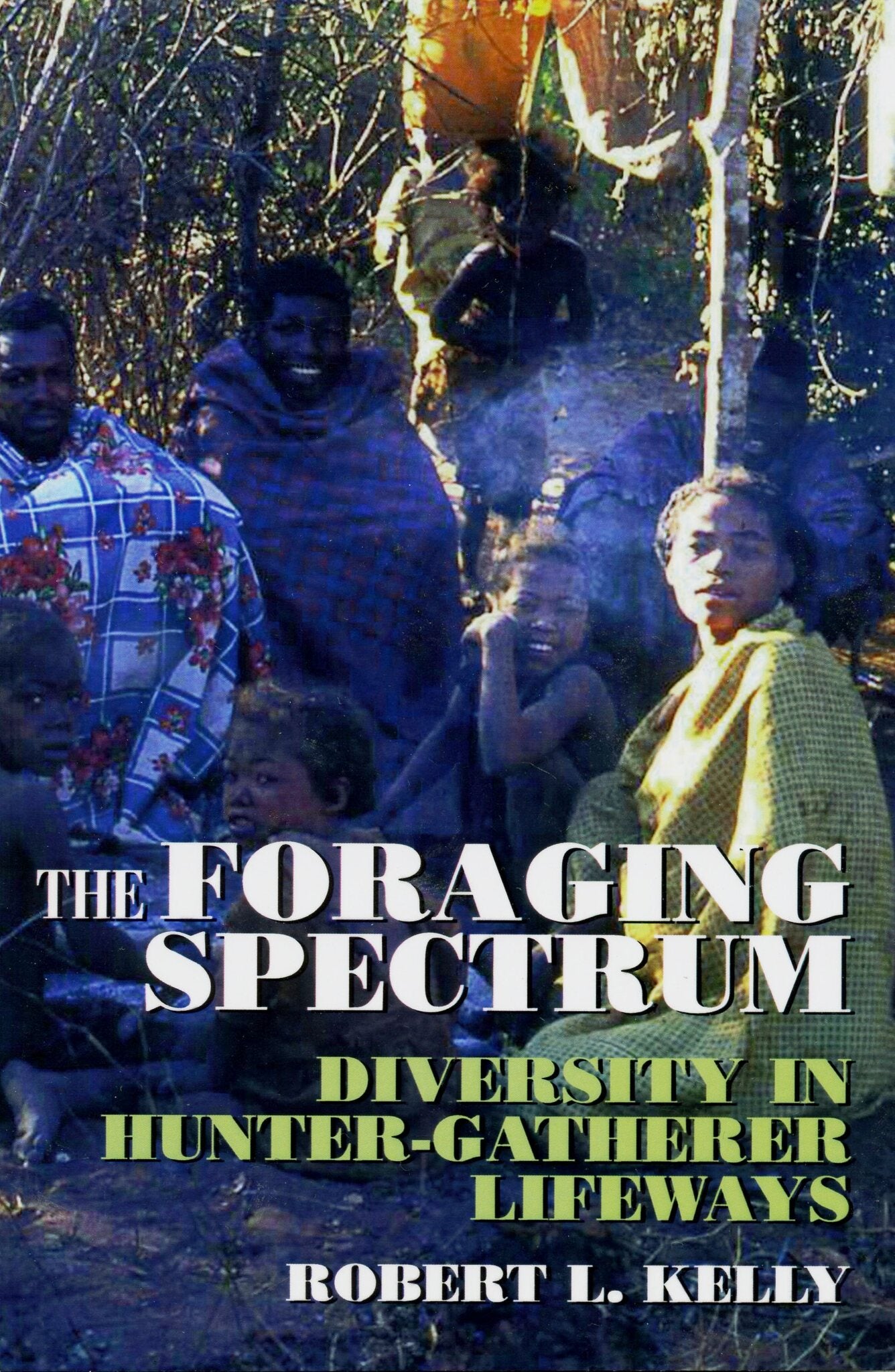
The author wrote this book (which was originally published by Smithsonian Institution Press in 1995) to show his archaeology students how dangerous anthropological analogy is and how variable the actual practices of foragers of the recent past and today are. His survey of the anthropological literature points to differences in foraging societies’ patterns of diet, mobility, sharing, land tenure, exchange, gender relations, division of labor, marriage, descent, and political organization. By considering the actual—not imagined—reasons behind diverse behaviour, this book argues for a revision of many archaeological models of prehistory.


[A]n excellent overview of key issues in hunter-gatherer studies.' (Alan Barnard, American Ethnologist)
'Not since Man the Hunter has there been such a synthesis and such a mix of stimulating ideas. This will be the authoritative work on hunter/gatherers for a good number of years.' (Brian Hayden, Canadian Journal of Archaeology)
'[A]uthoritative, comprehensive, and highly readable. . . . A well-worn and heavily annotated copy should be the companion of anyone claiming an interest or expertise in present or past hunter-gatherers.' (Bruce Winterhalder, American Antiquity)
Prepublication praise . . .
'The Foraging Spectrum [is] a well-written, scrupulously researched synthesis of modern approaches to foraging behavior, both past and present.' (David Hurst Thomas, American Museum of Natural History)
'A tour de force of scholarship in behavioral ecology.' (Mathias Guenther, Wilfred Laurier University)
Robert L. Kelly, University of Wyoming, Laramie, Wyoming
Chapter 1. Hunter–Gatherers and Anthropology
Chapter 2. Environment, Evolution, and Anthropological Theory
Chapter 3. Foraging and Subsistence
Chapter 4. Foraging and Mobility
Chapter 5. Sharing, Exchange, and Land Tenure
Chapter 6. Group Size and Reproduction
Chapter 7. Men, Women, and Foraging
Chapter 8. Egalitarian and Nonegalitarian Hunter–Gatherers
Hunter–Gatherers and Prehistory
Notes
References
Index