





Some error occured while loading the Quick View. Please close the Quick View and try reloading the page.
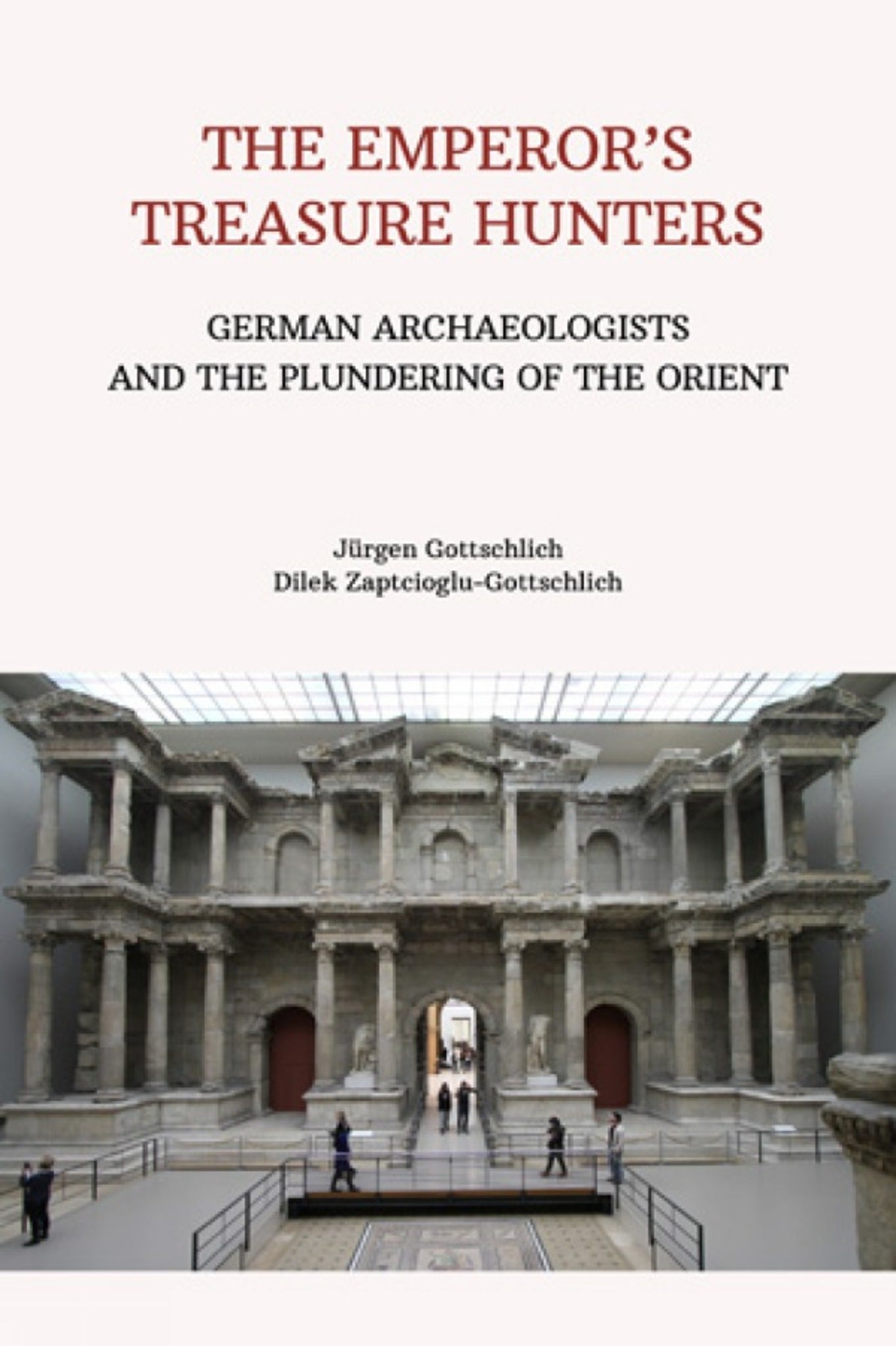
The Pergamon Altar, the Market Gate of Miletus, the Lions of Babylon, the bust of Nefertiti - these are all treasures that we admire in German museums today. Where do these works come from? When and under what circumstances did they come to Germany? Are we actually the rightful owners of these world-famous cultural assets?
In this translation of a book originally published in German by Aufbau Verlag in 2021, Jürgen Gottschlich and Dilek Zaptcioglu-Gottschlich take an in-depth look at the history of archaeological excavations and their transportation to the German Empire. The focus is on the expeditions of famous excavators such as Carl Humann, Theodor Wiegand and Robert Koldewey on the one hand and the predominantly nationalistic motives of their forays in the service of the Kaiser on the other.
While the debate on looted art has so far tended to focus on works of art from African and Asian colonies, this is the first book on archaeological finds in the former Ottoman Empire. Just as important as the demand for restitution is the question: How do we make this world cultural heritage accessible to as many people as possible?


Jürgen Gottschlich is one of the original founders of the cooperatively-owned German daily newspaper tageszeitung (taz) and has for 20 years been its Istanbul correspondent. Dilek Zaptcioglu-Gottschlich is a journalist and author of several books on the second half of the 19th-century and the history of the closing years of the Ottoman Empire.
Foreword
Acknowledgements
1 Ancient Art as a Symbol of German Power
2 “We Must Get Everything That Belongs to the Altar”
3 The Longest Century of the Ottomans
4 Osman Hamdi Bey, the Founder of Turkish Archaeology
5 Theodor Wiegand, the Emperor’s Archaeologist
6 About Swallowing Large Chunks
7 The Lions of Babylon
8 The Assur Affair
9 The Dispute over Queen Nefertiti
10 Archaeologists during the First World War
11 The Pergamon Museum
12 The Responsibility for World Cultural Heritage
Appendix
The Most Important Personages
Timeline
Notes
Sources and References
Illustration Credits
Index of Persons