





Some error occured while loading the Quick View. Please close the Quick View and try reloading the page.
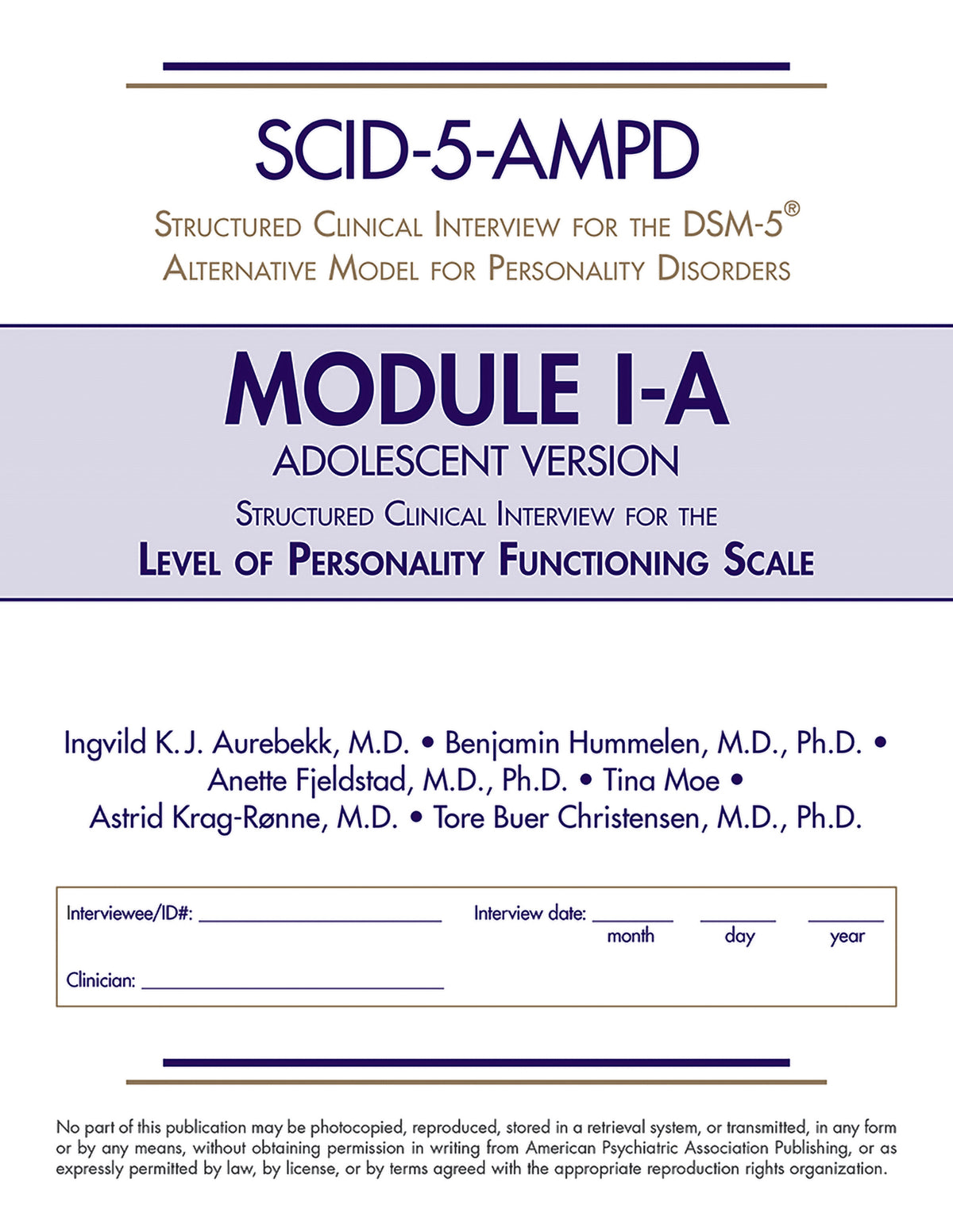
For clinicians working with younger patients, starting the right discussion can be half the challenge. The Structured Clinical Interview for the DSM-5 Alternative Model for Personality Disorders, Module I, Adolescent Version (SCID-5-AMPD Module I-A): Level of Personality Functioning Scale offers a map to engaging adolescents in age-appropriate discussions about identity and relationships through clear questions that will also result in valuable clinical insight. By helping adolescents express experiences that can be difficult to put into words, this interview template provides a stronger foundation for understanding personality functioning in a clinical context.
Organized around the Level of Personality Functioning Scale (LPFS) introduced in DSM-5, the guided framework walks clinicians through core domains of Identity, Self-Direction, Empathy, and Intimacy. Together, these areas of focus offer a structured way to assess both how adolescents understand themselves and how they function in relationships—two key aspects of personality development.
A series of screening questions paired with follow-up prompts help identify patterns in self-concept, emotional experience, relationships, and goal-setting, all areas an adolescent may struggle to put into words. The module provides direction at each step: what to ask next, how to understand the response, and how to translate that information into a clinical rating. Clinicians can adjust the depth of questioning based on the patient's responses, making the interview effective across different settings.
Whether used in outpatient services, inpatient programs, or research, the Structured Clinical Interview for the DSM-5 Alternative Model for Personality Disorders, Module I, Adolescent Version (SCID-5-AMPD Module I-A): Level of Personality Functioning Scale supports clinicians in conducting more in-depth adolescent personality assessments, leading to more accurate evaluations and effective therapeutic conversations from the very first session.


Ingvild K.J. Aurebekk, M.D., is Child and Adolescent Psychiatrist in the Department of Child and Adolescent Psychiatry and Habilitation at Østfold Hospital Trust, Åsebråten Child and Adolescent Psychiatry Clinic, in Fredrikstad, Norway.
Benjami n Humm elen, M.D., Ph.D., is Consultant Psychiatrist and Senior Research Fellow in the Department of Research and Innovation, Clinic Mental Health and Addiction, at Oslo University Hospital in Oslo, Norway.
Anette Fjelstad, M.D., Ph.D., is Child and Adolescent Psychiatrist and Researcher in the Department of Child and Adolescent Psychiatry and Habilitation at Østfold Hospital Trust in Fredrikstad, Norway.
Tina Moe is Psychologist in the Department of Psychiatry at Østfold Hospital Trust, District Psychiatric Centre, in Askim, Norway.
Astrid Krag-Rønne, M.D., is Child and Adolescent Psychiatrist in the Department of Child
and Adolescent Psychiatry and Habilitation at Østfold Hospital Trust in Sarpsborg, Norway.
Tore Buer Christensen, M.D., Ph.D., is Psychiatrist in the Department of Adult Psychiatry at Sørlandet Hospital in Kristiansand, Norway.
Donna S. Bender, Ph.D., is Director and Clinical Professor at New York University in the
Postdoctoral Program in Psychotherapy and Psychoanalysis in New York, New York.
General Overview of the SCID-5-AMPD
Prelimenary Questions About the View of Self and Quality of Interpersonal Relationships
Level of Personality Functioning
Instructions
Level of Personality Functioning Scale
Interviewer Instructions
Identity Domain
Sense of Self Subdomain
Self-Esteem Subdomain
Emotional Range and Regulation Subdomain
Identity Subdomain Scores
Self-Direction Domain
Ability To Pursue Meaningful Goals Subdomain
Constructive, Prosocial Internal Standards of Behavior Subdomain
Self-Reflective Functioning Subdomain
Self-Direction Subdomain Scores
Empathy Domain
Comprehension and Appreciation of Others' Experiences and Motivations Subdomain
Tolerance of Differing Perspectives Subdomain
Understanding of Effects of Own Behavior on Others Subdomain
Empathy Subdomain Scores
Intimacy Domain
Depth and Duration of Connections Subdomain
Desire and Capacity for Closeness Subdomain
Mutuality of Regard Reflected in Interpersonal Behavior Subdomain
Intimacy Subdomain Scores
Module I Junior Scoring