





Some error occured while loading the Quick View. Please close the Quick View and try reloading the page.
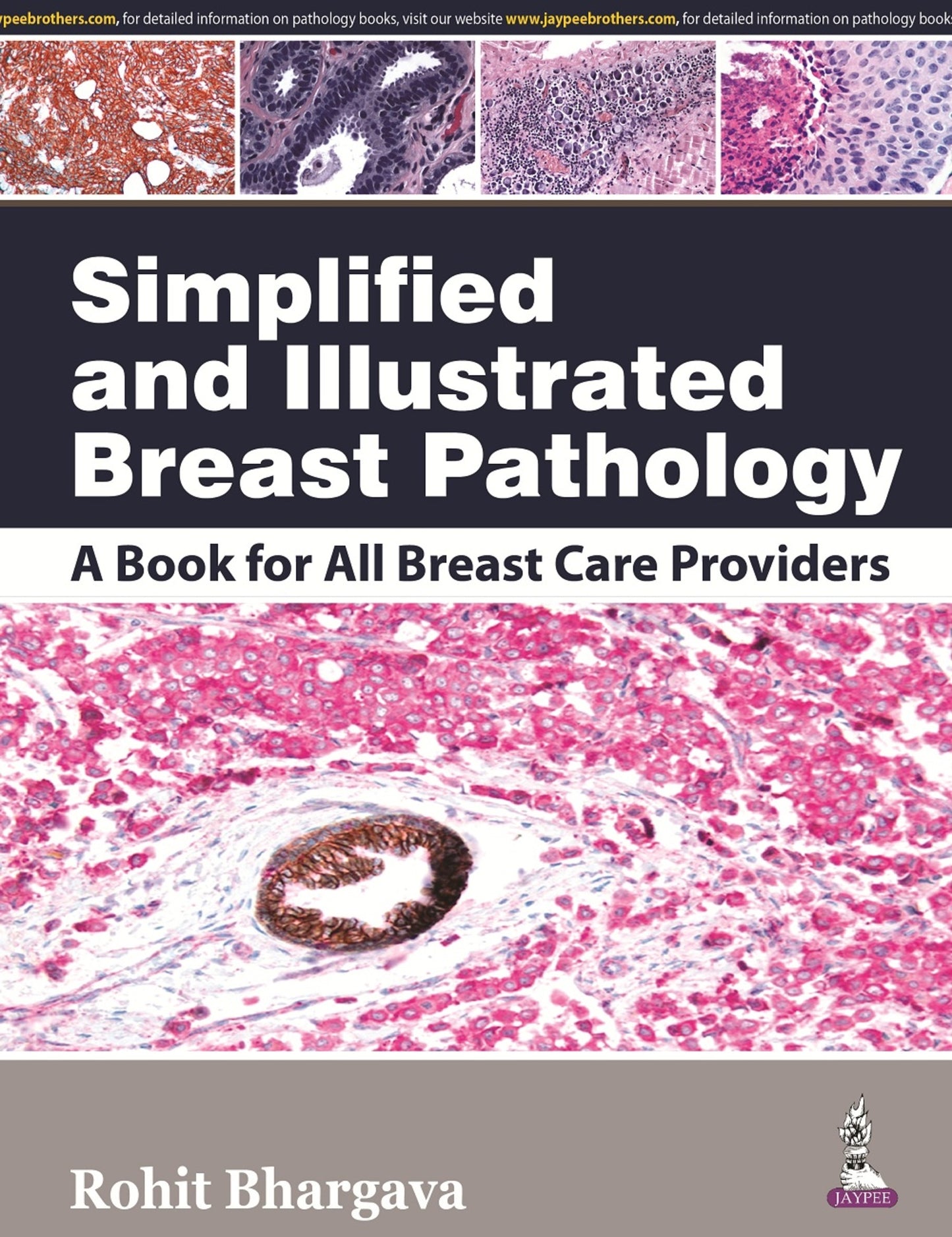
Simplified and Illustrated Breast Pathology is a concise and highly illustrated guide to breast pathology and pathological terminology, authored by Professor Rohit Bhargava from the University of Pittsburgh School of Medicine.
The book is divided into nine chapters, explaining uncommon pathology reports with the help of over 300 full colour, annotated clinical images. Topics include understanding specimen processing and examination after biopsy or tissue excision, definitions of diagnostic terms, reporting on large specimens (lumpectomies and mastectomies), breast tumour morphologic types, use of stains, prognostic marker testing and molecular testing in breast cancer, and neoadjuvant therapy.
The final chapter addresses frequently asked questions in breast pathology, making Simplified and Illustrated Breast Pathology an ideal guide for breast care providers seeking practical, day-to-day advice.
Key Points
- Concise and highly illustrated guide to breast pathology
- Authored by US based expert in pathology
- 303 full colour clinical images


Rohit Bhargava MBBS
Professor of Pathology, University of Pittsburgh School of Medicine
Pittsburgh, PA (USA), Director, Anatomic Pathology, Magee-Womens Hospital of UPMC, USA
1. What happens after a biopsy or excision of breast tissue? Understanding specimen processing and examination
2. Breast core biopsies: diagnosis, diagnostic terms and what do they mean?
3. Breast excisions, lumpectomies and mastectomies: reporting on large specimens
4. Breast tumour morphologic types
5. Diagnostic immunohistochemistry: how and when stains should be used
6. Current prognostic/predictive marker testing in breast cancer
7. Molecular testing in breast carcinoma
8. Neoadjuvant therapy in breast cancer: what breast cancer care providers need to know?
9. Frequently asked questions
Index