





Some error occured while loading the Quick View. Please close the Quick View and try reloading the page.
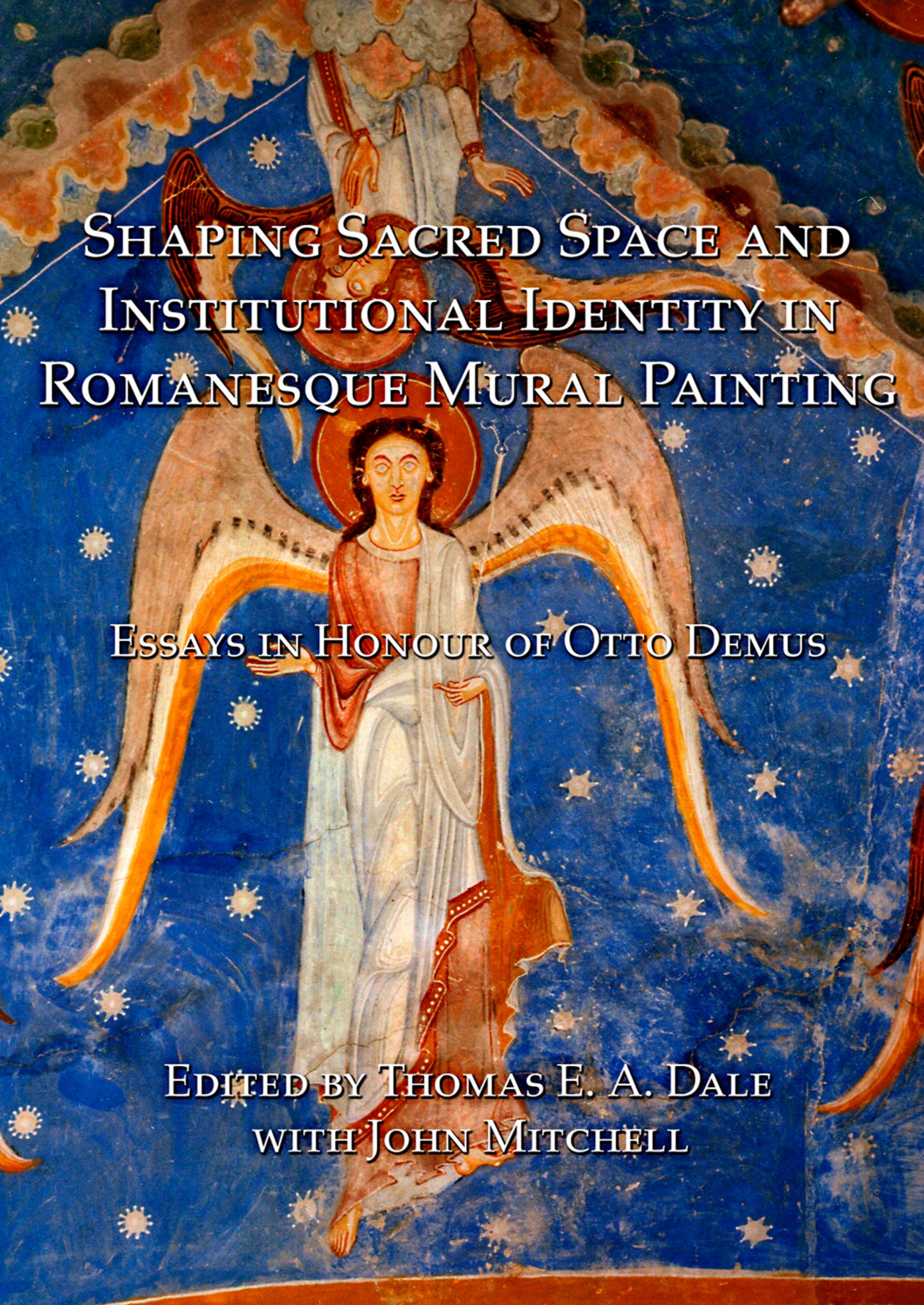
Romanesque mural painting was arguably the most visible field for religious images in Western churches between the eleventh and thirteenth centuries. Beyond its traditional justification as Bible of the illiterate mural painting demarcated the principal functional spaces within the church and propagated the sacred narratives, the systems of belief and institutional politics.
The present volume provides the first accessible collection of essays devoted exclusively to the contextual interpretation of Romanesque mural painting. They are offered in homage to Otto Demus, who established the essential parameters for the field with his unsurpassed survey of the field over thirty years ago. Presenting previously unpublished research on individual case studies from Italy, France and Spain, the collection of essays published here pursues Demus's premise that mural painting was designed both to shape the experience and ritual use of distinctive spaces within the medieval church, and to advertise certain institutional affiliations and political agendas. The introduction, by Thomas Dale, provides a methodological overview to the field, assessing Demus's contribution to the study of Romanesque mural painting and surveying the scholarship of the past thirty years. It also furnishes the first overview of primary texts that refer to the functions and exegesis of mural painting between the tenth and thirteenth centuries.
The ten essays are grouped under four topics
1. Patterns of Narrative Disposition in Sacred Space
2. Reinforcing the Praesentia of the Saints: The Church as Locus Sanctus
3. The Burial Crypt as Mediator between the Living and the Dead, Terrestrial and Celestial Space
4. Ecclesiastical Politics and Institutional Identity.
The present volume provides the first accessible collection of essays devoted exclusively to the contextual interpretation of Romanesque mural painting. They are offered in homage to Otto Demus, who established the essential parameters for the field with his unsurpassed survey of the field over thirty years ago. Presenting previously unpublished research on individual case studies from Italy, France and Spain, the collection of essays published here pursues Demus's premise that mural painting was designed both to shape the experience and ritual use of distinctive spaces within the medieval church, and to advertise certain institutional affiliations and political agendas. The introduction, by Thomas Dale, provides a methodological overview to the field, assessing Demus's contribution to the study of Romanesque mural painting and surveying the scholarship of the past thirty years. It also furnishes the first overview of primary texts that refer to the functions and exegesis of mural painting between the tenth and thirteenth centuries.
The ten essays are grouped under four topics
1. Patterns of Narrative Disposition in Sacred Space
2. Reinforcing the Praesentia of the Saints: The Church as Locus Sanctus
3. The Burial Crypt as Mediator between the Living and the Dead, Terrestrial and Celestial Space
4. Ecclesiastical Politics and Institutional Identity.

Price: £75.00
Pages: 288
Publisher: Pindar Press
Imprint: Pindar Press
Publication Date:
31 December 2004
ISBN: 9781899828425
Format: Hardcover
BISACs:

Introduction by Thomas Dale
Dado Imagery in the Lower church of S. Clemente, Rome, and S. Maria Immacolata at Ceri by John Osborne
Espace architectural et espace liturgique dans l'Ouest de la France: Les cas d'Asnière-sur-Vègre, de Poncé-sur-Loir et de Château-Gontier by Christian Davy
A Pilgrim's Prayer for Salvation: The Miracles of Saint Magnus in the Crypt of Anagni Cathedral by Martina Bagnoli
Narrative Layout and the Creation of a Locus Sanctus in the Frescoes of Sant'Urbano alla Caffarella by Kirstin Noreen
Functions of Pictorial Narratives and Liturgical Spaces: The Eleventh-Century Frescoes of the Titular Saint in the Basilica of San Clemente in Rome by Christiana Filippini
In paradisum deducant te angeli: Shaping Celestial Space in the Burial Crypt of Burgusio (Alto-Adige) by Thomas Dale
Confess your sins: Pictorial Images and Spatial Practices of Penance at Saint-Aignan-sur-Cher by Marcia Kupfer
The Ascension at S. Pietro in Tuscania: An Apse Painting as Reflex of the Reform Movement and Expression of Episcopal Self-Confidence by Stefanie Waldvogel
Sequential Abbots Portraits in Two South Italian Churches by Glenn Gunhouse
Searching for Institutional Identity in the Chapter House at Sigena by Karl Schuler
Bibliography
Index
Dado Imagery in the Lower church of S. Clemente, Rome, and S. Maria Immacolata at Ceri by John Osborne
Espace architectural et espace liturgique dans l'Ouest de la France: Les cas d'Asnière-sur-Vègre, de Poncé-sur-Loir et de Château-Gontier by Christian Davy
A Pilgrim's Prayer for Salvation: The Miracles of Saint Magnus in the Crypt of Anagni Cathedral by Martina Bagnoli
Narrative Layout and the Creation of a Locus Sanctus in the Frescoes of Sant'Urbano alla Caffarella by Kirstin Noreen
Functions of Pictorial Narratives and Liturgical Spaces: The Eleventh-Century Frescoes of the Titular Saint in the Basilica of San Clemente in Rome by Christiana Filippini
In paradisum deducant te angeli: Shaping Celestial Space in the Burial Crypt of Burgusio (Alto-Adige) by Thomas Dale
Confess your sins: Pictorial Images and Spatial Practices of Penance at Saint-Aignan-sur-Cher by Marcia Kupfer
The Ascension at S. Pietro in Tuscania: An Apse Painting as Reflex of the Reform Movement and Expression of Episcopal Self-Confidence by Stefanie Waldvogel
Sequential Abbots Portraits in Two South Italian Churches by Glenn Gunhouse
Searching for Institutional Identity in the Chapter House at Sigena by Karl Schuler
Bibliography
Index