





Some error occured while loading the Quick View. Please close the Quick View and try reloading the page.
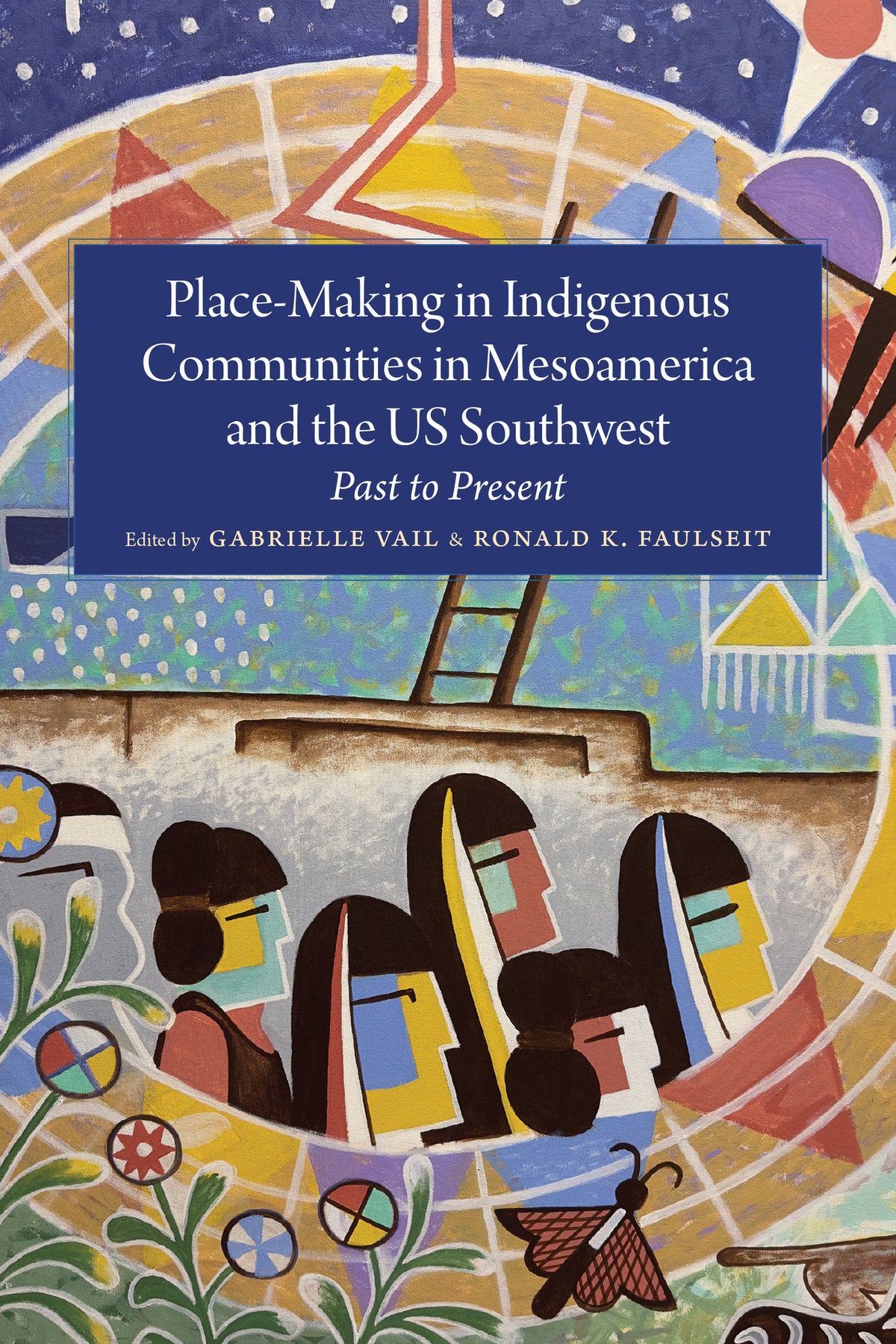
Place-Making in Indigenous Communities in Mesoamerica and the US Southwest explores shared Indigenous place-making concepts and practices across culturally diverse regions of Mesoamerica and the US Southwest from both historical and contemporary perspectives. Drawing on multidisciplinary research approaches, the volume demonstrates how Indigenous communities create and maintain deep connections to landscapes through stories, rituals, and reciprocal relationships, stressing the dynamic nature of the place-making process.
Contributors emphasize themes that crosscut Mesoamerican and Southwestern Indigenous cultures, including place-making through the (re)activation of primordial time, how people and spiritual energies embodied in geographical features of the land co-define time and space, the role of nonlocal materials and beings in establishing new—and often prestigious—place-based connections, and the impact of colonialism and neocolonialism on place-making and identity. Integrating archaeological evidence with contemporary ethnographic work, contributors explore the significance of places like Chichen Itzá's Balankanche cave as manifestations of primordial emergence sites. They also examine Hopi pilgrimages to ancestral shrines and how places such as Mirador Mountain in Chiapas, Cerro Danush in Oaxaca, and Black Mesa near San Ildefonso Pueblo continue to serve as focal points for ritual processions and community belonging.
Organized into sections emphasizing deep-time perspectives and contemporary heritage issues, Place-Making in Indigenous Communities in Mesoamerica and the US Southwest advocates for collaborative research approaches that center Indigenous voices and knowledge systems. By highlighting the deep connections between Indigenous communities and their sacred landscapes, this work brings a new perspective to ongoing conversations centered on land—one that urges engagement with Indigenous communities in a spirit of openness, collaboration, and respect.


“This volume brings together a particularly strong body of original, high-quality scholarship. The smooth inclusion of both philological/ethnohistoric material along with ethnographic and archaeological work is particularly impressive.”
—Fernando Armstrong-Fumero, Smith College
Gabrielle Vail is a research scholar affiliated with the Department of Anthropology at the University of North Carolina, Chapel Hill. She collaborates with Indigenous communities in the Maya area on language preservation/revitalization initiatives, using workshops as a means of repatriating ancestral knowledge and fostering intergenerational dialogue. She also collaborates with UC Berkeley’s Script Encoding Initiative to develop a Maya hieroglyphic font. She is the author or coauthor of six books, including Re-Creating Primordial Time: Foundation Rituals and Mythology in the Postclassic Maya Codices, and coeditor of three others, including The Madrid Codex: New Approaches to Understanding an Ancient Maya Manuscript.
Ronald K. Faulseit is professor of anthropology at Los Angeles Pierce College and chair of the Department of Anthropological and Geographical Sciences. He is lead coeditor of City, Craft, and Residence in Mesoamerica and editor of Beyond Collapse.