





Some error occured while loading the Quick View. Please close the Quick View and try reloading the page.
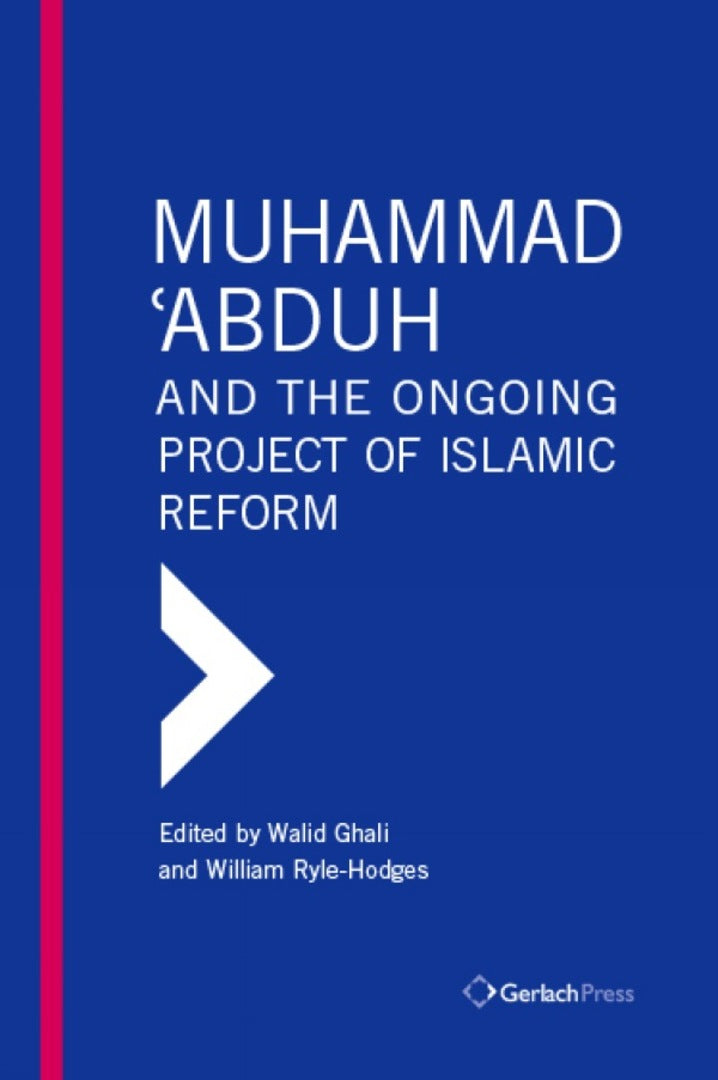
Muḥammad ’Abduh was one of the most influential figures in the modern history of Muslim societies and the reform movement. Although his demise was at an early age (53 years) over a century ago, his thoughts and ideas are still discussed in different spheres. In the chaotic political, social and religious circumstances we find ourselves in post-Arab Spring, thinkers and scholars increasingly turn to the work of some great reformers who appeared in the late 19th century.
Muḥammad Abduh (1849-1905) was an Egyptian philosopher, sociologist and reformer, ranked one of the most remarkable figures in the contemporary Muslim world. At his death he left numerous disciples, and works of genuine interest and inestimable value. He was, and still is, commonly given the superb title “al-Ustādh al-Imām” (The Master and Guide); this title alone shows his influence upon his contemporaries.
Abduh was one of those reformers who tried to explain the reasons for the decline of Muslims and their cultures. Muḥammad Abduh was born in Egypt, an autonomous province of the ancient Ottoman Empire. He was instrumental in developing one of the first political parties in Egypt (The National Party); he participated in a failed attempt at revolution (‘Urabi, 1881), went into exile, and died in Egypt under British occupation. He had many occupations: journalist, teacher, writer, politician, and the Grand Muftī of Egypt. Politically, he lived through extraordinary eventful times, and politics occupied him throughout his life.


Walid Ghali is a Professor of Arabic and Islamic Studies at the Aga Khan University Institute for the Study of Muslim Civilisations, London and a specialist in Arabic manuscript studies. He also leads the Aga Khan Library in the United Kingdom. He teaches a range of subjects for MA students, including Introduction to Sufism, Arabic Literature, and Muslim Thinkers in the 19th Century. William Ryle-Hodges is a Senior Policy Advisor at the Department for Environment, Food and Rural Affairs (DEFRA). He was formerly a research associate at the Centre for Islamic Studies at the University of Cambridge, where he worked on Arab journalism in late 19th century Egypt.