





Some error occured while loading the Quick View. Please close the Quick View and try reloading the page.
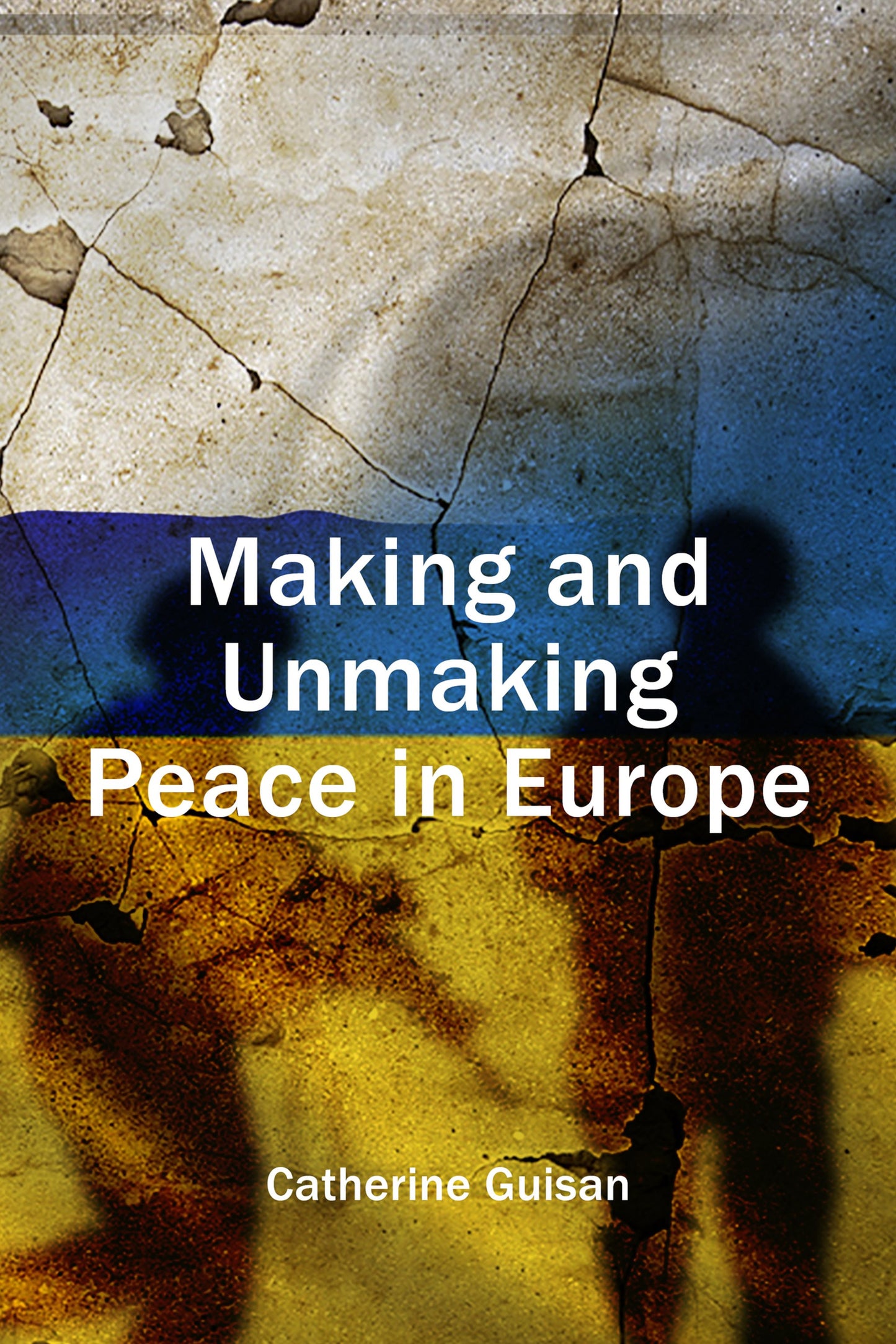
With the Russian invasion of Ukraine in 2022 having become a drawn-out war of attrition, thoughts are turning to what will follow it. How will a lasting peace settlement be negotiated? Catherine Guisan considers what lessons can be learnt from the processes of peacebuilding in Europe since the Second World War. She examines three precedents of European peacemaking from the past century of conflict: the US Marshall Plan, the project of European integration and the processes that ended the Cold War. In so doing she reveals how the skills and initiatives that maintained peace have gradually become lost and what this means for future conflict resolution, especially peace in Ukraine.


Catherine Guisan is Visiting Associate Professor in the Department of Political Science, University of Minnesota, Twin Cities. She has taught at the Universities of Utrecht, Amsterdam and Grenoble, as well as at the European University, Saint Petersburg, Russia, on a Fulbright Fellowship.
Introduction
1. Power as action in concert: US engagement and disengagement
2. European initiatives for peace in Europe: the politics of imagination and reconciliation
3. The “Russian problem” and the politics of resurrection in the Soviet Union and Russia
4. "Winning the peace" in Ukraine
5. We know how to make peace