





Some error occured while loading the Quick View. Please close the Quick View and try reloading the page.
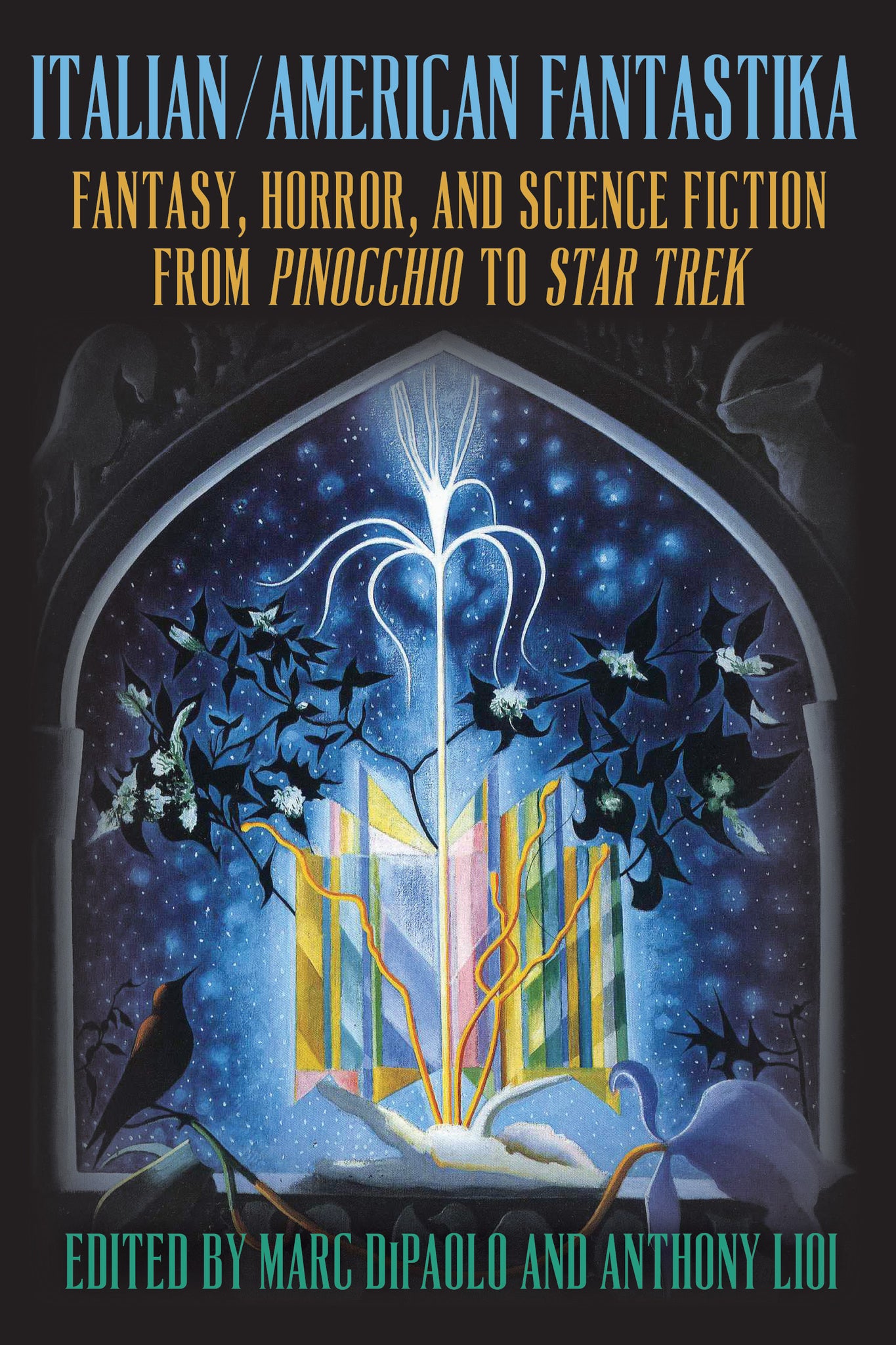
Delves into Italian contributions to these genres and what those contributions mean to global Italian cultural and political identity.
Diverse and minority populations worldwide have often embraced horror, science fiction, and fantasy narratives as a means of coming to terms with the multigenerational processes of migration and enculturation and of acting in opposition to totalitarian forces everywhere. Italian/American Fantastika explores how works in these genres by and about Italians from Italy, Canada, and the United States provide models for rethinking and refashioning what it means to be Italian in the twenty-first century. This is the first book to examine how Italian ethnic identity intersects with the whole universe of horror, science fiction, and fantasy, from the literary to the popular, and from print to visual media. Written by experts in multiple fields, from art history to film studies, and in an array of writing styles—scholarly, journalistic, personal, activist—this is a book for scholars and general readers interested in genre storytelling, ethnic studies, or the arts and humanities as a whole.


"A veritable treasure-trove of readings—inclusive of comic books, films, television series, and music videos—this book ushers in a new era of Italian American studies. The fantastic essays featured in DiPaolo's and Lioi's volume are theoretically rich and help us understand our deeply troubled twenty-first century." — Mary Jo Bona, author of Mothers, Mobility, Narrative: Maternality in US Literature
"In this exciting and deeply researched collection, masterfully edited by Marc DiPaolo and Anthony Lioi, the various contributors explore the concept of what they call Italian/American 'fantastika,' through an exploration of genres like science fiction, horror, and fantasy. Written with great verve and intellectual depth, the essays powerfully explore the cultural and political significance of everything from robots to witches, from Dante to pirates, from Pinocchio to Star Trek while placing them within the context of utopian studies, literary studies, and Italian American studies. Precisely by bringing much-needed complexity and clarity to the meaning of Italian American speculative culture, the authors in this collection provide incredibly fruitful insights on the meaning of belonging, assimilation, nationalism, and identity that will be incredibly valuable to a wide audience." — Alex Zamalin, author of Black Utopia: The History of an Idea from Black Nationalism to Afrofuturism
"The intersection of Italian ethnicity and the fantastika genre is a rich area that has long been neglected, and this book begins to repair that oversight. Its pioneering nature is perhaps its greatest strength, along with its broad understanding of the Italian diaspora."— Jonathan J. Cavallero, author of Italian Americans on Screen: Challenging the Past, Re-Theorizing the Future
Marc DiPaolo is Assistant Professor of Humanities at Moraine Valley Community College. He is the author of several books, including Fire and Snow: Climate Fiction from the Inklings to Game of Thrones, also published by SUNY Press. Anthony Lioi is Professor of English at the Juilliard School, where he teaches composition, American literature, and the environmental humanities. He is the author of Nerd Ecology.
Acknowledgments
Foreword: Science Fiction, Fantastika, and Italian American Identity
John Rieder
Preface: Are Italians Welcome on the Starship Enterprise? A Personal Essay on Witches, Starships, and a Little Wooden Boy
Marc DiPaolo
Introduction: "Is Italian American Speculative Fiction a Thing?"
Marc DiPaolo
Part 1 Defining a Field
1. Mutants in La Merica: The Whiteness of the Petrellis in NBC's Heroes
Anthony Lioi
2. Robots, Witches, and Paisani: Settler Colonial Systems and Intercultural Relation Building in Indigenous and Italian Canadian Fantastic Literature
Alec Follett
3. Vampires, Metaphysics, and Italian American Identity in Abel Ferrara's The Addiction
Ciro Incoronato
Part 2 Case Studies in Italy's Fantasies, Futurisms, and Gothic Horror
4. An Italian Nightmare: Gianni Montanari's La sepoltura Between Dystopia and Science Fiction
Umberto Rossi
5. Fascism and Pheromones: Futurist Fantasies of Domination in Bruce Sterling's Fantascienza
William Q. Malcuit
6. Italians of the Caribbean: Piracy and History in Salgari, Sabatini, and Pratt's Adventure Narratives
Cristian Soler
7. Genealogies of Horror: Dario Argento's Do You Like Hitchcock? Or, Reading National Horror Against the Local
Fernando Gabriel Pagnoni Berns
8. "That Ghastly Whiteness": Dino Battaglia Adapts Poe and Melville to Comics Davide Carnevale
Interlude: Weird Italy: Dante and Italian Genre Fiction
Dominique Musorrafiti and Matteo Damiani
Part 3 Reimagining Italian America: Artifacts of Anti-fascist and Ecofeminist Fantastika
9. "The Ocean Inside Her": C. L. Herman's The Drowning Summer as Italian American Young Adult Speculative Fiction
Lisa Marie Paolucci
10. "True Blue" Humanities: Madonna's EcoFantastika
Drago Momcilovic
11. Guillermo del Toro's Pinocchio: Reconceptualizing Italia, Italian Americans, and Fantastika Through a Wooden Boy's Questions
Danel Olson
12. Race and Italian/American Identity in Dorothy Bryant's Miss Giardino and The Kin of Ata Are Waiting for You
Victoria Tomasulo
13. Dorothy Fontana: The New Jersey "Secretary" Who Cocreated Star Trek
Marc DiPaolo
Appendix: The Canon of Speculative Fiction of the Italian Diaspora
Dominique Musorrafiti, Matteo Damiani, and Marc DiPaolo
List of Contributors
Index