





Some error occured while loading the Quick View. Please close the Quick View and try reloading the page.
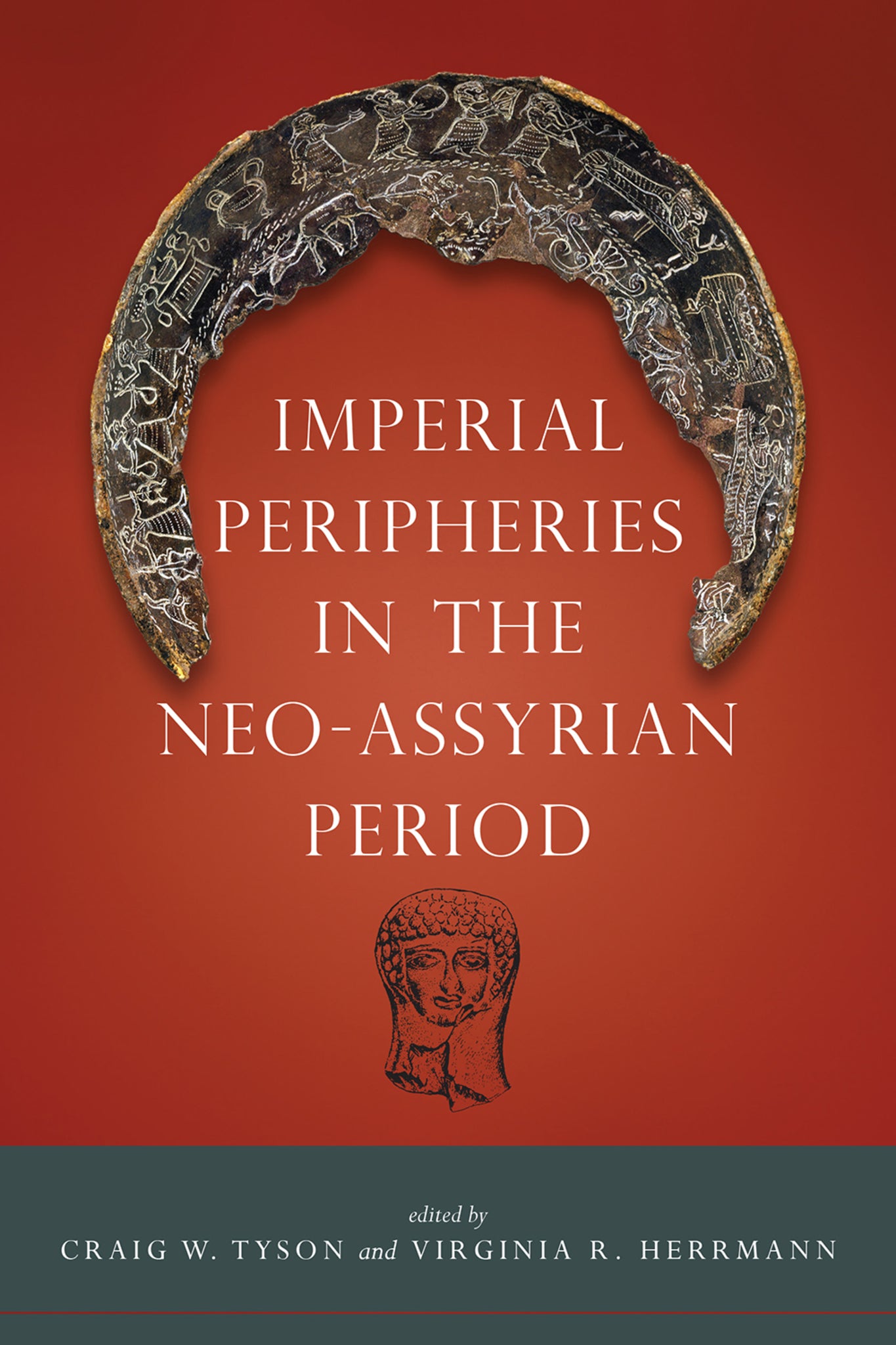
An international team of archaeologists and historians draws upon both new and existing evidence from excavations, surveys, texts, and material culture to highlight the strategies that the Neo-Assyrian Empire applied to manage its diverse and widespread empire as well as the mixed reception of those strategies by subjects close to and far from the center. Case studies from around the ancient Near East illustrate a remarkable variety of responses to Assyrian aggression, economic policies, and cultural influences. As a whole, the volume demonstrates both the destructive and constructive roles of empire, including unintended effects of imperialism on socioeconomic and cultural change.
Imperial Peripheries in the Neo-Assyrian Period aligns with the recent movement in imperial studies to replace global, top-down materialist models with theories of contingency, local agency, and bottom-up processes. Such approaches bring to the foreground the reality that the development and lifecycles of empires in general, and the Neo-Assyrian Empire in particular, cannot be completely explained by the activities of the core. The book will be welcomed by archaeologists of the Ancient Near East, Assyriologists, and scholars concerned with empires and imperial power in history.
Contributors: Stephanie H. Brown, Anna Cannavò, Megan Cifarelli, Erin Darby, Bleda S. Düring, Avraham Faust, Guido Guarducci, Bradley J. Parker


—John MacGinnis, University of Cambridge
“The book throws a fresh and innovative light on the methodological approach of an important subject in the history of the Ancient Near East.”
—Ariel Bagg, Universität Heidelberg
"The research is rigorous and current, with each author taking on the responsibility of extending his or her discrete study to reflect upon the broader implications of how we invoke, re-envision, or even discard the traditional core-periphery paradigm in studies of ancient empires. The result is a cohesive edited volume that capitalizes on the diversity of geographical locations, temporal scales, and artifactual evidence in its papers to provide the reader with a comprehensive compendium of perspectives on Neo-Assyrian Empire."
—Journal of Near Eastern Archaeology
“The authors of this volume are to be congratulated on their achievement, presenting timely and insightful analysis of various important case studies within and beyond Assyria’s pale.”
—The Middle Ground Journal
“[Imperial Peripheries in the Neo-Assyrian Period] presents an excellent blending of multiple datasets—settlement object, architectural, historical, art historical—to form a contribution that will prove especially useful in the field of Assyrian and Near Eastern studies. . . . The discussions in this volume have the potential to be used broadly in furthering ideas about agency and centrality in discussions of any empire.”
—American Antiquity
Virginia R. Herrmann is a Junior Research Group Leader in the Institute for Ancient Near Eastern Studies at the University of Tübingen and co-director of the Chicago-Tübingen excavations at Zincirli, Turkey. She co-curated the 2014 Oriental Institute Museum exhibit In Remembrance of Me: Feasting with the Dead in the Ancient Middle East.