





Some error occured while loading the Quick View. Please close the Quick View and try reloading the page.
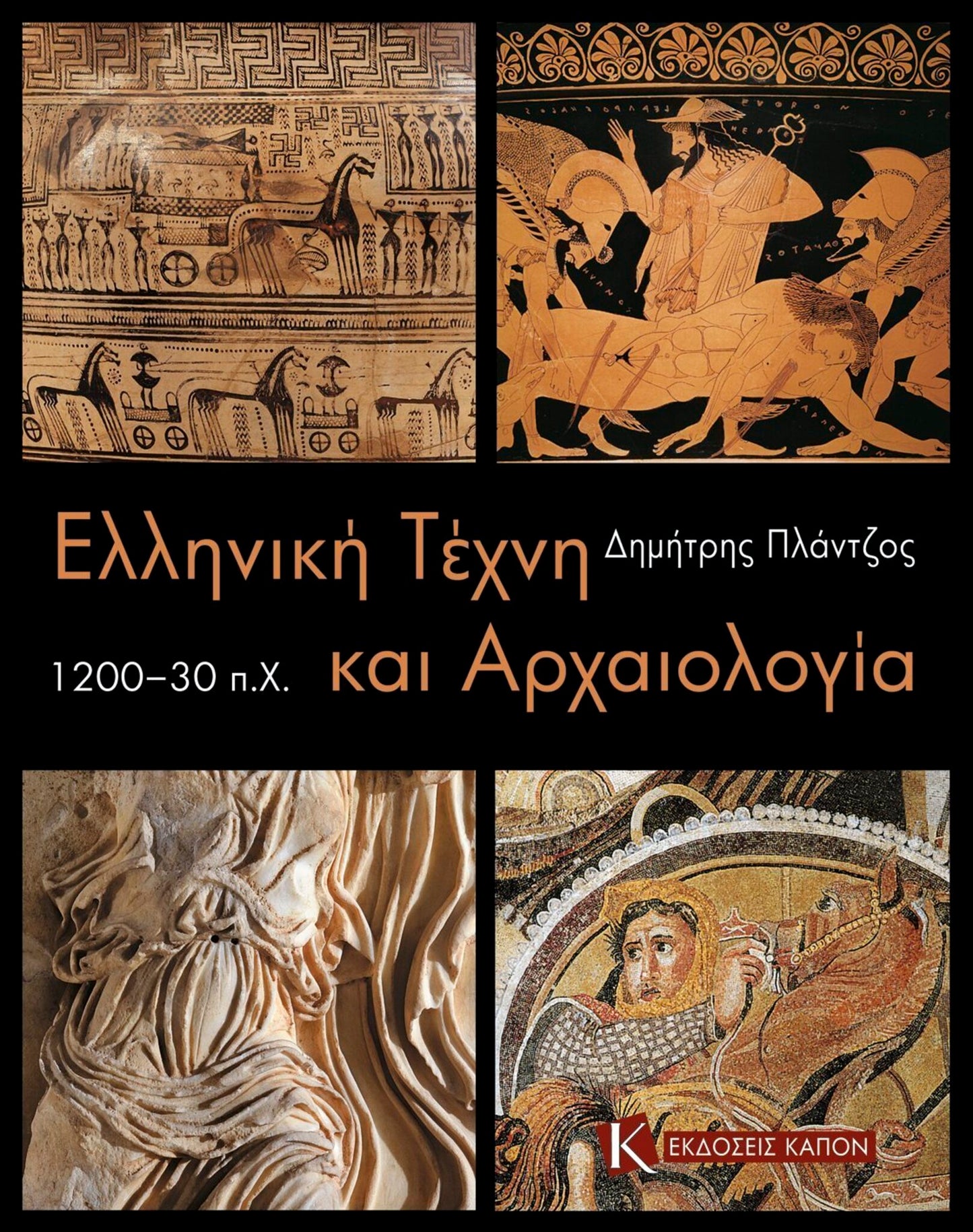


‘This is one of the most instructively illustrated textbooks that this reviewer has ever seen. Each of the 592 magnificent colour illustrations has been strategically positioned to coordinate with accompanying test and incredibly well blended into the large page format. Commentary is well organized, terse, pointed and minimalist in description. [...] As a textbook this volume provides a very viable platform current, comprehensive, and convenient for teaching a survey approach which promotes more than a fleeting academic traction.’ Henry V. Bender, Classical Journal, 2017.09.01
‘This elegant edition – yet another excellent publication by Kapon – completes the task with integrity by offering an attractive introduction to the study of ancient Greek art. As promised in the Introduction, the book achieves a fortunate combination of a thorough study of objects and a systematic effort to render them understandable, not only as ‘art’ but as sources of historical and cultural information as well. The student of classical antiquity will find here useful terminology, tips in methodology, and suggestions for further reading. The book, with its elegant editing and the harmonious development of its subject matter, is an enjoyable read and a particularly useful guide not only for classical archaeological students and scholars but for every reader interested in Greek antiquity’ Themata Archaiologias 2017 1.1
‘In 2016, the English translation of a survey of Greek art and archaeology by Dimitris Plantzos was published. In five chapters the author introduces the reader to the research methodology of archaeological investigation and discusses a select number of mostly familiar monuments within their historical and cultural context. Textboxes focus on specific works of art and various cultural issues, with topics ranging from the symposion to the problems associated with using Roman copies to reconstruct lost Greek works. The material covered in the textboxes serves to enhance the reader’s appreciation of the material covered in the chapter. The monuments presented in each chapter are, for the most part, canonical but the author departs from the approaches of other authors of survey texts by taking a decidedly archaeological approach and including issues such as excavation history and authenticity. Plantzos’ text offers a good balance between monuments and narrative; that is, the number of monuments is manageable and the discussions include, to a certain degree, stylistic and cultural information.’ Linda Maria Gigante, Bryn Mawr Classical Review 2017.04.35
‘Plantzos' book differs from the many available handbooks on Greek art (including my own, now rather old) in a number of significant ways. It is a big book but very succinct, and thereby packs a lot of information not accessible in the usual handbooks, and it presents the whole in a proper historical perspective including the element of 'reception'. It is moreover heavily illustrated, which is essential but often inadequate through lack of energy on the part of the authors or publishers; it is not easy nowadays to assemble the impressive range of illustrations that appears here. Moreover, it includes much that wrongly gets ignored in other books - plans, reconstructions, etc. Another advantage is that it is written by a Greek scholar and teacher so that there seems to be a certain immediacy of communication of what is essential in Greek art.’ Sir John Boardman, Emeritus Professor of Classical Archaeology, Oxford University
This readable and thorough introductory textbook includes boxes with information on people, places, and artefacts, and definitions of terms to enhance the text. The line drawings and many beautiful illustrations capture the reader's interest. Chapters cover the methods of classical archaeology, the early Iron Age, and the Archaic, Classical, and Hellenistic periods. [...] Of interest to professors seeking a new textbook, and students and others interested in an introduction to classical art, culture, and archaeology. Summing Up: Recommended. General and undergraduate collections; faculty. Nancy J. Mactague, CHOICE March 2017
‘This beautifully illustrated volume situates Greek art within the framework of classical archaeology (and also classical studies), as well as within the growing field of reception studies. He interests readers in the history of the discipline, including the place of museums in historical discourse, and the importance of archaeological context. His emphasis on terminology, the combination of a linear and thematic approach, rich contextual references, and bibliographies help to move this old conversation into a new direction. The book is systematic and comprehensive on the one hand, yet user-friendly on the other (e.g. box texts, bullet points, generous illustrations). Not surprisingly, Plantzos offers ample discussions of gems, coins, terracottas, bronzes, and wall-paintings (something not attempted in quite this way since Boardman), indicating that these categories are as important as sculpture and architecture in the study of ancient Greek visual and material culture.’ Tyler Jo Smith, Associate Professor of Mediterranean Art and Archaeology, University of Virginia
Dimitris Plantzos is a classical archaeologist, educated at Athens and Oxford. He is the author of various articles and books on Greek art and archaeology, archaeological theory and classical reception, including The Archaeologies of the Classical (Athens 2014) and The Art of Painting in Ancient Greece (Kapon 2018), and the co-editor of the Wiley-Blackwell Companion to Greek Art (Oxford 2012; with Tyler J. Smith). Formerly a Curator at the Museum of Cycladic Art in Athens, he is Professor in Classical Archaeology at the University of Athens and codirector of the Argos Orestikon Excavation (Kastoria, Greece).
Preface
CHAPTER 1 Classical archaeology: sources and methodology
Chronology
Map I: Greece and the eastern Mediterranean
CHAPTER 2 The Early Iron Age (1100–700 BC)
CHAPTER 3 The Archaic Period (700–480 BC)
CHAPTER 4 The Classical Period (480–336 BC)
Map II: the Hellenistic world
CHAPTER 5 The Hellenistic Period (336–30 BC)
Index
Sources of illustrations