





Some error occured while loading the Quick View. Please close the Quick View and try reloading the page.
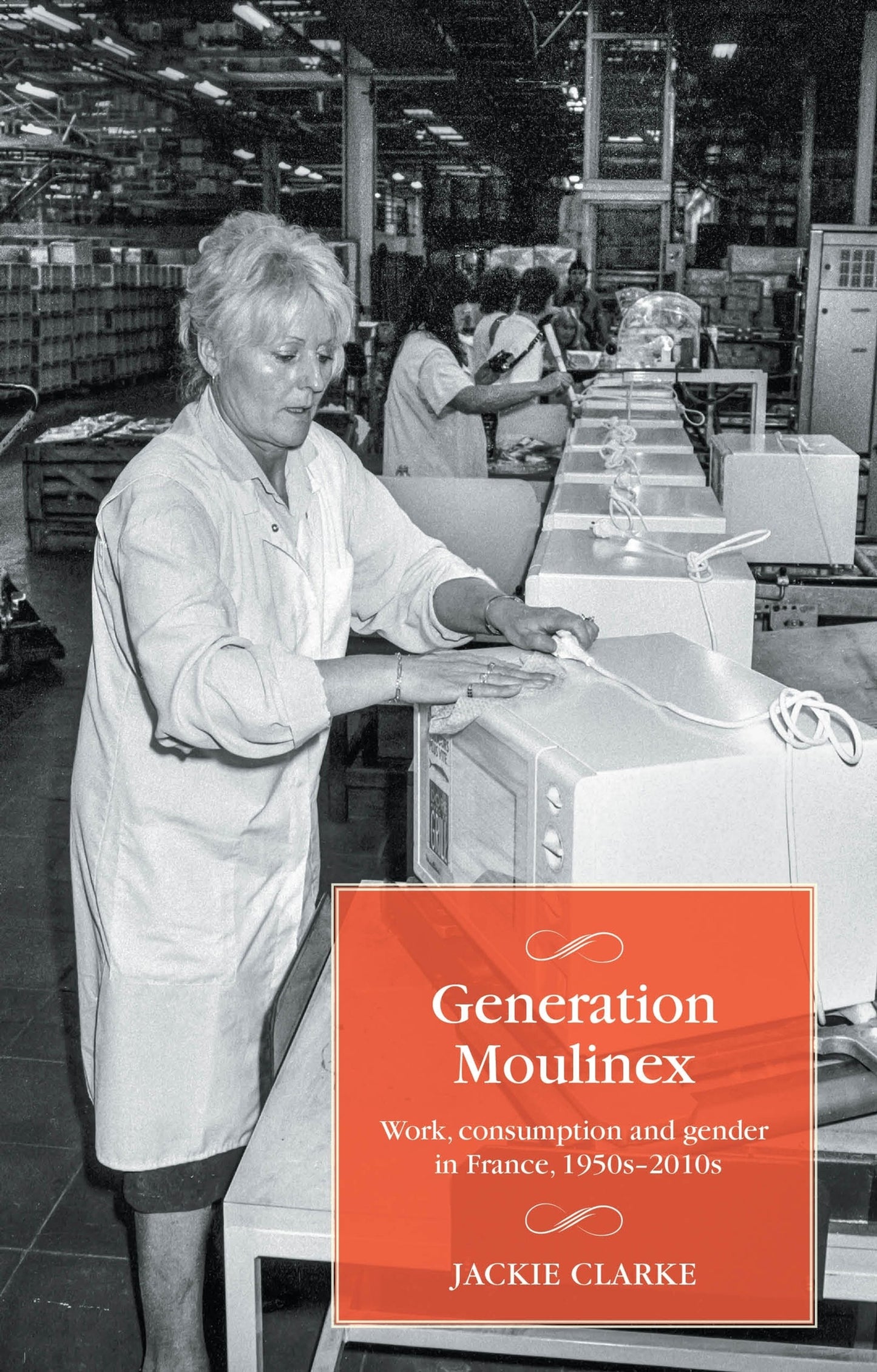
Moulinex is widely known as a brand that brought domestic appliances into many homes during the 1950s and 1960s. Its history also illuminates broader changes in working-class lives and the organisation of work in postwar France. Based in Normandy, the company was central to the transformation of a rural region, creating a network of factories that employed thousands of workers. Most of these sites have since closed, as industrial employment in France declined sharply from its 1970s peak. Generation Moulinex traces this trajectory from the rise of mass production and consumption to the era of globalisation and deindustrialisation. It centres the experiences of a generation of French workers, many of them women, whose lives both shaped and were shaped by these transformations.

Price: £85.00
Pages: 264
Publisher: Manchester University Press
Imprint: Manchester University Press
Series: Studies in Modern French and Francophone History
Publication Date:
24 November 2026
ISBN: 9781526174116
Format: Hardcover
BISACs:

Jackie Clarke is Senior Lecturer in French Studies at the University of Glasgow
Introduction
Part I: Inventing Moulinex: cultures of production and consumption in the 1950s and 1960s
1 Domestic appliances, consumer culture and productivism in postwar France
2 Gender, geography and the factory order
Part II: The worker-consumer and ‘les années 68’
3 Rethinking the worker-consumer
4 ‘As workers and housewives’: Gendered revolt after 1968
Part III: Deindustrialising Moulinex
5 Industrial work as service work: The new emotional rules of the factory
6 Against obsolescence: Displaced worker politics
Conclusion