





Some error occured while loading the Quick View. Please close the Quick View and try reloading the page.
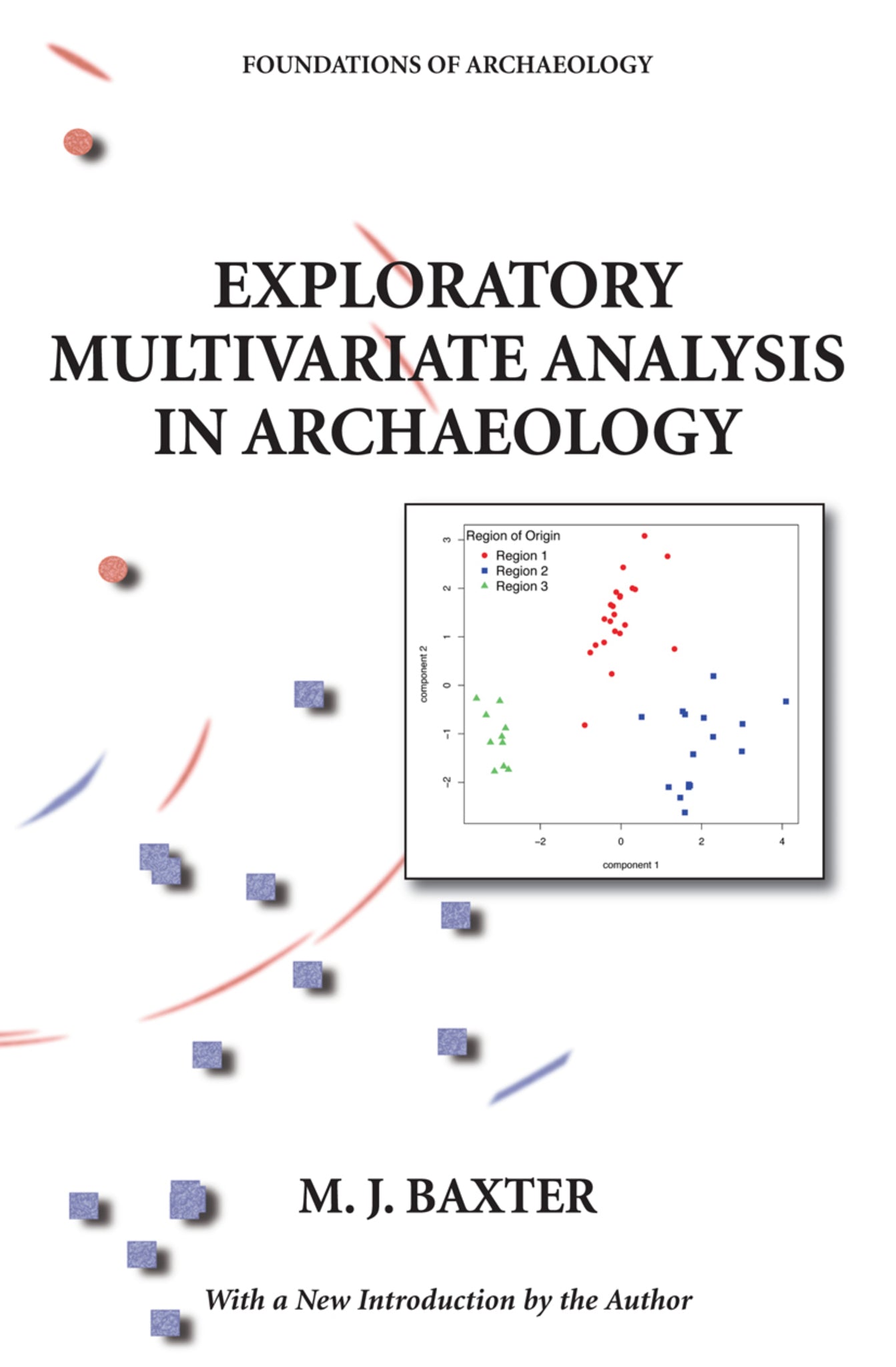
This volume presents four techniques of multivariate analysis commonly used by archaeologists (principal component analysis, correspondence analysis, cluster analysis and discriminant analysis). Employing 'ordinary language' and real data sets, and including extensive literature reviews, the book illustrates how these statistical techniques can be applied to specific archaeological questions. A new introduction by the author updates his discussion in light of subsequent developments in the field of quantitative archaeology. Originally published by Edinburgh University Press in 1994.


'There are many things to admire about this book. . . . [T]he treatment of the methods is very solid and to the point. I especially like the way in which Baxter explores their strengths and weaknesses in applied settings. . . . [W]ritten at a level that most archaeologists will find comprehensible.' (Mark S. Aldenderfer, American Antiquity)
'[A]n excellent tool and reference for the practicing archaeo-statistician, as well as for the novice who wishes to get acquainted with multivariate statistical methods. In it one obtains practical advice from an experienced practitioner . . . . I like this book and recommend it.' (Kenneth L Kvamme, Archaeological Computing Newsletter)
'[A] no-nonsense account of the main multivariate techniques used in archaeology . . . . The style is straightforward and clear, and well in tune with the needs of the reader. . . . The tone is balanced and reasonable . . . . [F]or anyone who analyses multivariate data in archaeology.' (Clive Orton, Journal of Archaeological Science)
Introduction to the Percheron Press Edition
Chapter 1. Multivariate Statistics in Archaeology
Chapter 2. Univariate and Bivariate Approaches and Preliminary Data Analysis
Chapter 3. Principal Component Analysis - The Main Ideas
Chapter 4. Principal Component Analysis - Specialised Topics
Chapter 5. Correspondence Analysis - The Main Ideas
Chapter 6. Correspondence Analysis - Extensions
Chapter 7. Cluster Analysis - The Main Ideas
Chapter 8. Cluster Analysis - Some Problems
Chapter 9. Discriminant Analysis - The Main Ideas
Chapter 10. Further Aspects of Discriminant Analysis
Chapter 11. The Final Chapter
Appendixes
Bibliography
Index