





Some error occured while loading the Quick View. Please close the Quick View and try reloading the page.
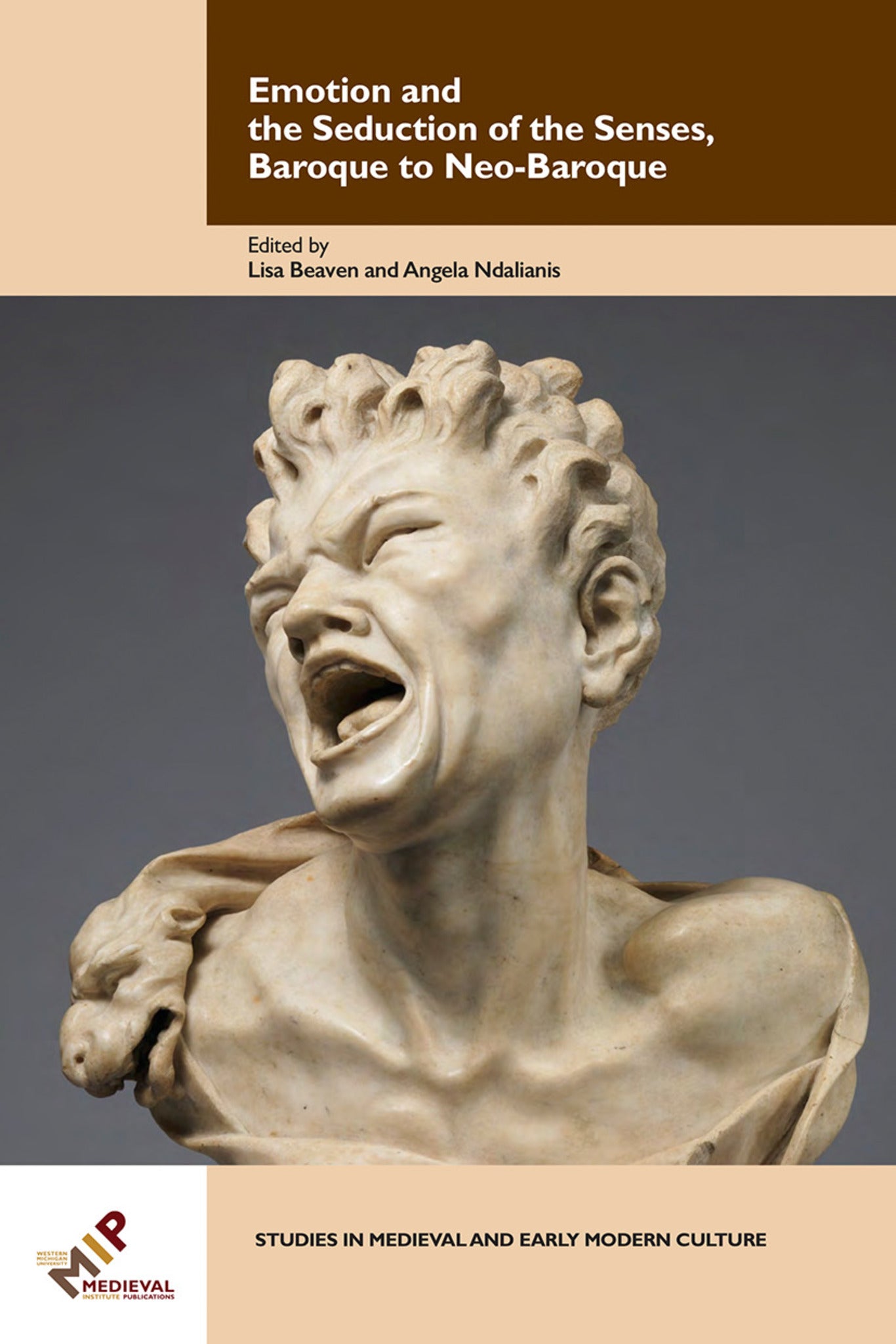
Emotion and the Seduction of the Senses, Baroque to Neo-Baroque examines the relationship between the cultural productions of the baroque in the seventeenth century and the neo-baroque in our contemporary world. The volume illuminates how, rather than providing rationally ordered visual realms, both the baroque and the neo-baroque construct complex performative spaces whose spectacle seeks to embrace, immerse, and seduce the senses and solicit the emotions of the beholder.

Price: £105.00
Pages: 326
Publisher: Medieval Institute Publications
Imprint: Medieval Institute Publications
Series: Studies in Medieval and Early Modern Culture
Publication Date:
31 July 2018
ISBN: 9781580442718
Format: Hardcover
BISACs:

Lisa Beaven was a research fellow in the ARC Centre of Excellence for the History of Emotions, University of Melbourne, between 2015 and 2017, and is currently a lecturer at La Trobe University. She has published widely on collecting and patronage in seventeenth-century Rome. Her book, An Ardent Patron: Cardinal Camillo Massimo and his Artistic and Antiquarian Circle, was published in 2010 (Paul Holberton Press and C.E.E.H.). Angela Ndalianis is Professor in Media in the Department of Media and Communication at Swinburne University of Technology. Her research focuses on entertainment culture and media histories as well as the transhistorical and transcultural nature of the baroque. Her publications include Neo-baroque Aesthetics and Contemporary Entertainment (MIT Press, 2004), The Horror Sensorium: Media and the Senses (McFarland, 2012), Science Fiction Experiences (New Academia, 2009), The Contemporary Comic Book Superhero (ed., Routledge, 2008), and Neo-baroques: From Latin America to the Hollywood Blockbuster (co-edited, Rodopi Press, 2017).
Introduction Feeling Baroque in Art and Neuroscience: Joy, Sadness, Pride, and a Spinozist Solution to the Quest for Happiness by Monika Kaup The Baroque Sublime: The Affective Power of Landscape by Helen Langdon "Their Jarring Spheres Confound": John Milton's Paradise Lost as a Counter-Baroque War Machine by Justin Clemens "To Make Them Gaze in Wonder": Emotional Responses to Stage Scenery in Seventeenth-Century Opera by Katrina Grant The Role of Emotions in the Characters of Pedro Calderon de la Barca's Autos by Javier de la Rosa, Adriana Soto-Corominas, and Juan Luis Suarez Clouds and Calculated Emotions in the Production of Neo-Baroque Spatial Illusions in Las Vegas Hotels and Casinos by Peter Krieger Mirrors of Reason, Illusion, and Infinity: The Case of the Villa Patrizi by David Marshall Infinite Bodies: The Baroque, the Counter-Reformation Relic and the Body of James II by Matthew Martin Chican@ Saints: The Persistence of Religious Bodies in Mexican America by Kat Austin The Ecstasy (?) of Saint Teresa by John Weretka Faith and Fetish: Objects and the Body in Catholic Devotional Practice by Lisa Beaven Hannibal: Baroque Horror Vacui and the Theatre of Senses by Angela Ndalianis