





Some error occured while loading the Quick View. Please close the Quick View and try reloading the page.
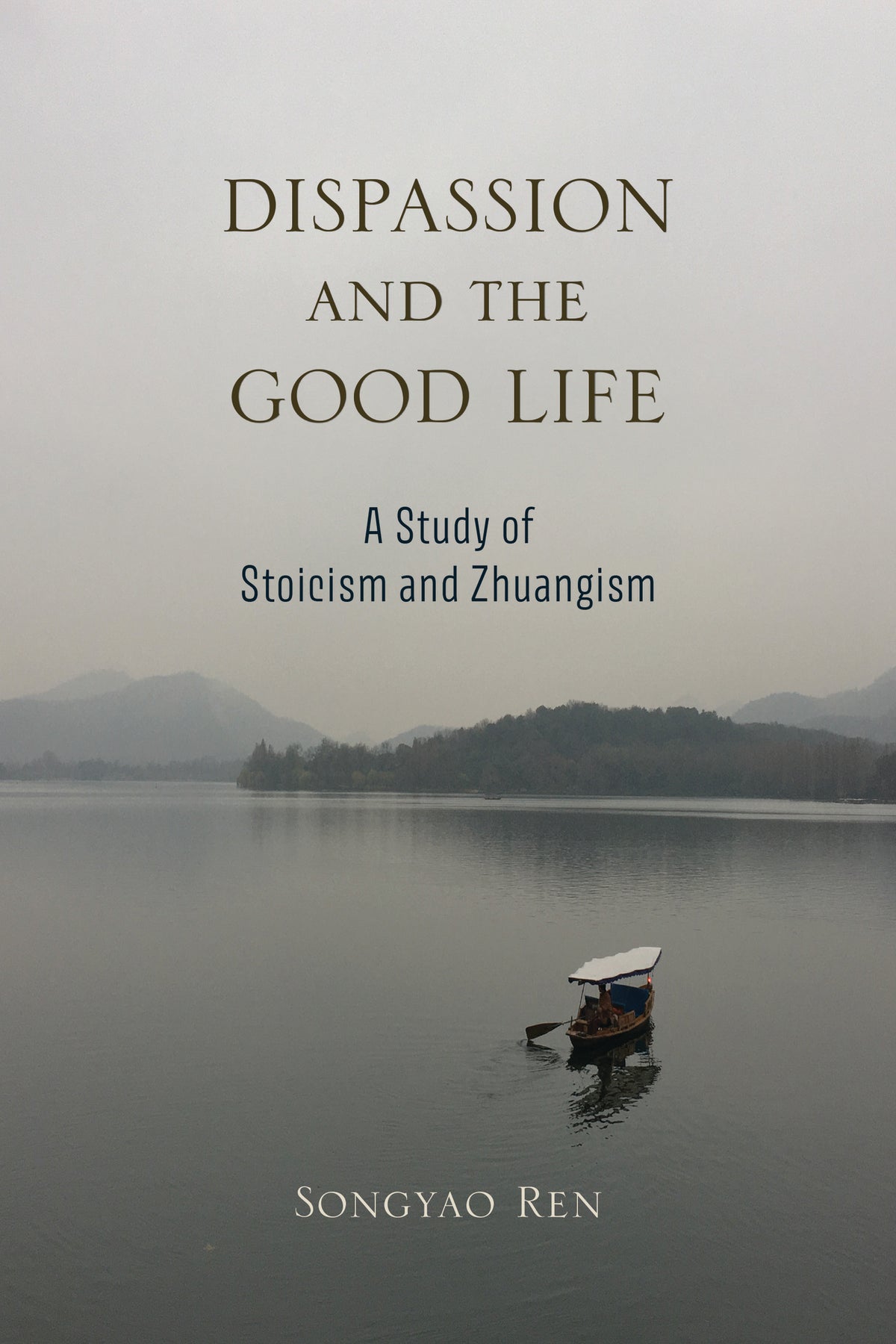
A comparative study of Stoicism and Zhuangism that explores dispassion as an ethical ideal.
Dispassion and the Good Life adopts an empirically informed approach to philosophy, combining ancient wisdom with work in emotion science. Drawing on resilience studies in psychology, sociology, and other fields, it deepens our understanding of ancient accounts of dispassion, revealing their relevance to modern life.
To the modern ear, "dispassion" carries a negative connotation and is often associated with apathy—a a lack of feeling, motivation, or concern—or an indifference to human affairs. This book, however, argues that dispassion is not apathy, but remains relevant to contemporary debates about the good life. Through a comparison of Stoicism and Zhuangism, it shows that dispassion offers emotional equanimity, enabling us to escape emotional upheaval without devolving into impassivity.
The Stoics propose maintaining equanimity by identifying with reason, the only thing impervious to the blows of fortune. However, while this lifts us above worldly vicissitudes, it risks impoverishing life to the point that it may no longer be worth living. By contrast, the Zhuangists advocate preserving equanimity by extending ourselves out over different parts of the volatile world in a responsive manner. This allows us to take flourishing into our own hands while acknowledging our embeddedness in the world of change.


"This is a wonderful book. It not only examines the commonalities and differences of two interesting ancient traditions, Stoicism and Zhuangism, but also strives to draw from them an ethics we could live by today, including insights from social scientific research. It is also extremely well written, in a style as clear as a bell." — Joel Marks, University of New Haven
Songyao Ren is Assistant Professor of Philosophy at the University of Texas at Dallas, specializing in ethics, moral psychology, and Chinese philosophy. She is a coauthor, with Owen Flanagan, Joseph E. LeDoux, and others, of Against Happiness.