





Some error occured while loading the Quick View. Please close the Quick View and try reloading the page.
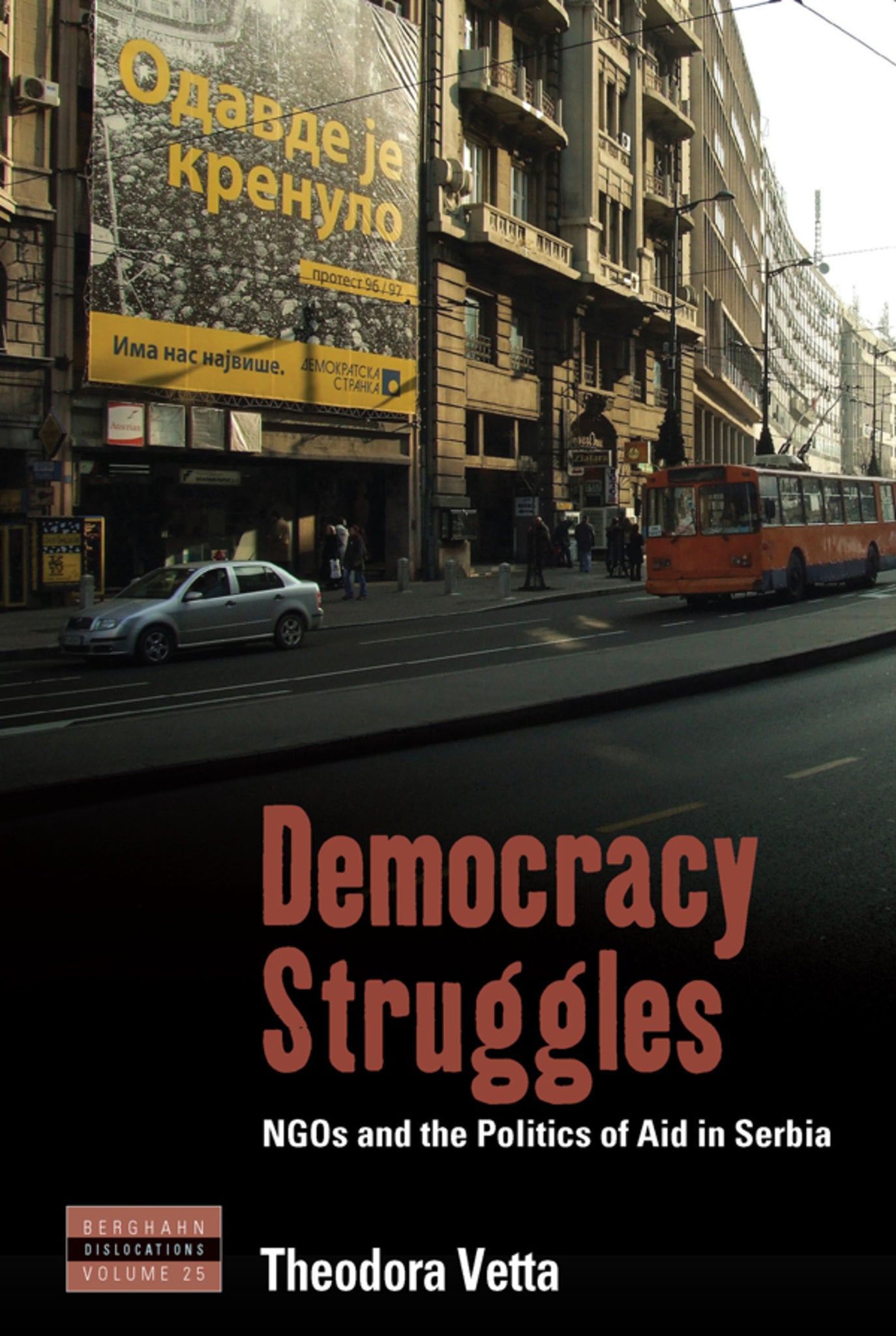
Tracing the boom of local NGOs since the 1990s in the context of the global political economy of aid, current trends of neoliberal state restructuring, and shifting post-Cold War hegemonies, this book explores the “associational revolution” in post-socialist, post-conflict Serbia. Looking into the country’s “transition” through a global and relational analytical prism, the ethnography unpacks the various forms of dispossession and inequality entailed in the democracy-promotion project.


“Vetta’s book offers a refreshing and much-needed class-informed analysis of the NGO world in Serbia…The book provides essential class-informed analysis for anyone interested in the working of aid industry in the context of post-socialist transformations.” • ANUAC
“This book offers a rich, informative and critical analysis on a topic that has so far not received much attention. It opens up a number of new research avenues on the topic of aid, democratization, neoliberalism and recent political developments in the context of Serbia.” • Eurasian Geography and Economics
Acknowledgments
PART I: CIVIL SOCIETY IN THE MAKING
Chapter 1. Empowerment, Fast-Track
Chapter 2. NGOing and the Donor Effect
PART II: THE POLITICS OF CULTURE
Chapter 3. The “Democrats”: Salon NGOs in Belgrade
Chapter 4. The “Nationalists”: Radikali and Privatization
PART III: GOOD GOVERNANCE
Chapter 5. Revitalizing Communities, Decentralizing the State
Chapter 6. NGOs vs. State: Clash or Class?
Conclusion
References
Index