





Some error occured while loading the Quick View. Please close the Quick View and try reloading the page.
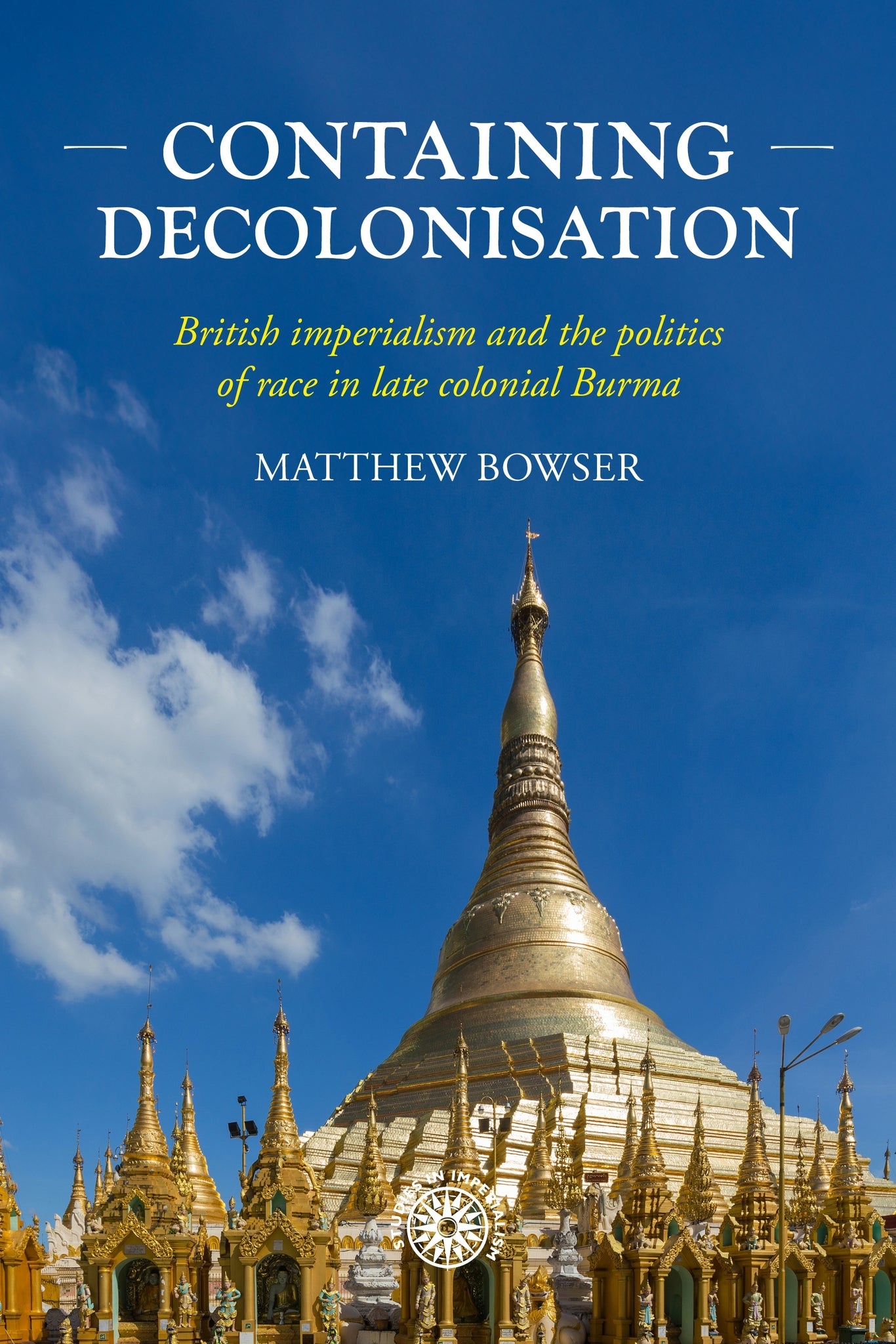
This book examines British imperialism in late colonial Burma to study how imperialists attempted to protect their strategic and economic interests after decolonisation: they did so by supporting ethnonationalism. This process resembles the Cold War tactic of “containment,” and the book makes a crucial contribution to the study of modern imperialism by demonstrating the continuity between “containment’s” late- and “neo”-colonial manifestations. For Burma/Myanmar, it also explores the origin of the present-day military junta’s racial regime: it emphasizes the protection of the ethnoreligious majority from ethnic minority insurgency. The Rohingya people are currently suffering a genocide because of this racial regime. As the country endures civil war against the junta, this book highlights how ethnonationalists in the late colonial period first promoted this racial regime to seize power and prevent revolution, a process supported by British imperialists for their own ends.

Price: £85.00
Pages: 256
Publisher: Manchester University Press
Imprint: Manchester University Press
Series: Studies in Imperialism
Publication Date:
02 September 2025
ISBN: 9781526187949
Format: Hardcover
BISACs:

Matthew Bowser is Assistant Professor of Asian History at Alabama A&M University
Introduction
1 Partition and the rise of Burmese ethnonationalism (1929-1936)
2 The Myochit Party and the construction of a racial regime (1936-1938)
3 The pogrom of 1938 and its aftermath (1938-1939)
4 U Pu’s Ministry: Active and passive revolutions in conflict (1939-1940)
5 The “Galon Government:” Burmese ethnonationalism in power (1940-1942)
6 The Long March, the Arakanese Civil War, and Burmese politics under Japanese occupation (1942-1945)
7 A ‘contained’ decolonisation (1945-1948)
Conclusion: Ethnonationalism and Burma since 1948