





Some error occured while loading the Quick View. Please close the Quick View and try reloading the page.
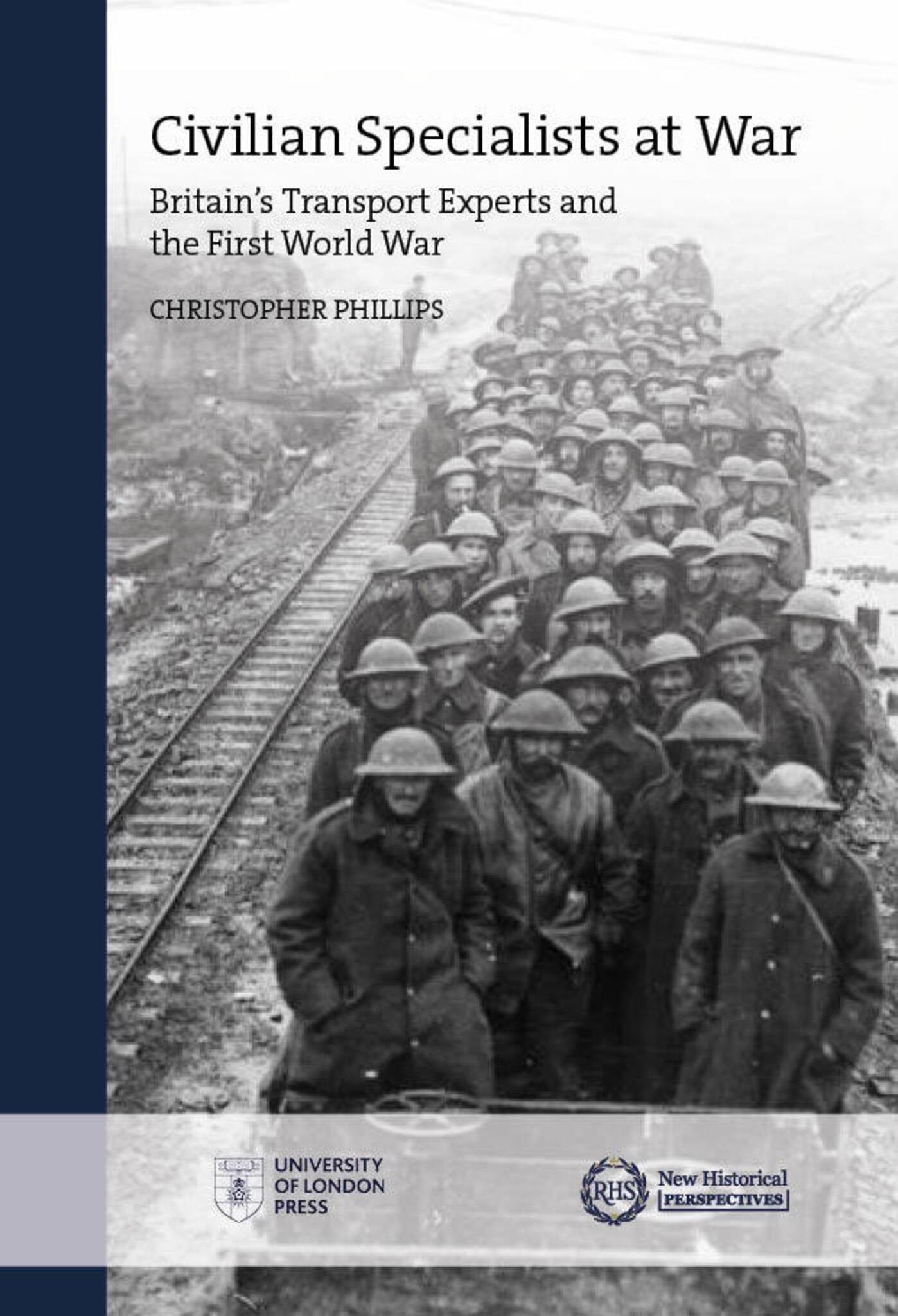
The war of 1914–18 was the first great conflict to be fought between highly industrial societies able to manufacture and transport immense quantities of goods to the field of battle. In Civilian Specialists at War, Christopher Phillips examines the manner in which Britain’s industrial society influenced the character and conduct of industrial warfare. This book analyses the multiple connections between the military, the government and the senior executives of some of pre-war Britain’s largest companies. It illustrates the British army’s evolving response to the First World War and the role to be played by non-military expertise in the prosecution of such a conflict.
This study demonstrates that pre-existing professional relationships between the army, the government and private enterprise were exploited throughout the conflict. It details how civilian technologies facilitated the prosecution of war on an unprecedented scale, while showing how British experts were constrained by the political and military demands of coalition warfare. Civilian Specialists at War reveals that Britain’s transport experts were a key component in the country’s conduct of the First World War.


"Accessible and compelling... This engaging and thought-provoking monograph is essential for those interested in logistics generally as well as those interested in the men who shaped, organised and enhanced Britain’s transport infrastructure on the Western Front, in Palestine, Salonika and Sinai."
-British Journal for Military History
"The role of transportation was much more nuanced than previous authors have led us to believe and Phillips’ work opens the door for further crucial analysis." -Western Front Association
"Christopher Phillips’s impressive debut, therefore, is an important, timely and very welcome addition to our knowledge and understanding of a neglected, though critical, aspect of Britain’s war effort."
-English Historical Review
"It is now difficult, for me, to view battles like Passchendaele without considering the enormous logistical planning that made them possible by men whose extraordinary contribution has largely been overlooked by history." -Great War Forum
"Serious studies of military logistics are rare, and this is a well-presented, informative and useful study that is recommended."
- Journal of the Railway & Canal Historical Society
"A timely addition to the ever-emerging new historiographical understanding of the First World War in Britain... This book should be on the shelves of every First World War historian."
-Twentieth Century British History
"Christopher Phillips’s impressive debut is an important, timely and very welcome addition to our knowledge and understanding of a neglected, though critical, aspect of Britain’s war effort."
-English Historical Review"It is now difficult for me to view battles like Passchendaele without considering the enormous logistical planning that made them possible by men whose extraordinary contribution has largely been overlooked by history." -Great War Forum
"Serious studies of military logistics are rare, and this is a well-presented, informative and useful study that is recommended."
-Journal of the Railway & Canal Historical Society
Introduction
Part I: Preparation 1. Forging a relationship: the army, the government and Britain’s transport experts, 1825–1914 2. A fruitful collaboration: Henry Wilson, the railways and the BEF’s mobilization, 1910–14
Part II: Expansion 3. Stepping into their places: Britain’s transport experts and the expanding war, 1914–16 4. Commitment and constraint I: the South-Eastern and Chatham Railway and the port of Boulogne 5. Commitment and constraint II: Commander Gerald Holland and the role of inland water transport
Part III: Armageddon 6. The civilians take over? Sir Eric Geddes and the crisis of 1916 7. ‘By similar methods as adopted by the English railway companies’: materials and working practices on the western front, 1916–18 8. The balancing act: Britain’s transport experts, the global war effort and coalition warfare, 1916–18 9. The road to victory: transportation in the British Expeditionary Force, 1917–18
Conclusion