





Some error occured while loading the Quick View. Please close the Quick View and try reloading the page.
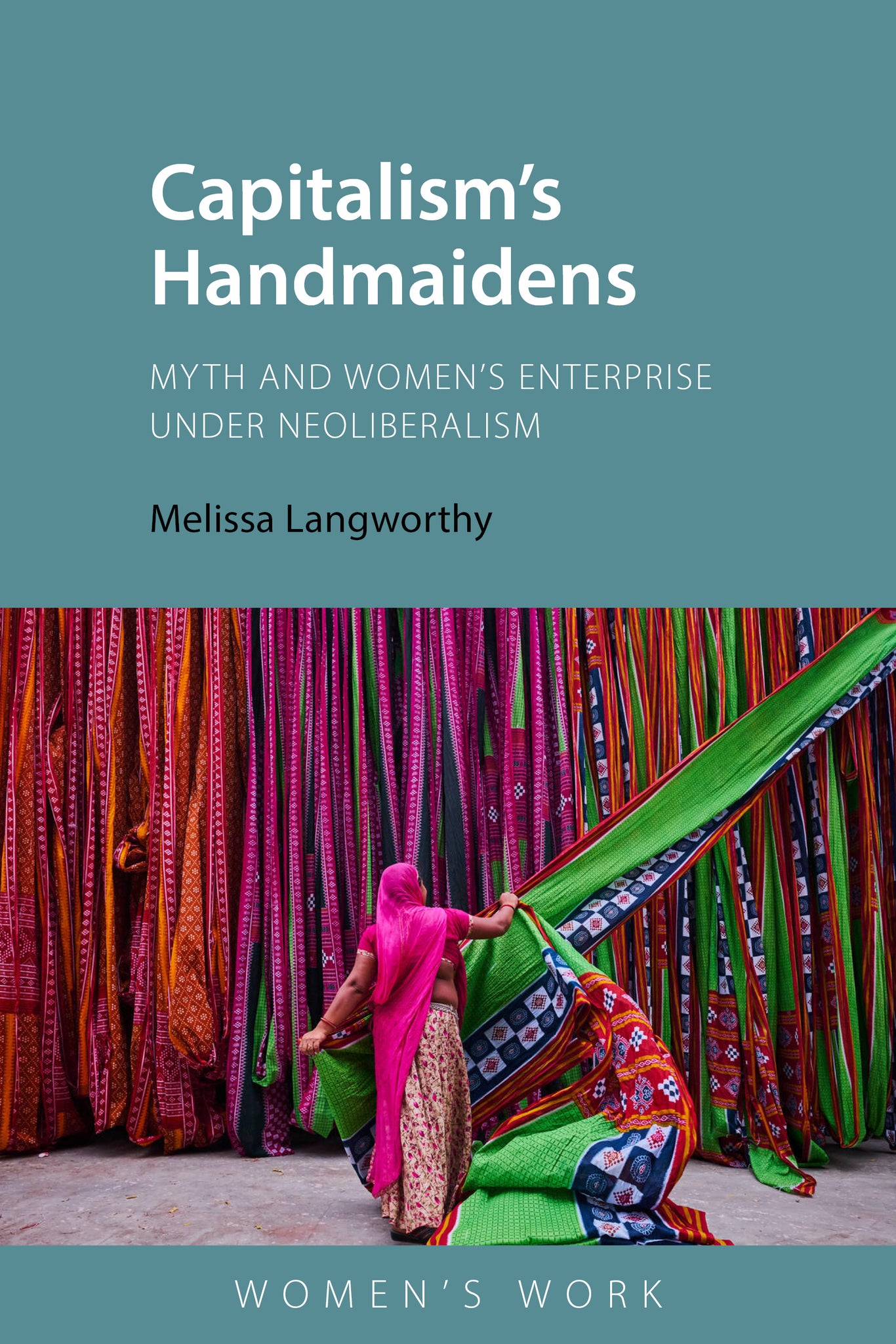
When we think of a “woman entrepreneur”, what comes to mind? Women entrepreneurs hold a dominant presence in political, social, economic and development imaginaries, as a global class of workers typifying the contemporary, neoliberal era. Their enterprise is readily proffered as the evidence of a nation’s progress, inclusion and development. International institutions, development banks, states, civil society groups, corporations and international financial institutions promote women’s enterprise in nearly every corner of the globe. A powerful mythology has grown up around the idea of women as empowered, financial saviour-mothers who benefit the prosperity, inclusivity, and security of a nation and the global economy.
In this book, Melissa Langworthy exposes these myths for what they are and in offering a political economy of women’s enterprise, she asks what value women’s enterprise gives, not to women, but to the institutions that have shaped them and placed them in the centre of the global imaginary.


Melissa Langworthy, PhD, is a feminist economist specializing in sustainable development, gender equality, and economic justice. She is Research Director for Includovate, a global development research firm, and a Senior Gender Expert for Equinoccio, an implementing partner of the European Commission. She has 20 years of experience working with multilateral, bilateral, and national institutions to promote inclusive development, including for UN ESCAP, UN Women and Oxfam. Her research, which has been published in top journals including New Political Economy, Gender Work and Organization, and the Journal of Economic Issues, focuses on women’s economic and entrepreneurial lives and the institutional structures that shape them.
1. Introduction
2. Mapping the genealogy of women’s enterprise
3. When only women will do: poststructuralism, neoliberalism and the women’s enterprise myth
4. The myth of the financially prudent woman
5. The myth of empowerment
6. Myth of work–life balance
7. Myth of modernity
8. Conclusion