





Some error occured while loading the Quick View. Please close the Quick View and try reloading the page.
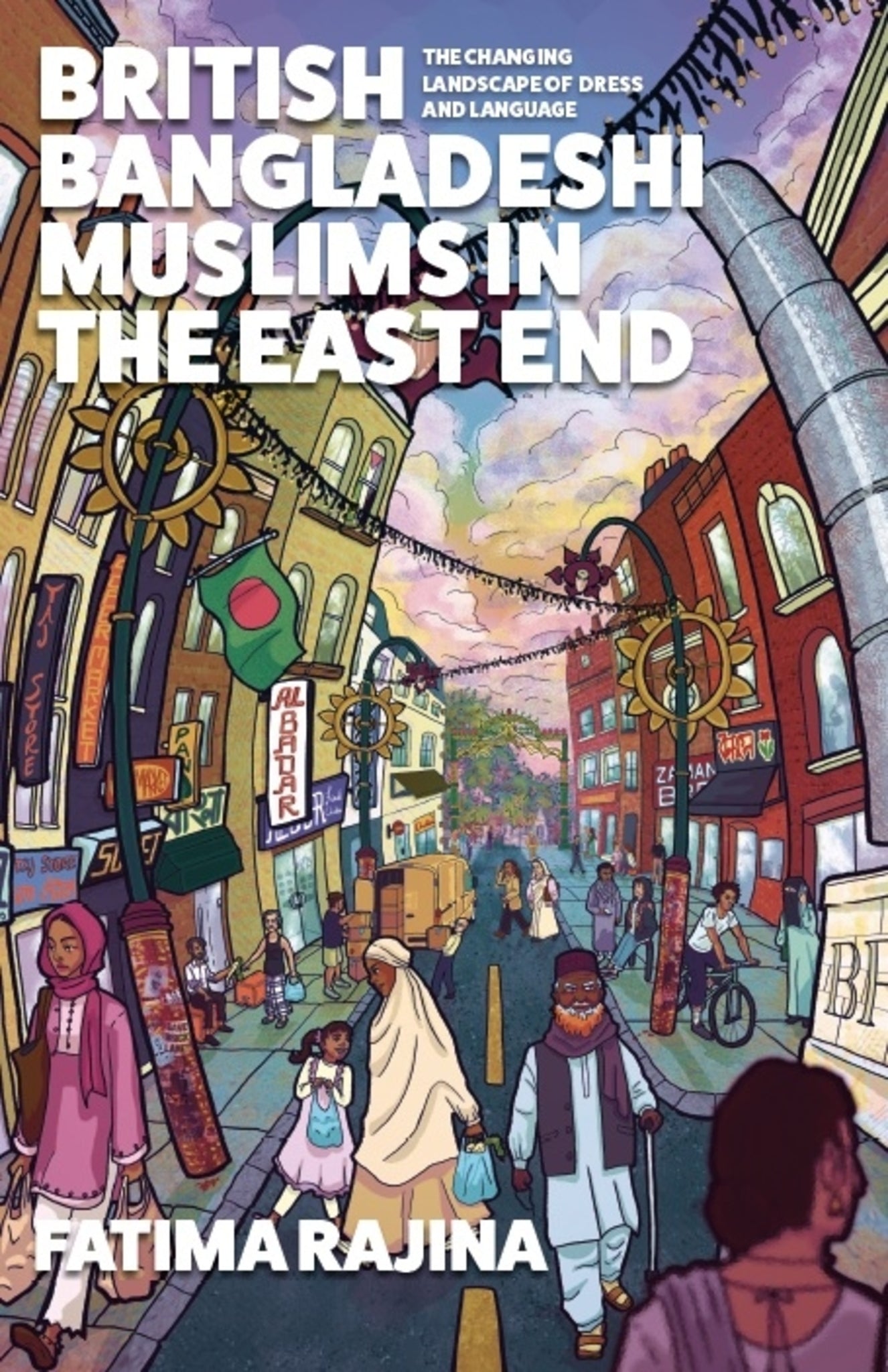
Popular discourse around British Muslims has often been dominated by a focus on Muslim women and their sartorial choices, particularly the hijab and niqab. This book takes a different angle and focuses on Muslim men, examining how factors like the global war on terror influenced and changed their sartorial choices and use of language. The book denaturalises the ubiquitous and deeply problematic security lens through which knowledge of Muslims has been produced in the past two decades.
British Bangladeshi Muslims in the East End offers an alternative reading of these communities and how their political subjectivities emerge. Drawing on historical events, field research and existing academic work, the book aims to address the multiple ways British Bangladeshi Muslim men and women create their relationship with dress and language. This is the first book to empirically examine how dress and language shape the identities of British Bangladeshi Muslims in the East End, using in-depth analysis useful for anyone interested in the study of British Muslims broadly. While the book focuses on a specific Muslim community, the emerging themes demonstrate the interconnectedness of Muslims locally and globally and how they manifest their identities through dress and language.
Cover illustration by Waheeda Rahman-Mair: prints available at https://www.waheeda.co.uk/store


‘The book is a tour de force… Rajina brings British Bangladeshi Muslims forth with textured voices, while shedding light on how those voices are mediated by fields of power which craft the paradigms available to them.'
Victoria Redclift, Associate Professor of Political Sociology in the Social Research Institute, University of London
‘An important and innovative account of the evolution of the Bangladeshi community in East London … focusing upon issues of identity revolving around dress and language, analysing their centrality in the diaspora.’
Panikos Panayi, Professor of European History, De Montfort University
'This study makes a number of significant contributions. It offers a detailed account of how everyday practices are inflected by broader state narratives, particularly the Prevent Strategy and the discourse of integration. The attention to women’s voices is also significant, as is the sensitivity to contradiction and ambivalence, for the participants do not always speak with a single voice, nor do they conform to external expectations. The study’s strength lies in its refusal to resolve those tensions, allowing competing registers of experience to remain in view. The book also challenges prevailing assumptions about the category of the ‘British Muslim.’ By focusing on a specific ethnic and linguistic community, Rajina avoids abstraction and presents identity as something worked out under constraint. Her analysis of language, in particular, opens up important questions about cultural continuity and religious affiliation that are often missing in broader discussions of Muslim belonging in Britain.'
F. Redhwan Karim, The Muslim World Book Review
Introduction
1 From Shurma to Thames, from Desh to Bidesh: history of migration
2 Shaping of Identity: the relationship with South Asian clothes
3 Visibly Muslim: The aesthetic choices
4 Being Bengali: More than just the language
5 Audibly Muslim: Arabic the lingua franca?
Conclusion
Index