





Some error occured while loading the Quick View. Please close the Quick View and try reloading the page.
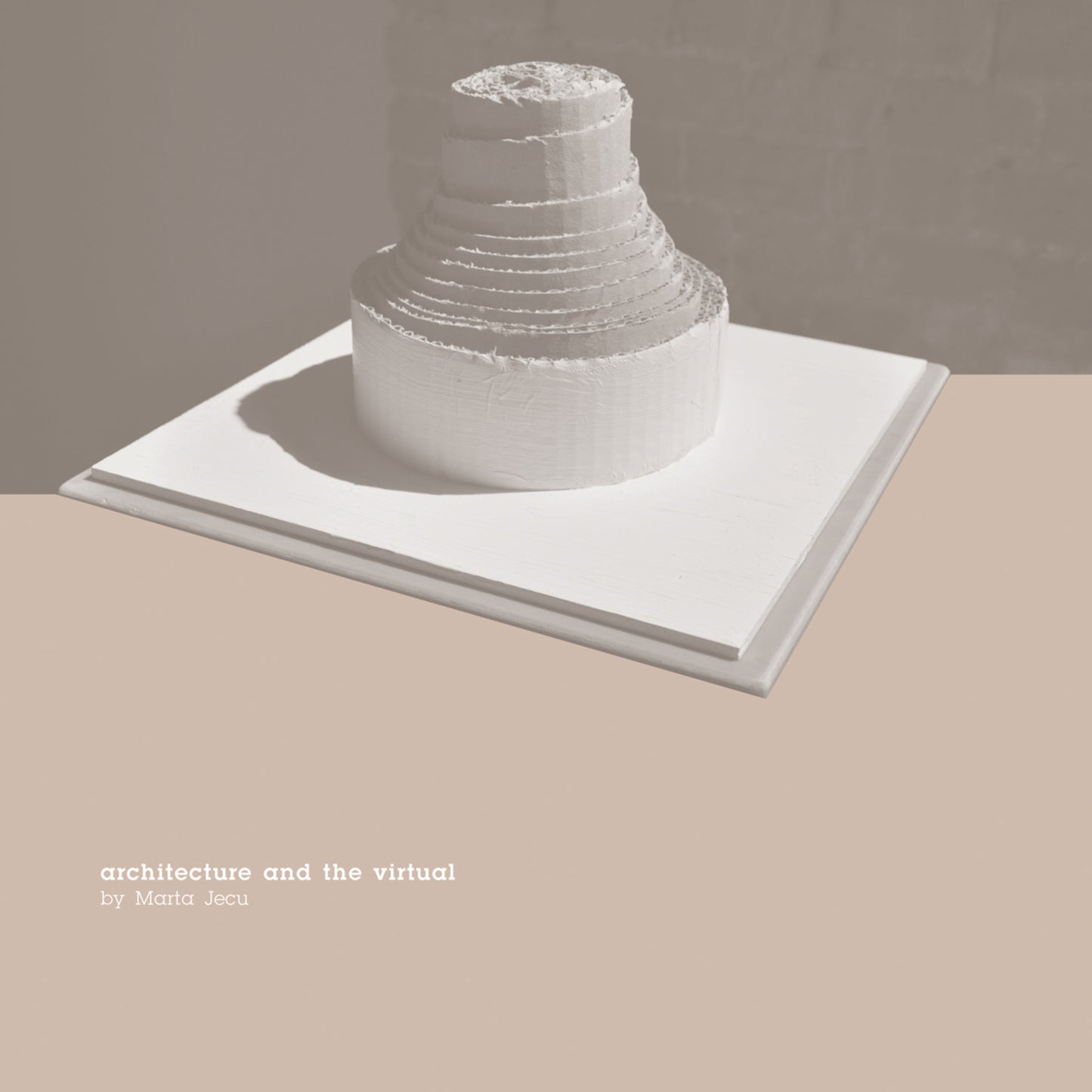
Architecture and the Virtual is a study of architecture as it is reflected in the work of seven contemporary artists, working with the tools of our post-digital age. The book maps the convergence of virtual space and contemporary conceptual art and is an anthropological exploration of artists who deal with transformable space and work through analogue means of image production. Marta Jecu builds her inquiry around interviews with artists and curators in order to explore how these works create the experience of the virtual in architecture. Performativity and neo-conceptualism play important roles in this process and in the efficiency with which these works act in the social space.


Introduction: The multiple is not only what has many parts, but also what is folded in many ways.
Chapter 1: Intensity: Performativity and the virtual
Interview with Carlos Bunga, October 2007
Interview with Yukihiro Taguchi, January 2008
Interview with Noam Braslavsky, July 2008
Interview with Daniel Lima, July 2008
Chapter 2: Palimpsest: Deconstructed architecture and the idea of the ruin
Interview with Yukihiro Taguchi, May 2007
Interview with Sancho Silva, August 2007
Interview with Michael Krome, July 2009
Interview with Cristian Rusu, April 2010
Chapter 3: Leap into documentation: The post-conceptual space
Interview with Carlos Bunga, March 2009
Interview with Yukihiro Taguchi, July 2009
Interview with Sancho Silva, April 2009
Addendum: The Gutai Manifesto
Chapter 4: Postdigital and the virtual: A question of density
Interview with Carlos Bunga, March 2010
Interview with Sinta Werner, July 2009
Interview with Yukihiro Taguchi, October 2012
Interview with Michael Krome, July 2009
Interview with Hironari Kubota, November 2011
Conclusion