





Some error occured while loading the Quick View. Please close the Quick View and try reloading the page.
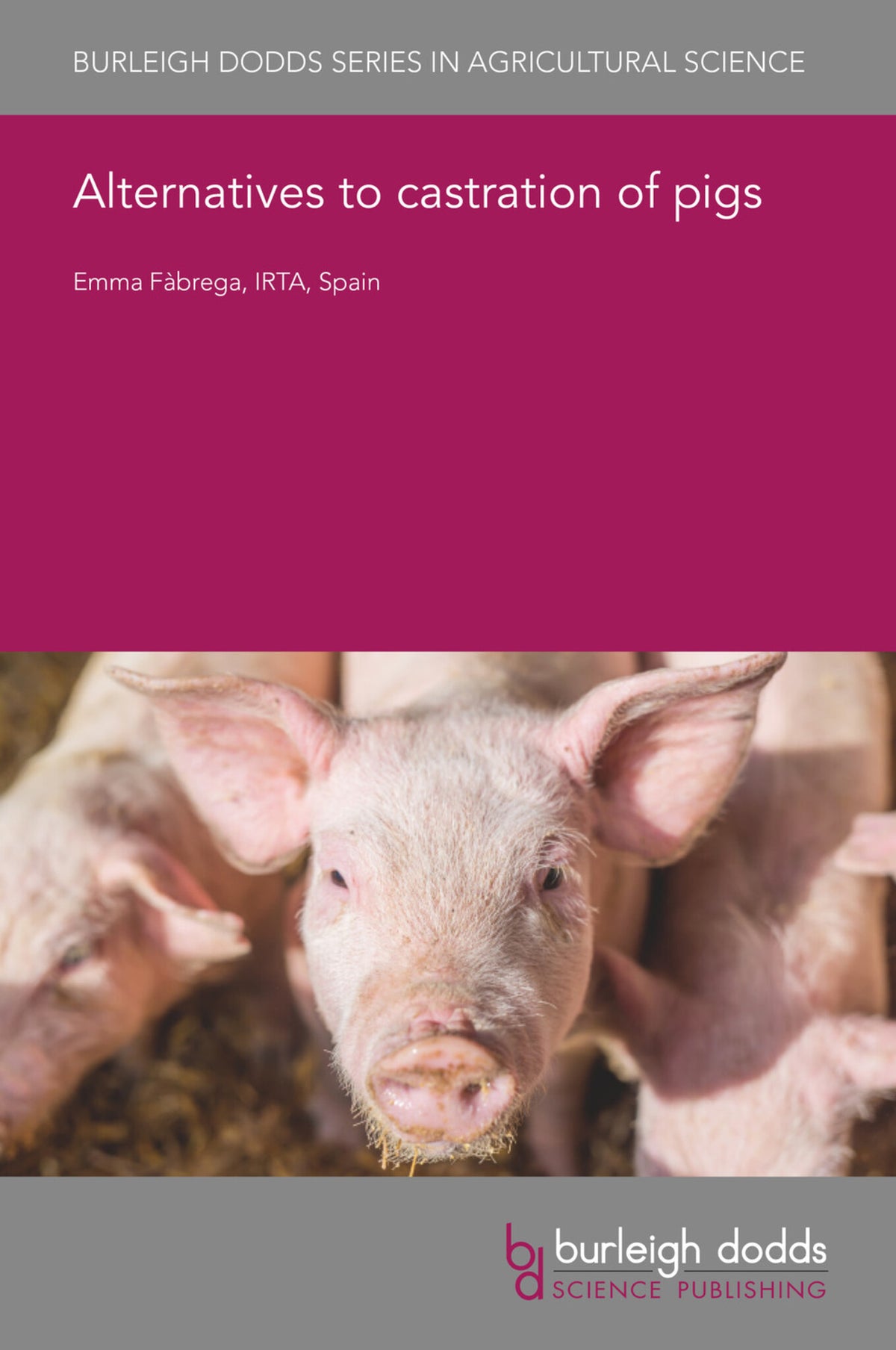
Piglets have been traditionally been surgically castrated to avoid boar taint risk and aggression and mounting behaviour. However, castration without anaesthesia and analgesia induces pain and has become a controversial practice on welfare grounds. Therefore, alternatives to surgical pig castration that guarantee proper meat quality and welfare, are required if castration is to be abandoned. This chapter deals with the main alternatives which are commercially available at present: (1) Raising entire males and (2) Immunocastration. Sex sorting could be another possibility, if technological and implementation obstacles could be overcome. The chapter summarises the effects on welfare and meat quality of the available alternatives, as well as dealing with other aspects such as societal and farmers’ acceptance of those alternatives. The nutritional, management and breeding strategies, which are implemented when raising entire males to enhance welfare and meat quality are described. The methodologies being used or under development to assess boar taint risk on line or at line are presented. Further reading and future perspectives end the chapter.

Price: £25.00
Publisher: Burleigh Dodds Science Publishing
Imprint: Burleigh Dodds Science Publishing
Series: Burleigh Dodds Series in Agricultural Science
Publication Date:
02 February 2021
ISBN: 9781801460309
Format: eBook
BISACs:

1 Introduction 2 Entire male production 3 Immunocastration 4 Sex sorting of semen 5 Case study 6 Conclusion and future trends 7 Where to look for further information 8 References