





Some error occured while loading the Quick View. Please close the Quick View and try reloading the page.
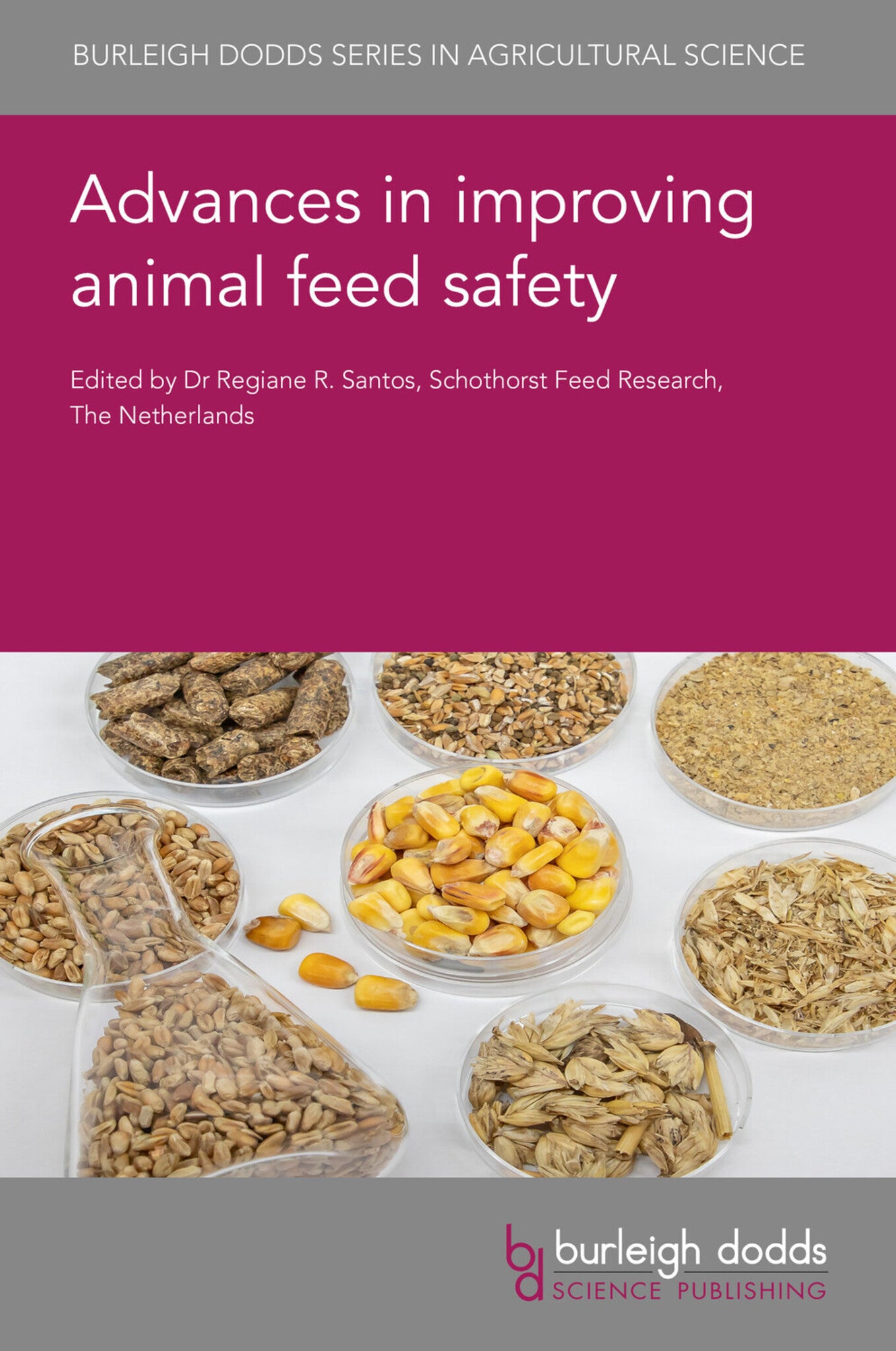
In order for animal feed products to be fit for consumption and pass the necessary safety requirements, they must be free from pathogens, chemicals and toxins that could cause harm to the animal. To ensure product safety, the animal feed sector must continue to find new and innovative ways of detecting and controlling the major groups of contaminants.
Advances in improving animal feed safety provides a comprehensive overview of the key microbiological and chemical risks affecting animal feed, from bacterial pathogens such as Salmonella and E.coli, to mycotoxins and environmental contaminants such as heavy metals and flame retardants. The book also reviews the techniques used for detecting and controlling contaminants in animal feed.


- 1.Improved batch control/micro-scaling technologies for more precise feed control: Kifle G. Gebremedhin, Cornell University, USA;
Part 1 Managing microbiological risks affecting animal feed: Bacterial pathogens
- 2.Bacterial pathogen contamination of animal feed products and their effects: Steven C. Ricke, University of Wisconsin-Madison, USA;
- 3.New techniques in analysing microorganisms in feed: microbiome analyses: Steven C. Ricke, University of Wisconsin-Madison, USA;
- 4.Techniques for controlling bacterial pathogen contamination of animal feed products: Elena George Olson, University of Wisconsin-Madison, USA;
Part 2 Managing microbiological risks affecting animal feed: Viral pathogens
- 5.Viral pathogen contamination of animal feed products and their effects: Scott Dee, Pipestone Veterinary Services, USA;
- 6.Techniques for detecting viral pathogens in animal feed products: Jordan T. Gebhardt, Kansas State University, USA;
- 7.Techniques for controlling viral pathogen contamination of animal feed products: Joshua A. Jackman, Sungkyunkwan University, South Korea;
Part 3 Managing risks from natural toxins affecting animal feed: Mycotoxins
- 8.Mycotoxin contamination of animal feed products and their effects: Wayne L. Bryden, The University of Queensland, Australia;
- 9.Techniques for detecting mycotoxins in animal feed products: Yiqiang Chen, China Agricultural University, China;
- 10.Mycotoxin risk assessment in animal feed products: Stoycho D. Stoev, Trakia University, Bulgaria;
- 11.Techniques for controlling mycotoxin contamination of animal feed products: Anthony Pokoo-Aikins, USDA-ARS, USA;
Part 4 Managing chemical risks affecting animal feed: Environmental contaminants
- 12.Environmental contamination of animal feed products and their effects: Javier Morán Martínez, Autonomous University of Coahuila, Mexico;
- 13.Environmental contaminant risk assessment in animal feed products: Martin Rose, The University of Manchester, UK;