





Some error occured while loading the Quick View. Please close the Quick View and try reloading the page.
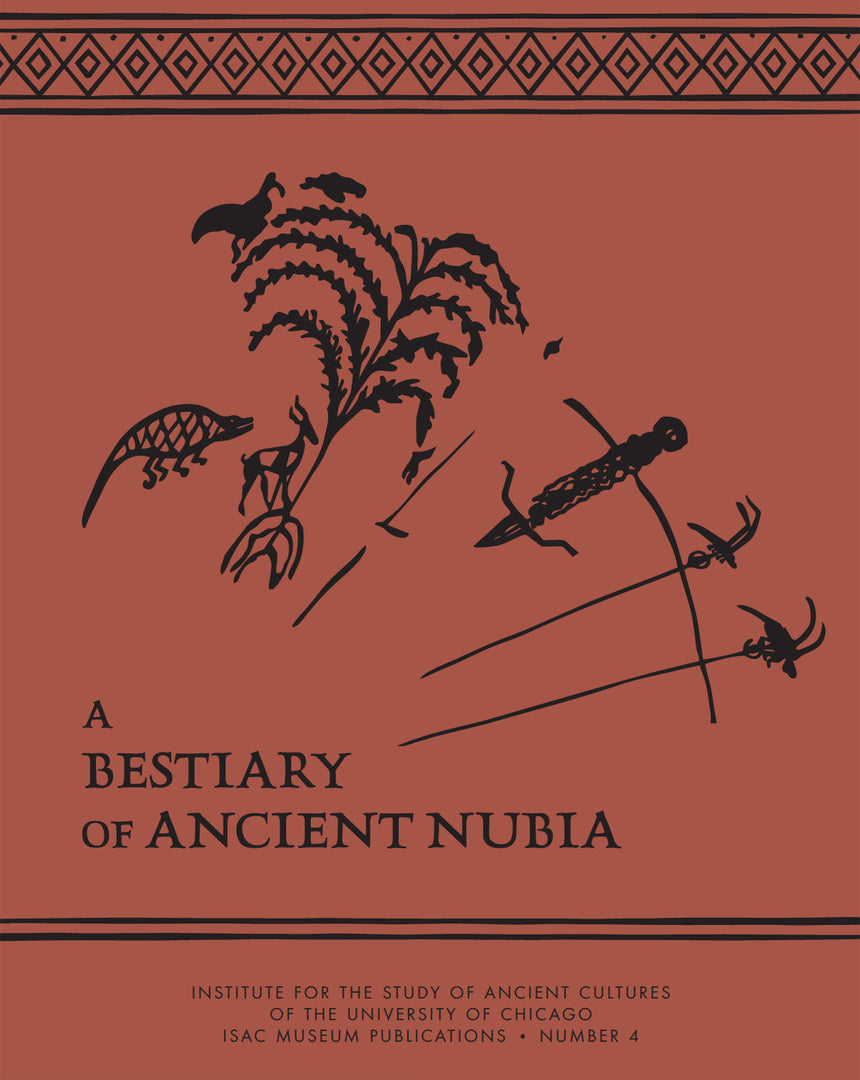
Published in conjunction with a special exhibition of the Institute for the Study of Ancient Cultures at the University of Chicago, this sumptuously illustrated volume examines the many roles animals played in Nubian life, art, religion and economy from prehistory through the medieval period. It showcases how animals were utilized as resources, revered as pets, and feared.
A Bestiary of Ancient Nubia features a wide range of animals including lions, crocodiles, ibex, ibises, cattle, insects, monkeys and giraffes. It covers the region of Nubia along the Nile in modern-day southern Egypt and northern Sudan.
Ten scholarly essays, each focused on a different category of animals and the ways the ancient Nubians observed, depicted and exploited them, illuminate the close and complex relationship between humans and the fauna and landscape of the Middle Nile Valley. The detailed catalogue presents all the objects displayed in the exhibition. Together, the essays and catalogue offer a thematic study and a visual record of Nubia’s rich animal world.


Marc Maillot (PhD in Egyptology, Sorbonne University, 2013) is an associate member of the Orient et Méditerranée unit of the Centre National de la Recherche Scientifique. Before his appointment in 2015 as a courtesy assistant professor at the University of Central Florida, he conducted seminars on late antiquity urbanism and architecture at Sorbonne University in Paris and Shendi University in Sudan.